
Lieferung heute & morgen

Qualitätsgarantie

Willkommens-Angebote freischalten: KOSTENLOSE Lieferung | Bis zu 80 % RABATT | Kostenlose 30-Tage-JoyPlus-Testphase
App herunterladen
A good cutting board is the cornerstone of any kitchen. However, the search for the right model, especially a bamboo cutting board, can quickly become overwhelming. Many products look identical at first glance but reveal their weaknesses after just a few weeks of use: they warp, crack, or wear out quickly. As your Joybuy Product Recommendation Officer, I'll help you identify the crucial quality indicators and steer clear of common purchasing pitfalls.
Before we dive into recommendations, it's important to understand the most common issues that lead to a bad purchase. By knowing what to look out for, you can specifically filter for durable and functional products.
To make an informed decision, you should focus on three core parameters. These determine the functionality, safety, and lifespan of your kitchen board.
The manufacturing method is the most important criterion. High-quality bamboo cutting boards are often made using a special whole-bamboo technology. This process involves heating and pressing an entire bamboo stalk into a single, continuous plank. The result is a seamless, adhesive-free surface. Such boards are significantly more resistant to warping and moisture than laminated models. They offer a consistently smooth surface that is ideal not only for cutting but also for rolling out dough.
The stability of a cutting board is directly related to its thickness.
A bamboo cutting board with a handle makes handling much easier. It can be safely transported from the countertop to the pot or hung up to save space. An integrated juice groove is indispensable when cutting juicy foods like tomatoes, roasts, or melons. It catches liquids and keeps your work surface clean. Boards that are also intended to be used as a wooden serving board also benefit from these practical details.
Here are some product recommendations tailored to different user profiles that meet the quality criteria mentioned above.
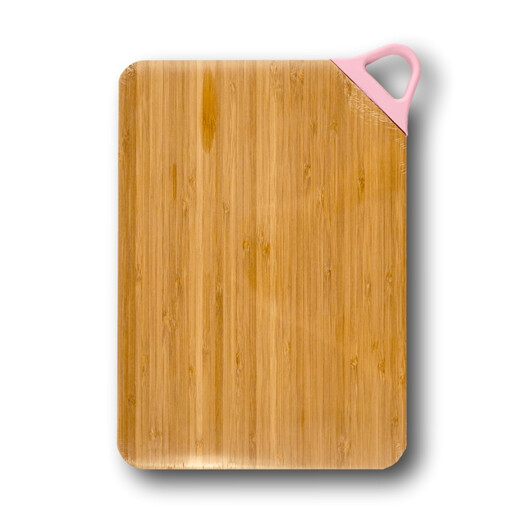
Why This Fits Their Persona: Ideal for daily meal prep. The size is a great compromise between ample workspace and easy handling. It's sturdy enough for everyday use without taking up too much kitchen space.
With a solid material thickness of 17 mm, this board resists warping far better than thinner alternatives in a similar price range.
The integrated handle makes it easy to carry and hang. The dense bamboo surface is resistant to knife cuts and odours.
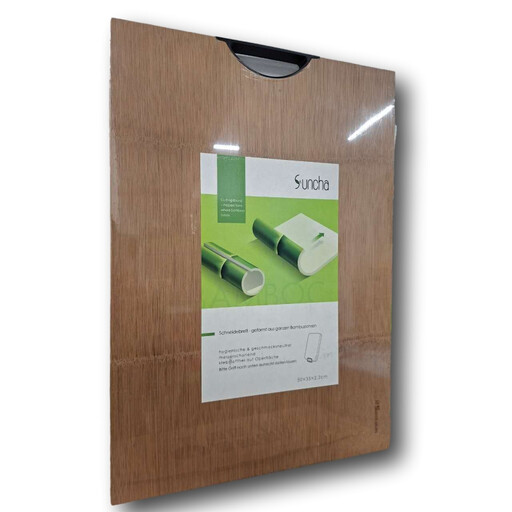
Why This Fits Their Persona: For anyone processing large quantities, kneading dough, or carving a Sunday roast. This large cutting board provides a huge, stable work surface for demanding kitchen projects.
This board is crafted from a single piece of bamboo, completely bypassing the adhesive trap. The massive thickness of 26 mm ensures unparalleled stability and prevents any wobbling or warping.
The seamless surface is extremely durable and hygienic. Its size makes it a versatile tool that also serves as a pastry board or carving board.

Why This Fits Their Persona: This set is perfect for those who want to combine functionality with aesthetics. The three different sizes are ideal for preparing and stylishly serving cheese, cold cuts, or antipasti directly at the table.
According to the manufacturer, the carbonisation of the bamboo increases durability and reduces moisture absorption, making the boards more resistant to warping. Each board features a juice groove and handles.
The set offers versatility for various tasks while also serving as an elegant wooden serving board. The dark, carbonised look is an eye-catcher in any kitchen and on any dining table.
We've compiled a complete, up-to-date list of products that fully meet these strict selection criteria and UK safety regulations.
Proper care is simple but crucial for longevity. Clean the board by hand after use with warm water and a mild detergent. Rinse it thoroughly and dry it immediately with a cloth. Store it upright to allow air to circulate. A bamboo kitchen board should never be cleaned in the dishwasher or soaked in water for extended periods. Occasionally rubbing it with a food-safe mineral oil will condition the material and protect it from drying out.
Bamboo is technically a grass and has a higher density and hardness than many types of wood. This makes it very resistant to deep cuts, but it can be slightly harder on knife edges than softer woods like maple. However, for most household knives, this difference is negligible with normal use. It's a trade-off between the board's durability and the knife's edge retention.
Bamboo is a fast-growing plant and is therefore considered a renewable resource, making it an eco-friendly alternative to slow-growing hardwoods. However, a truly sustainable cutting board is also defined by its manufacturing process. Models that are made without adhesives (e.g., through whole-bamboo technology) often have an advantage here, as they avoid potentially harmful chemicals. Check the product description to learn more about the manufacturing method.