
Lieferung heute & morgen

Qualitätsgarantie

Willkommens-Angebote freischalten: KOSTENLOSE Lieferung | Bis zu 80 % RABATT | Kostenlose 30-Tage-JoyPlus-Testphase
App herunterladen
For many, a bamboo cutting board is the top choice in the kitchen. It's seen as sustainable, is gentle on knife blades, and adds a natural aesthetic to the countertop. However, not every bamboo kitchen board lives up to its promise. An attractive appearance can often hide design flaws that lead to rapid wear and tear. Before you make a decision, it's crucial to understand the common pitfalls that often only become apparent after a few weeks of use.
The two most common problems are:
This guide will show you the objective criteria to look for to find a durable, functional, and sustainable cutting board that truly meets your needs.
To separate the good from the bad, don't be swayed by marketing promises. Instead, focus on verifiable product features. Three characteristics are of central importance here.
The manufacturing method directly impacts a cutting board's durability and hygiene.
The thickness of a cutting board is a direct indicator of its stability and longevity. A thickness of at least 1.7 cm ensures the board lies flat on the countertop and won't slip or give way during heavy-duty chopping. Extra-thick boards of 2.5 cm or more are excellent as a carving board for roasts or large items, as their own weight provides exceptional stability.
Additional features can make daily kitchen tasks much easier, but they aren't necessary for every use case.
Based on the quality criteria mentioned, we have put together a few products for different user profiles.
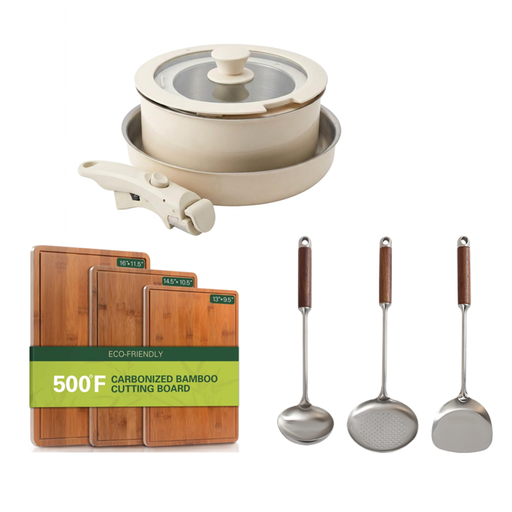
Why This Fits Their Persona: This all-in-one bundle is ideal for setting up a first kitchen, such as in a shared flat or student dorm. It covers all the bases with pots, pans, cooking utensils, and a bamboo cutting board set, offering excellent value for money.
Instead of buying a single, ill-fitting board, this set provides three different sizes for various tasks. This promotes hygienic separation of food types and avoids the one-size-fits-all compromise.
A comprehensive starter kit in one package. The set of three carbonised bamboo boards offers good baseline hardness and durability for everyday use.
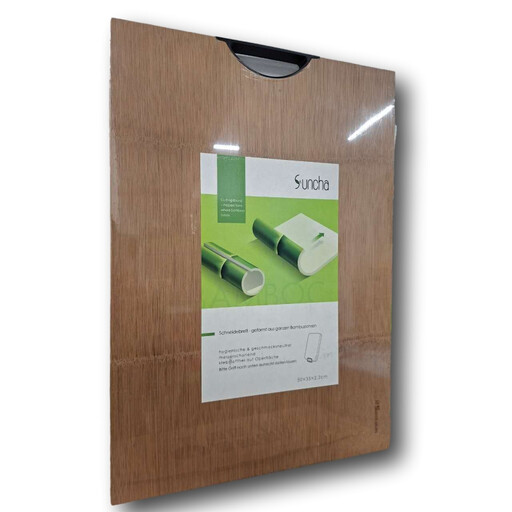
Why This Fits Their Persona: Those who cook often and with passion need a large, stable work surface. At 50 x 35 cm, this board offers ample space for preparing large meals and its solid construction makes it an ideal carving board.
With a thickness of 26 mm and its single-piece bamboo construction, it bypasses the common problems of warping and cracking. It is designed for maximum stability and longevity.
Exceptionally robust and generously sized. The solid, glue-free construction ensures a hygienic and extremely durable surface.
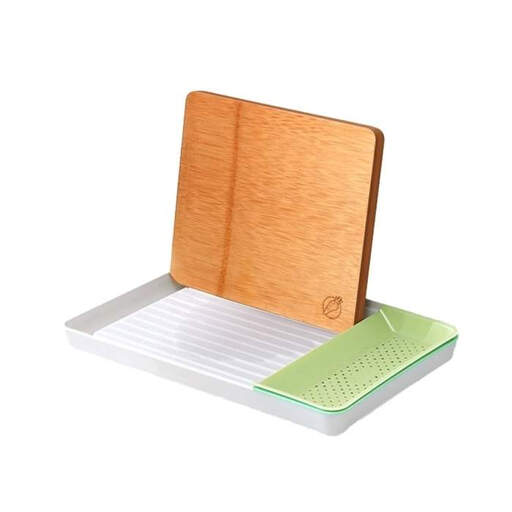
Why This Fits Their Persona: For cooks who value an organised workflow (mise en place). This prep station optimises preparation by allowing you to separate ingredients and scraps directly on the board.
It solves the problem of a cluttered countertop that arises when prepping multiple ingredients. Instead of using multiple bowls, the workflow is streamlined by the integrated collection trays.
Multifunctional design with a bamboo cutting surface and removable plastic trays. Promotes a clean and efficient cooking process.
We have compiled a complete, up-to-date list of products that fully meet these strict selection criteria and German safety regulations.
Proper care is crucial for the longevity of your bamboo board. After each use, clean it by hand with a damp cloth, warm water, and mild dish soap. Rinse it thoroughly and dry it immediately with a towel. Store it upright to allow air to circulate on all sides. Important: Never put a bamboo board in the dishwasher or soak it in water, as this will lead to cracking and warping. Occasional treatment with food-grade mineral oil will condition the material and maintain its water-repellent properties.
Bamboo naturally has properties that can inhibit bacterial growth. Additionally, the surface of bamboo boards is very hard and dense, meaning knife blades leave fewer deep grooves than on softer plastic boards. Bacteria can accumulate in deep cuts on plastic boards and become difficult to remove. However, regardless of the material, thorough cleaning after every use—especially after contact with raw meat or fish—is the most important factor for kitchen hygiene.
Look for three key features: thickness (at least 1.7 cm for good stability), construction (solid, single-piece boards are preferable to laminated ones), and the finish of the surface. A good surface feels smooth but isn't sealed with a thick layer of lacquer that could chip off. A heavier weight is also often an indicator of dense, solid quality.