
Lieferung heute & morgen

Qualitätsgarantie

Willkommens-Angebote freischalten: KOSTENLOSE Lieferung | Bis zu 80 % RABATT | Kostenlose 30-Tage-JoyPlus-Testphase
App herunterladen
A bamboo cutting board is the top choice for many home cooks and design-conscious households. It combines a natural aesthetic with the practical demands of a modern kitchen. However, not every board lives up to its promise. Many buyers find that after a short time, their new kitchen board warps, cracks, or its glued seams become unhygienic weak points.
This guide will help you avoid the common pitfalls. As your Joybuy Product Recommendation Officer, I'll show you the crucial features to look for to find a durable and functional bamboo kitchen board that will reliably serve its purpose for years to come.
Before you make a purchase, you should be aware of the three most common problems that occur with low-quality models, which often only become apparent after a few weeks of use.
To avoid these issues, don't be swayed by marketing promises. Instead, focus on verifiable product characteristics. The following three parameters are critical for the quality and longevity of your cutting board.
The most advanced manufacturing method is whole-bamboo unfolding technology. This process involves softening an entire bamboo culm with heat and unfolding it into a single, continuous plank. The key advantage: the cutting surface is completely free of adhesive. The result is a seamless, extremely durable, and hygienic surface. A board like this is more resistant to moisture and offers no entry points for bacteria in glue seams, making it an excellent choice for a sustainable cutting board with superior hygienic properties.
The thickness of a cutting board is a direct indicator of its stability and durability.
Practical elements significantly enhance its utility in the kitchen. A cutting board with a handle is easy to lift, transport, and hang for space-saving storage. An integrated juice groove catches liquids from meat, fruit, or vegetables, keeping your work surface clean. Some boards are also designed to double as an attractive wooden serving board or bamboo tray for cheese, cold cuts, or antipasti.
Based on the quality criteria above, we have identified several products that are particularly well-suited for different user profiles.
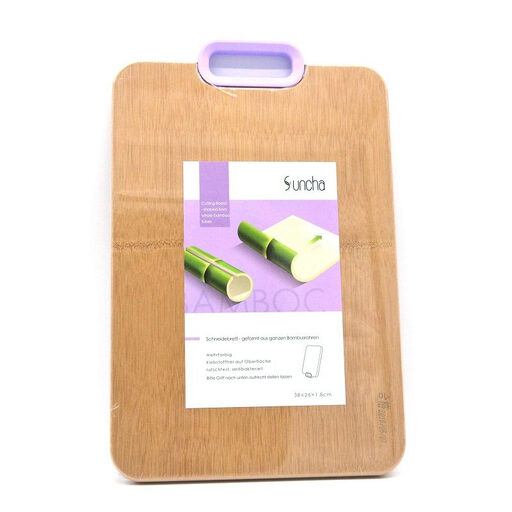
Why This Fits Their Persona: Ideal for daily kitchen tasks. Its size is a perfect compromise between ample workspace and easy handling. It's sturdy enough for vegetables, meat, and bread.
The "Whole Bamboo" construction from a single piece of bamboo eliminates the risk of separating glue seams. The solid thickness of 18 mm ensures high dimensional stability and prevents warping.
Seamless, knife-friendly surface and a practical handle for easy handling and storage.
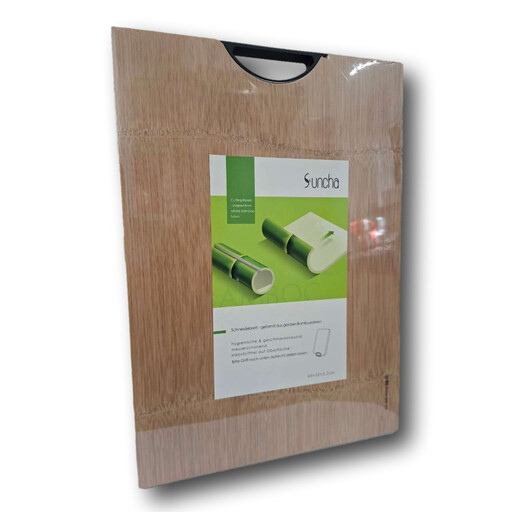
Why This Fits Their Persona: For those who process large quantities or enjoy carving roasts and poultry. The generous surface area and substantial weight provide maximum safety and comfort for demanding tasks.
With a massive thickness of 26 mm and solid bamboo construction, this board is extremely resistant to warping and cracking, even with intensive use and cleaning.
Exceptional stability and durability. Its size makes it a versatile tool that also serves as a large carving or serving board.

Why This Fits Their Persona: Perfect for cooks who value organisation and hygiene. This cutting board set allows for the separate preparation of items like vegetables, meat, and bread to prevent cross-contamination.
According to the manufacturer, the carbonisation process reduces moisture absorption and increases durability, which counteracts warping and cracking. The set concept also addresses the issue of hygiene.
Three different sizes for maximum flexibility. Each board features a juice groove and handles, enhancing the set's functionality.
We have compiled a complete, up-to-date list of products that fully meet these strict selection criteria and safety regulations.
Proper care is crucial for its longevity. After use, clean the board by hand with a damp cloth, warm water, and mild dish soap. Rinse it thoroughly and dry it immediately with a cloth. Store it upright to allow air to circulate. Absolutely avoid cleaning it in the dishwasher and do not let the board soak in water. To keep the material supple and protect it from drying out, you can regularly (about once a month) treat it with a food-safe mineral oil.
High-quality bamboo has a very dense and non-porous surface, which makes it harder for bacteria to penetrate compared to softer woods. Unlike plastic boards, where deep knife cuts can leave permanent grooves that trap bacteria, the hard surface of bamboo shows greater resistance to such deep scoring. A seamless construction without glue joints, as seen in whole-bamboo technology, further contributes to a more hygienic surface.
Warping is almost always caused by moisture. When a board gets wet or dries unevenly, the material swells or shrinks more on one side than the other. This creates tension and ultimately leads to warping. The main causes are insufficient material thickness, low-quality construction, or improper care (e.g., cleaning in the dishwasher). Choosing a thick, well-made board and following the care tips are the most effective ways to prevent this.