
Lieferung heute & morgen

Qualitätsgarantie

Willkommens-Angebote freischalten: KOSTENLOSE Lieferung | Bis zu 80 % RABATT | Kostenlose 30-Tage-JoyPlus-Testphase
App herunterladen
A good cutting board is the cornerstone of any kitchen. But with so many options, it's easy to feel overwhelmed—and what seems like a great deal can quickly turn into a costly mistake. A bamboo or wood cutting board that warps, cracks, or dulls your high-quality knives is not only frustrating but also unhygienic.
As your Joybuy Product Recommendation Officer, I'm here to help you separate the wheat from the chaff. In this guide, I'll show you the critical features to look for and how to avoid the three most common pitfalls when buying a cutting board.
Many products look great at first glance but reveal their weaknesses only after daily use. Pay close attention to these three points to make a durable and functional choice.
To avoid these problems, you should base your decision on objective criteria. The following three aspects are crucial for the quality and longevity of a cutting board.
The material is the primary determinant of your cutting board's properties.
A large cutting board not only offers more space to work but also sits more securely on the countertop due to its heavier weight. A thickness of at least 2 cm is a good benchmark to minimise warping and ensure a sturdy base. Thinner boards can be practical for smaller tasks, but a solid board is preferable for daily, heavy-duty use.
These features significantly enhance practical usability:
Based on these criteria, we have identified several products that are well-suited for different user profiles.

Why This Fits Their Persona: This cutting board set offers the right size for every task—whether for chopping vegetables, carving meat, or as a stylish serving board for cheese and cold cuts. Ideal for those who love to entertain guests and value an organised kitchen.
The carbonisation of the bamboo reduces moisture absorption, making the boards more resistant to warping and cracking.
Three different sizes for maximum flexibility; integrated juice grooves and handles on each board.
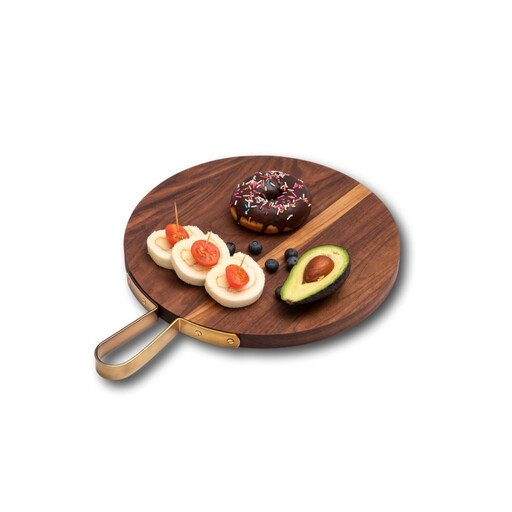
Why This Fits Their Persona: For home cooks who are looking for not just a tool, but a design object. With its dark grain and round shape with a long handle, this walnut cutting board is a statement piece and doubles perfectly as a wooden serving board.
Walnut wood is hard enough to be durable, yet more forgiving than extremely hard bamboo, making it gentler on high-quality knife blades.
Elegant design made from solid walnut wood; multifunctional as both a cutting and serving board.
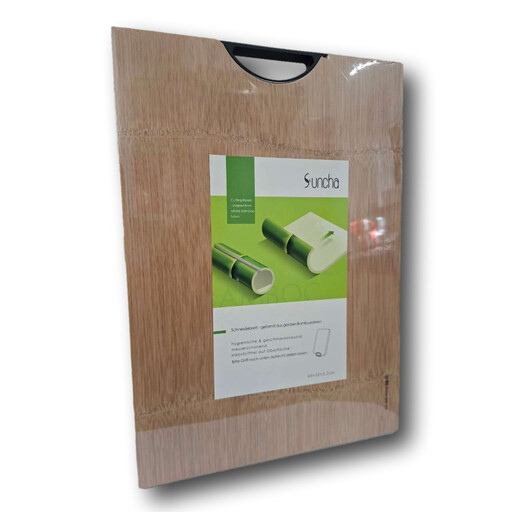
Why This Fits Their Persona: This large and solid bamboo board is a workhorse for daily kitchen tasks. It provides ample space and stability for preparing large meals, from chopping vegetables to breaking down poultry.
With a thickness of 26 mm and solid bamboo construction, this board offers high dimensional stability and effectively resists warping.
Extra-large and thick work surface for maximum stability; integrated handle for easy handling.
We have compiled a complete, up-to-date list of products that fully meet these strict selection criteria and German safety regulations.
Clean the board after each use with a damp cloth and mild dish soap. Briefly rinse it under running water and dry it thoroughly immediately. Store it upright to allow air to circulate. Important: Wood and bamboo boards should never be cleaned in the dishwasher or left to soak in water for extended periods.
Bamboo naturally has properties that can inhibit bacterial growth. Studies suggest that with proper care, wood and bamboo can be more hygienic than plastic boards, as bacteria can become trapped in the cut grooves of plastic and are difficult to remove. An antibacterial cutting board made of bamboo is therefore a good choice, as long as it is well-maintained.
To protect the material from drying out and to maintain its water-repellent properties, the board should be treated regularly (about once a month) with a food-safe oil. Refined mineral oils sold specifically for cutting boards are suitable, as are natural oils like coconut or walnut oil. Avoid olive oil, as it can go rancid.