
Lieferung heute & morgen

Qualitätsgarantie

Willkommens-Angebote freischalten: KOSTENLOSE Lieferung | Bis zu 80 % RABATT | Kostenlose 30-Tage-JoyPlus-Testphase
App herunterladen
A bamboo cutting board is the top choice for many home cooks and eco-conscious consumers. It's known for being sustainable, durable, and aesthetically pleasing. However, the market is flooded with products of widely varying quality. Not every bamboo kitchen board is a good long-term investment. Before you make a decision, it's crucial to understand the most common flaws, which often only become apparent after a few weeks of use.
Many cutting boards look high-quality at first glance, but their defects are only revealed in daily kitchen use. Pay attention to these three points to avoid a bad purchase.
To ensure your new cutting board is durable, hygienic, and functional, you should check three core parameters.
The way the bamboo is processed is crucial for its longevity. Ideally, a board should consist of larger, solid pieces of bamboo that are laminated horizontally or vertically. This significantly reduces the number of seams. Look for mentions of food-grade glue that is formaldehyde-free. A sustainable cutting board is not only defined by its fast-growing bamboo material but also by its safe and solid construction.
Sufficient material thickness is the foundation of a good cutting board. A thickness of at least 2.5 cm provides the necessary weight and stability to prevent slipping while cutting. Such a solid board is less likely to warp and can also serve as a large cutting board for demanding tasks like breaking down poultry or kneading dough.
Practical extra features significantly increase its everyday utility. A cutting board with a handle is easier to transport, clean, and hang for space-saving storage. A surrounding juice groove is indispensable when cutting juicy foods like tomatoes, roasts, or melons. It catches liquids and keeps your countertop clean. Boards with an attractive design and handle can also be used as a versatile serving board for cheese, cold cuts, or snacks.
Instead of making a one-size-fits-all recommendation, we have identified products that fit different user profiles and meet the quality criteria mentioned.
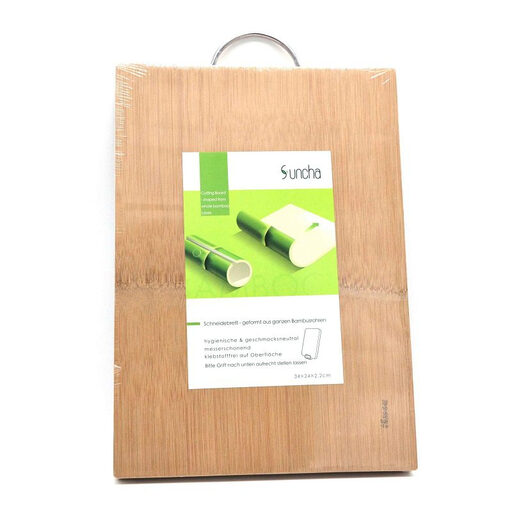
Why This Fits Their Persona: Ideal for daily kitchen tasks. The size is a great compromise between having enough workspace and being easy to handle. It's sturdy enough for vegetables, meat, and bread.
With a thickness of 2.6 cm, it bypasses the "Thickness Dilemma" and offers high stability against warping. The whole-bamboo construction reduces the number of glue seams.
Solid construction and a practical handle for easy handling and storage.
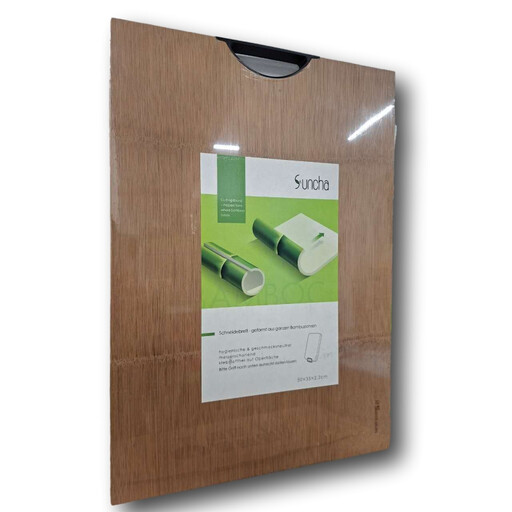
Why This Fits Their Persona: Perfect for chefs who need a lot of space—for rolling out dough, prepping multiple ingredients at once, or carving a roast right at the table.
The description "made from a single piece of bamboo" and its 2.6 cm thickness directly address the "Glue Trap" and the "Thickness Dilemma." This board is designed for maximum stability and durability.
Very large work surface (50 x 35 cm) and significant mass for excellent stability. It also works well as an impressive carving or serving board.
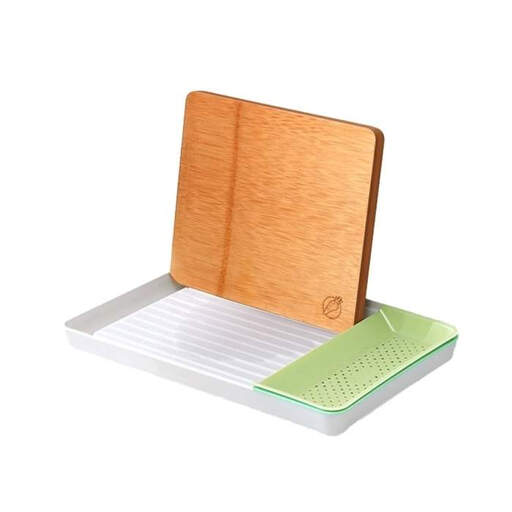
Why This Fits Their Persona: For cooks who value an organised and efficient workflow. Ideal for directly separating chopped ingredients and scraps to keep the work surface clean.
This product redefines utility. Instead of just being a cutting surface, it offers a complete system. Its value lies in organisation, thereby bypassing the typical pitfalls of a simple board.
Integrated system with a bamboo cutting board and removable trays for highly efficient and clean food preparation.
We have compiled a complete, up-to-date list of products that fully meet these strict selection criteria and European safety regulations.
Proper care is crucial for its lifespan. After use, wash the board by hand with warm water and a mild detergent. Never fully submerge it in water or clean it in the dishwasher. Dry it immediately with a cloth and let it air dry completely, preferably standing on its edge. To keep the material supple and prevent cracking, you should rub it with a food-grade mineral oil or a special wood conditioning oil every few weeks.
Bamboo is technically a type of woody grass and has a very high density. It is harder than many common woods like maple or beech. This makes it very durable and cut-resistant, but it can be more stressful on the blades of very high-quality or delicate Japanese knives than softer woods. So-called end-grain boards, where the wood fibres face upwards, are generally considered the most knife-friendly option, whether made of wood or bamboo.
Look for product descriptions that explicitly mention the use of food-grade glue (e.g., formaldehyde-free) and a finish with natural oils instead of lacquer. In the EU, certifications like LFGB (German Food and Feed Code) are a reliable indicator that a product has been tested and deemed safe for food contact. If such information is missing, a solid, massive construction without many small glue seams is a good sign.