
Lieferung heute & morgen

Qualitätsgarantie

Willkommens-Angebote freischalten: KOSTENLOSE Lieferung | Bis zu 80 % RABATT | Kostenlose 30-Tage-JoyPlus-Testphase
App herunterladen
A bamboo cutting board has become a staple in the kitchens of many environmentally and health-conscious households. The material is considered sustainable, robust, and gentle on knives. However, not every product marketed as a "bamboo board" lives up to expectations. Many buyers find that after a short time, their new board warps, cracks, or the surface quickly becomes unhygienic. To avoid such disappointments, it's crucial to understand the key quality differences that often lie beneath the surface.
This guide will show you which pitfalls to watch out for and what features define a durable and functional bamboo kitchen board.
The market is flooded with offers whose marketing promises often don't hold up to scrutiny. Two problems in particular frequently lead to a bad purchase:
To purchase a truly sustainable cutting board that will serve you well for years, you should check three key parameters.
The manufacturing method is the most important quality criterion. High-quality boards are often crafted using a special process where an entire bamboo culm is unfolded under heat and pressed into a single, continuous panel.
The thickness of a cutting board is directly responsible for its stability and longevity.
Practical details significantly enhance its utility in the daily kitchen routine.
Based on the quality criteria mentioned, we have identified a few models that are suitable for different user profiles.
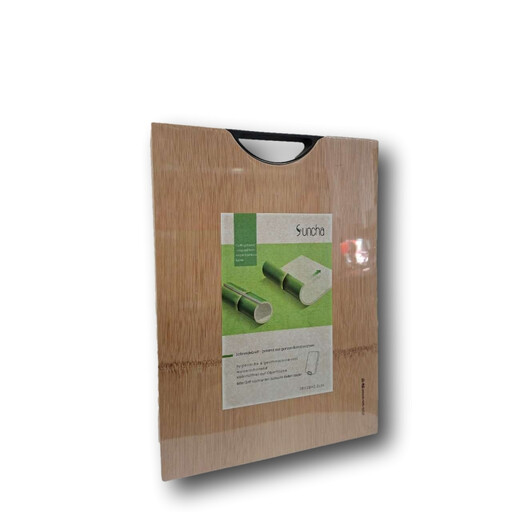
Why it's a good fit: With its size and massive 26 mm thickness, this board offers an ideal all-round solution for daily meal preparation. It's robust enough for vegetables and meat, yet handy enough for quick use.
The solid construction and substantial material thickness of 26 mm effectively prevent warping or cracking. It is designed as a durable work tool, not a thin decorative board.
The combination of solid thickness and a practical handle makes it a reliable and easy-to-handle tool for daily kitchen tasks.
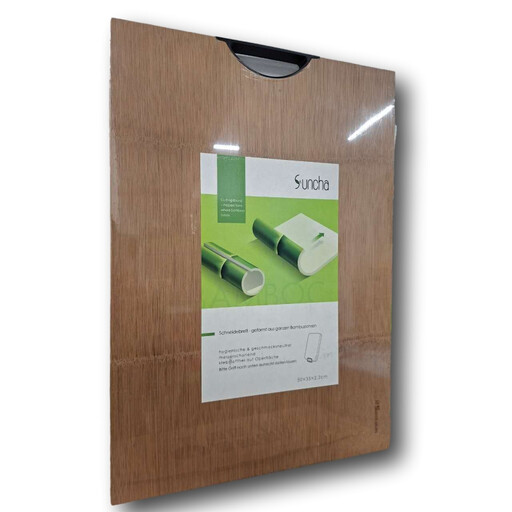
Why it's a good fit: Anyone who preps large quantities, carves a roast, or rolls out dough needs a generous and completely stable work surface. This XXXL board meets exactly these requirements.
According to the manufacturer, this board is made from a single piece of Moso bamboo. The cutting surface is therefore glue-free, which eliminates the risk of contaminants and swelling at glue seams.
The combination of the very large surface area (50x35 cm) and the glue-free construction makes it a high-quality and safe carving board for demanding tasks.

Why it's a good fit: This set of three boards in different sizes offers maximum flexibility. You can use them separately for different foods (e.g., vegetables, meat, bread) or as a stylish bamboo serving platter for cheese and cold cuts.
According to the manufacturer, the boards are carbonised. This heat treatment process increases the material's density, reduces moisture absorption, and makes the boards more resistant to warping and cracking.
The set includes three fully equipped boards, each with a juice groove and handles. This provides a complete and versatile solution for preparation and serving in one package.
We have compiled a complete, up-to-date list of products that fully meet these strict selection criteria and safety regulations.
Proper care is crucial for its longevity. Clean the board by hand after use with a damp cloth, warm water, and mild dish soap. Rinse it thoroughly and dry it immediately with a cloth. Store it upright to allow air to circulate. Important: A wooden cutting board made of bamboo must never be cleaned in the dishwasher or soaked in water for an extended period. To keep the material supple and protect it from drying out, it is recommended to rub the board with a food-safe mineral or conditioning oil every few weeks.
Bamboo naturally has properties that can inhibit the growth of bacteria. Unlike plastic cutting boards, which can develop deep knife cuts over time where bacteria can accumulate, the hard and dense surface of a well-maintained bamboo board is less prone to such deep grooves. However, regular and proper cleaning is essential for kitchen hygiene, regardless of the material.
Pay attention to the product description. Phrases like "made from a single piece of bamboo," "glue-free surface," or references to an "unfolding technology" are good indicators. A visual inspection also helps: a board made from a continuous piece will show a smooth, seamless surface without the typical light-coloured lines visible on laminated boards. These boards also often feel heavier and more solid.