
Lieferung heute & morgen

Qualitätsgarantie

Willkommens-Angebote freischalten: KOSTENLOSE Lieferung | Bis zu 80 % RABATT | Kostenlose 30-Tage-JoyPlus-Testphase
App herunterladen
A good cutting board is a cornerstone of any kitchen. The bamboo cutting board with a handle, in particular, has become a popular choice for home chefs and eco-conscious households due to its material properties and functionality. However, the market is crowded, and not every board advertised as "high-quality" lives up to its promise. Many buyers discover only after a few months that their new kitchen board is warping, cracking, or becoming unhygienic.
This guide will show you the critical features to look for to avoid a bad purchase. We'll analyse the most common pitfalls and explain the key parameters that define a durable and practical bamboo kitchen board.
Before you make a decision, you should be aware of the typical weaknesses often hidden behind appealing product images.
To avoid these problems, you should base your selection on objective criteria. The following three points are crucial for the quality and durability of your cutting board.
The type of construction is the most important factor for durability. Pay attention to the difference:
sustainable kitchen accessory designed for longevity.A good bamboo wood cutting board is more than just a slab of wood. Practical details determine its everyday usability:
cutting board with a juice groove is indispensable when you're cutting juicy foods like tomatoes, roasts, or melons. The groove catches escaping liquids and keeps your work surface clean. This also makes the board an ideal bamboo carving board.Bamboo naturally has dense fibres, which gives it certain antibacterial properties, as liquids and germs cannot penetrate it as easily as more porous types of wood. A food-safe oil finish applied during manufacturing further protects the material and preserves its natural appearance. Such a board is easy to maintain: it should be hand-washed with warm water and mild soap after each use and dried upright. Dishwasher cleaning is taboo, as the heat and moisture will damage the material.
We have identified products that meet the aforementioned quality criteria and are suitable for different user profiles.
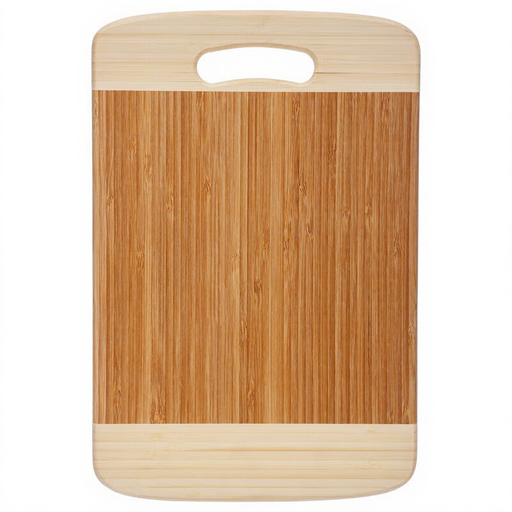
Why This Fits Their Persona: Ideal for daily use in smaller kitchens or as a secondary board. Its compact size is perfect for quickly chopping vegetables or fruit without taking up much counter space.
This board relies on a simple but honest construction of 100% natural bamboo. It avoids the trap of overly complex and fragile glue seams with a clean, functional design.
Compact size and an integrated handle for easy handling and storage. Good value for money for basic kitchen tasks.
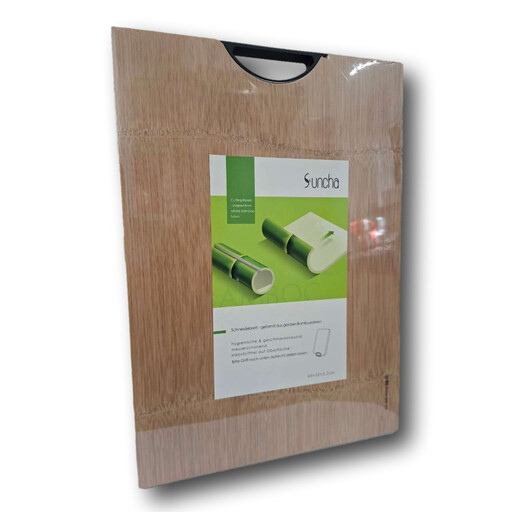
Why This Fits Their Persona: Perfect for ambitious chefs who need a large, stable work surface for preparing entire meals. Ideal as a carving board for roasts or as a generous bamboo serving board.
With a thickness of 26 mm and its solid construction, it directly counters the trap of thin, warping boards. The stability ensures safety and durability even with intensive use.
Extra-large and thick work surface (45 × 32 cm) for maximum stability. The solid construction from 100% natural bamboo is knife-friendly and robust.

Why This Fits Their Persona: This cutting board set is ideal for organised cooks who want to use separate boards for different foods (vegetables, meat, bread) to prevent cross-contamination.
According to the manufacturer, high-temperature carbonisation increases durability and reduces moisture absorption. This counteracts warping and cracking, the typical weaknesses of cheaper boards.
Three different sizes for maximum flexibility. Each board features an integrated juice groove and handles, which enhances functionality.
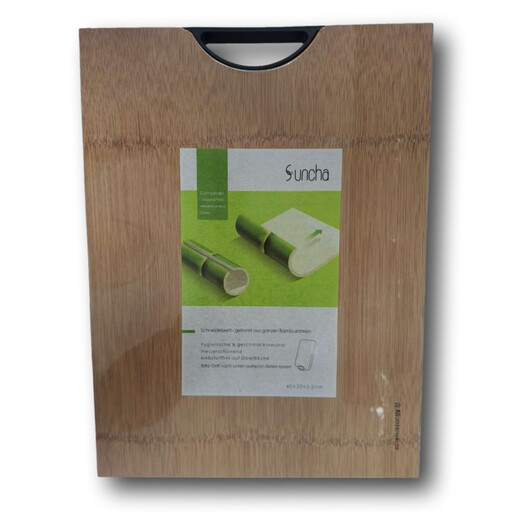
Why This Fits Their Persona: For buyers who place the highest value on natural materials and an adhesive-free construction. The unique manufacturing technique makes it a special piece of kitchen culture.
It completely bypasses the "solid wood" trap because, according to the manufacturer, it has a seamless, glue-free surface thanks to the whole-bamboo unfolding technique. The risk of failing adhesives is eliminated here.
Glue-free surface for maximum contact with natural materials. The 26 mm thickness also ensures extreme robustness and longevity.
We have compiled a complete, up-to-date list of products that fully meet these strict selection criteria and relevant safety standards.
Proper care is simple but crucial. Hand-wash the board with warm water and a mild detergent after each use. Dry it immediately with a cloth and let it air-dry completely, preferably standing on its edge so air can circulate. Absolutely avoid the dishwasher and do not let the board soak in water. To keep the material supple and prevent it from drying out, you can rub it with a food-safe mineral oil every few weeks.
Bamboo has a very dense fibre structure, making it more resistant to deep knife cuts than many types of wood. Bacteria can accumulate in these cuts on plastic or softer wood boards. While no material is inherently germ-free, the hard, less porous surface of bamboo provides a hygienic foundation as long as it is properly cleaned and maintained.
You can identify a genuine solid cutting board made of bamboo, not just one glued together from thin strips, by several features. Look at the product description: terms like "whole-bamboo technology," "made from a single piece," or "glue-free surface" are good indicators. Also, examine the edges of the board. On laminated boards, you can often see fine lines between the individual strips. A significant thickness (over 2 cm) and a corresponding weight are also signs of a solid and durable construction.