
Lieferung heute & morgen

Qualitätsgarantie

Willkommens-Angebote freischalten: KOSTENLOSE Lieferung | Bis zu 80 % RABATT | Kostenlose 30-Tage-JoyPlus-Testphase
App herunterladen
By: Joybuy Product Recommendation OfficerDate: August 28, 2026
The demand for alternatives to single-use plastic tableware is steadily increasing. Bamboo disposable tableware has emerged as a popular option for parties, food service, and everyday use. However, not all products labelled as "bamboo" live up to their claims. Many buyers invest in tableware that turns out to be impractical, flimsy, or less eco-friendly than expected.
Before you make a decision, you should be aware of the two most common pitfalls that can lead to a bad purchase:
This guide will help you navigate these issues and make an informed choice that meets your needs for both functionality and sustainability.
To ensure you get a suitable product, you should check three core parameters. These will help you separate the wheat from the chaff and find the right solution for your occasion.
The most important factor is the material. Look for products explicitly declared as being made from bamboo fibre pulp. This material is derived from bamboo pulp, processed into a slurry, and then pressed into shape using heat and pressure. The result is a sturdy, lightweight, and—under industrial conditions—compostable product.
In contrast are products made from bamboo powder mixed with plastic binders. These are typically intended for reuse, are not biodegradable, and should not be confused with true disposable tableware. For eco-friendly partyware, pure fibre pulp is the correct choice.
A good disposable bamboo product must hold up to both solid and liquid foods. Stability is determined by the density and thickness of the material. High-quality biodegradable plates and compostable bowls won't immediately warp when they come into contact with warm dishes or oily dressings.
Check the manufacturer's specifications regarding use with hot foods. While most products are designed for single use with warm meals, they are generally not suitable for the oven or for cooking in the microwave. Brief reheating may be possible with some models, but should always be done with caution.
The intended use determines the ideal shape. The range extends from simple round plates for cakes and snacks to multi-compartment trays for catering.
Based on the criteria above, we have curated a few products for typical requirement profiles.
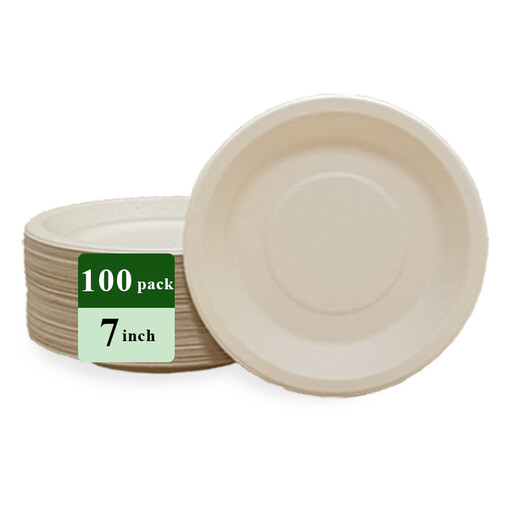
Why This Fits Their Persona: Ideal for private parties that require a large quantity of reliable tableware. The 7-inch size (approx. 18 cm) is versatile enough for cake, salads, or barbecue side dishes.
This product is made from pure bamboo fibre pulp, thus avoiding the melamine trap. The manufacturing process ensures sufficient stability for typical party foods without quickly becoming soggy.
Bulk Pack: The 100-pack offers excellent value for larger events. Versatile Size: Suitable for a wide range of foods.
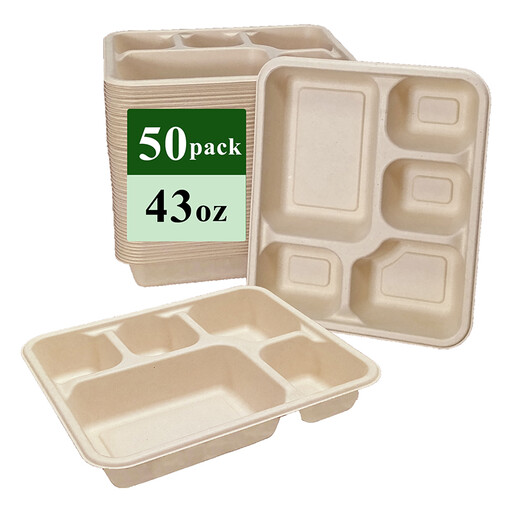
Why This Fits Their Persona: Designed for professional use in the food service industry, where complete meals must be separated and securely packaged. Ideal for delivery services and event catering.
The sturdy five-compartment construction prevents sogginess and keeps foods from mixing. The large 43oz volume (approx. 1.27 litres) solves the problem of packaging that is often too small.
5-Compartment Design: Allows for the clean separation of different meal components. Large Capacity: Suitable for full-sized meals.
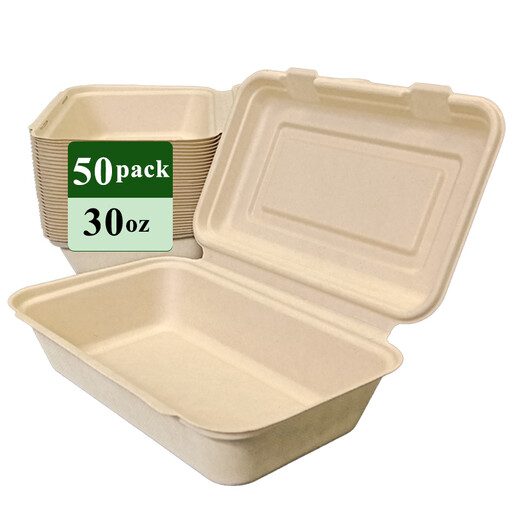
Why This Fits Their Persona: This clamshell box is a practical disposable bento box for lunch at the office, a picnic in the park, or as a takeaway container. The lid closes the box securely.
The clamshell design minimises the risk of leaks during transport. At 30oz (approx. 890 ml), the box offers enough space for a complete meal and is sturdier than simple paper plates.
Secure Closure: The hinged-lid design protects contents during transport. Convenient Size: Well-suited for single, portable servings.
We have compiled a complete, up-to-date list of products that fully meet these strict selection criteria and German safety regulations.
Disposable tableware made from pure bamboo fibre pulp is biodegradable under industrial composting conditions, where it breaks down into its organic components. In contrast, products mixed with melamine or other plastics are not compostable. Therefore, always check the manufacturer's exact material specifications.
High-quality bamboo fibre tableware is typically much sturdier and more cut-resistant than conventional paper plates. It resists moisture and grease better and doesn't get soggy as quickly. While less durable than hard plastic, it offers significantly more stability than many other paper-based disposable alternatives.
This depends on the specific product. Some manufacturers state that their products are suitable for brief reheating in the microwave. However, prolonged heating or cooking should be avoided, as the material can dry out and become brittle. Always check the manufacturer's safety instructions on the packaging or in the product description. As a general rule, do not use in a conventional oven or over an open flame.