
Lieferung heute & morgen

Qualitätsgarantie

Willkommens-Angebote freischalten: KOSTENLOSE Lieferung | Bis zu 80 % RABATT | Kostenlose 30-Tage-JoyPlus-Testphase
App herunterladen
Switching to sustainable alternatives in the food service and events industry has become a necessity. Bamboo disposable tableware has emerged as a popular choice, but not all products live up to their claims. Costly mistakes often stem from unclear product descriptions and overlooked functional flaws. This guide will help you identify the crucial criteria for making an informed decision.
Before making a purchase, you should be aware of two common problems that often lead to unusable products and wasted money.
To avoid these pitfalls, you should focus on two key technical features. These determine the tableware's quality and real-world performance.
The material is the foundation of stable and functional tableware. Products made from pure, pressed bamboo fiber typically offer higher density and strength. In contrast, composite materials mixed with fillers or undeclared binders may have lower heat resistance and stability. Look for clear manufacturer specifications regarding material composition. High-quality menu boxes made from bamboo fiber are often explicitly labeled as such.
The design is not purely an aesthetic consideration; it is crucial for practical use.
Here are some product recommendations tailored to different use cases that meet the criteria mentioned above.
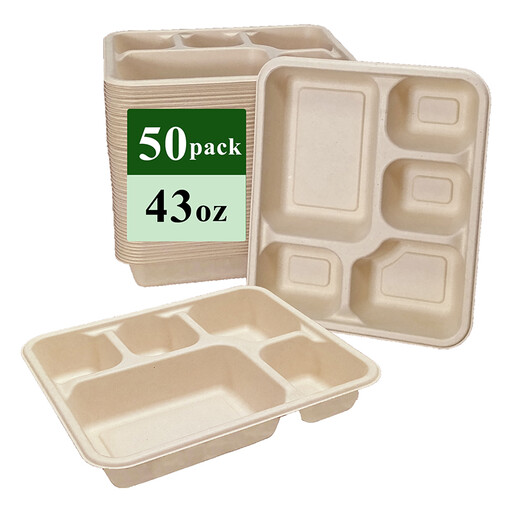
Why This Fits Their Persona: Ideal for catering companies and restaurants serving full meals. The large capacity and five compartments allow for a clean separation of different food components, which is essential for professional food service.
The sturdy bamboo fiber construction prevents sogginess, while the well-defined compartments maintain structural integrity even when filled with various foods.
Large capacity (approx. 1270 ml) and a 5-compartment layout for maximum flexibility in menu design. The 50-pack is designed for commercial use.
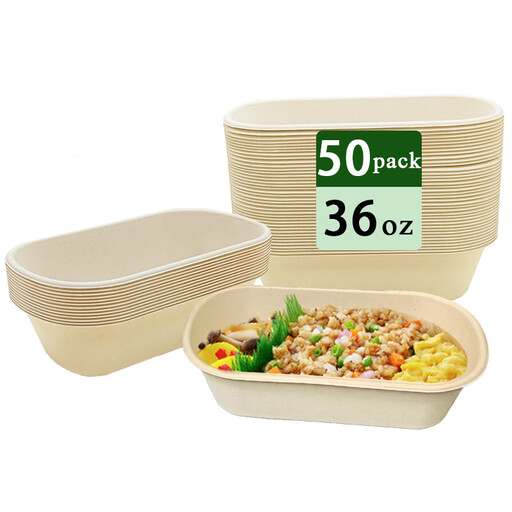
Why This Fits Their Persona: Perfect for food trucks and takeaway vendors who need reliable, eco-friendly packaging for single meals. The box design with a lid secures the contents during transport.
The bamboo fiber material offers good resistance to grease and moisture. The closed design protects the food and retains heat better than open trays.
The 36oz capacity (approx. 1065 ml) is designed for main courses. According to the manufacturer, the boxes are suitable for reheating in the microwave.
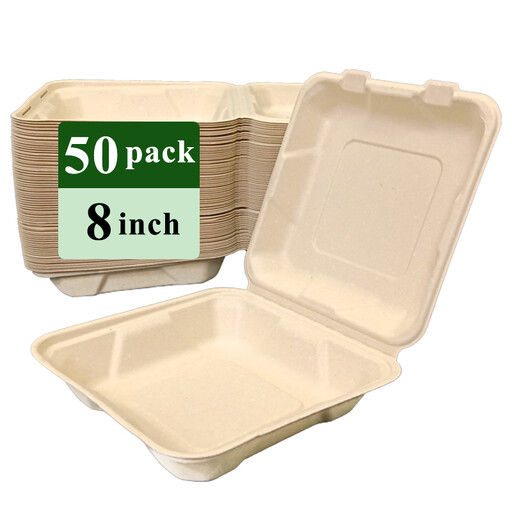
Why This Fits Their Persona: A versatile solution for private parties, barbecues, or picnics. The 8-inch clamshell is excellent for burgers, sandwiches, or a slice of cake and is easy to handle.
The clamshell provides a stable base and a secure closure, ensuring no spills at a buffet or outdoors. The material is designed for contact with various types of food.
Standardized size for versatile applications. The 50-count bulk pack offers good value for money for larger private events.
We have compiled a complete, up-to-date list of products that meet these strict selection criteria and comply with food safety regulations.
Its eco-friendliness heavily depends on its composition and disposal. Tableware made from 100% bamboo fiber is a good choice, as it comes from a rapidly renewable resource. However, industrial facilities are often required for optimal composting. Check the manufacturer's specifications to ensure it contains no unwanted binders like melamine resin.
Some biodegradable bowls made from bamboo fiber are suitable for briefly reheating food in the microwave. However, it is not recommended to use them for long cooking processes or at very high temperatures. Always follow the specific warnings from the manufacturer on the product packaging or in the description. Empty containers should never be heated in the microwave.
High-quality tableware made from pressed bamboo fiber demonstrates good resistance to heat and oil and is significantly more stable than conventional paper plates. It can typically be used for hot soups, sauces, or fried foods without immediately becoming soggy. Nevertheless, it is designed for single use and is not comparable to the durability of reusable tableware.