
Lieferung heute & morgen

Qualitätsgarantie

Willkommens-Angebote freischalten: KOSTENLOSE Lieferung | Bis zu 80 % RABATT | Kostenlose 30-Tage-JoyPlus-Testphase
App herunterladen
A bamboo and walnut chopping board can be used for a wide range of tasks, from chopping and kneading to serving. However, wooden chopping boards vary considerably in terms of material, dimensions, care requirements and design. An attractive grain alone says little about whether a kitchen board is suitable for your worktop and everyday use.
A board with limited depth can quickly become impractical when chopping vegetables or rolling out dough. For families and keen home cooks, large chopping boards measuring around 40 to 50 cm in length are often more functional. Before buying, you should also check that there is enough space on your kitchen worktop.
A juice groove catches liquid when chopping fruit, vegetables or meat. However, it does not replace a separate work surface for different types of food. A chopping board with a handle is easier to lift and use for serving, but depending on the handle design, it may require more storage space.
Bamboo and walnut wood should generally not be left in water for extended periods and are usually not suitable for the dishwasher. Heat, direct sunlight and significant temperature fluctuations can encourage warping or cracking. Ignoring these instructions may shorten the board’s service life, regardless of its price.
A bamboo chopping board is made from a rapidly renewable natural material and is often offered as a practical alternative to plastic. Depending on its construction, bamboo may consist of a single continuous board or glued or cross-laminated layers. The product description should therefore be read carefully.
Walnut wood typically has a darker colour and distinctive grain. It is suitable both for kitchen preparation and for serving bread, cheese or small dishes. With a wooden kitchen board, a smooth, splinter-free surface and sturdy construction are more important than the wood’s colour alone.
Three measurements are particularly relevant when choosing a board:
For example, the Suncha Solid Bamboo Cutting Board measures 500 × 350 × 26 mm and weighs 1.99 kg according to the product details. It therefore offers a generous work surface, but requires a suitable place to store it.
A knife-friendly chopping board should not be made from particularly hard materials such as glass or stone, as these can place greater strain on kitchen knife blades. Wood and bamboo are therefore often chosen for everyday food preparation. The surface should be checked regularly for deep cuts, splinters and cracks.
If the board is damaged, stop using it if cracks, severe warping or mould are visible. Occasional treatment with a suitable wood oil approved for contact with food may be beneficial, depending on the manufacturer’s recommendations. The care instructions for the individual product should always take priority.
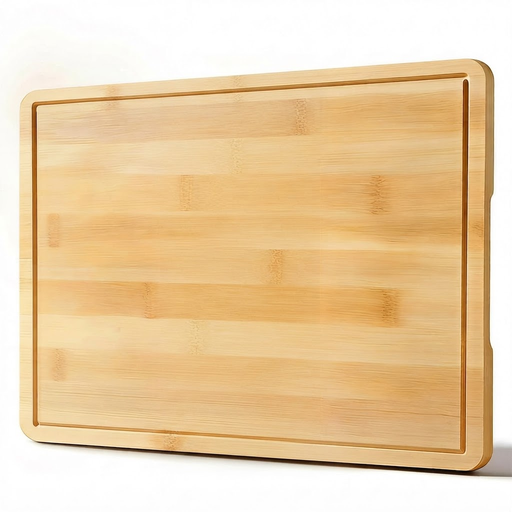
Why this product suits this profile: The format provides a practical everyday work surface for fruit, vegetables and bread. The integrated handle makes it easier to lift and serve.
The stated dimensions make the available surface area clear. The juice groove and handle are clearly listed as functional features rather than merely decorative design elements.
Bamboo construction, juice groove, integrated handles and a rectangular format measuring 406 × 292 mm.

Why this product suits this profile: The reversible board has a juice groove and, according to the product description, can be used with separate sides for different tasks, such as raw animal products and vegetables.
The product details specify the dimensions, reversible design and juice groove. This makes it easier to assess the features and storage requirements before buying.
Reversible bamboo board, 45 × 30 cm, juice groove, and suitable for chopping and serving.
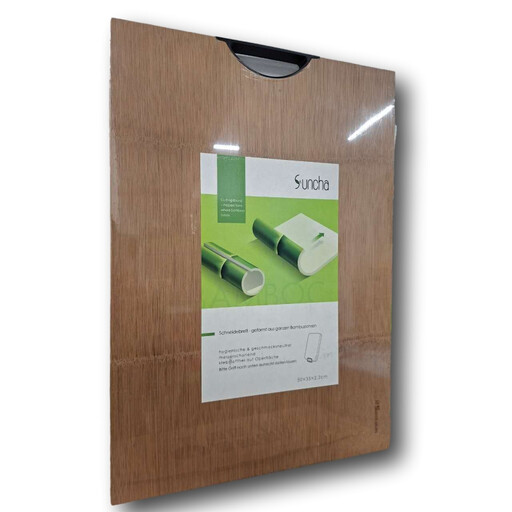
Why this product suits this profile: According to the product description, the large 26 mm-thick bamboo board is also suitable for dough, pasta and extensive food preparation.
The stated 500 × 350 × 26 mm dimensions prevent the work surface from being misjudged. The handle helps with carrying, but also increases the space required for storage.
Single-piece bamboo board according to the supplier, weighing 1.99 kg, with a generous surface area and suitable for chopping and preparing dough.
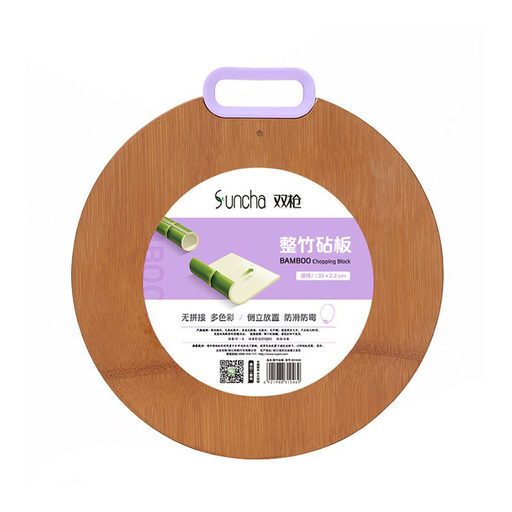
Why this product suits this profile: The round design, with a diameter of 33 cm, is suitable for bread, cheese and smaller serving arrangements, as well as everyday chopping tasks.
The diameter and thickness are clearly specified. This allows you to compare the board in advance with your available storage space and intended servingware.
Round bamboo board with a diameter of 330 mm and a thickness of 18 mm; suitable for chopping and serving.
A durable chopping board depends on more than just the choice of material. The following routine is recommended for bamboo and walnut wood:
Walnut wood should also be protected from prolonged exposure to direct sunlight. With a chopping board for serving, it is also important to ensure that the board is completely dry before placing food on it.
We have put together a complete, regularly updated list of products that fully meet these strict selection criteria and the safety regulations applicable in the EU.
For regular kitchen tasks, sizes of around 40 × 30 cm and above are often practical. If you roll out dough or prepare larger quantities, you may prefer a model measuring 45 to 50 cm in length. However, the work surface should be suitable for your worktop and storage space.
The board should be cleaned by hand with warm water and a mild cleaning product, then dried and stored upright. Avoid using the dishwasher and soaking the board for extended periods. If necessary, a suitable wood-care oil can be applied according to the manufacturer’s instructions.
Replacement is advisable if the board has severe cracks, splinters, permanent warping or visible mould. Deep cuts can make cleaning more difficult. If you are unsure about the board’s hygienic condition, you should also stop using it.