
Lieferung heute & morgen

Qualitätsgarantie

Willkommens-Angebote freischalten: KOSTENLOSE Lieferung | Bis zu 80 % RABATT | Kostenlose 30-Tage-JoyPlus-Testphase
App herunterladen
Bamboo wall panelling offers an effective way to add natural texture and structure to interior spaces. As a rapidly renewable resource, bamboo is a prime material choice for modern wall design. Processed into bamboo panels or flexible bamboo on a roll, it allows for a wide range of applications, from accent walls to refinishing furniture. This article analyses the key technical properties and selection criteria to help you make an informed decision.
Selecting the right bamboo panelling depends on several objective parameters. The following criteria are essential for your evaluation:
Bamboo is available in various processed forms. Carbonisation is a thermal process where the bamboo is treated with heat and pressure. This procedure alters the material's cellular structure, resulting in a darker, caramel-like colour and can increase its dimensional stability. Natural, untreated bamboo retains its original light colour. The choice depends on your desired aesthetic and durability requirements.
Bamboo on a roll, often referred to as bamboo wallpaper, offers excellent flexibility. This format is particularly suitable for covering curved surfaces, columns, or for seamless application across large wall areas. In contrast, rigid bamboo wall panels are designed for flat walls and create a clean, geometric pattern with their seams. The rolled format is often easier to transport and handle for DIY wall panel projects.
The installation method is a critical factor. Many products are designed to be affixed with a suitable mounting adhesive. Self-adhesive wall panelling is less common, as the weight of the bamboo requires a strong bond, which is best achieved with a separately applied adhesive. The substrate must be dry, clean, dust-free, and structurally sound. Flexible rolls can compensate for minor surface imperfections more effectively than rigid panels.
The look and feel are determined by the surface treatment. Options range from finely sanded, smooth surfaces to textured finishes that accentuate the bamboo's natural grain. A "Lightly Burned Grain" enhances the structure through the carbonisation process, while a "Nature Grain" offers a more subtle texture.
Based on the technical criteria mentioned, we are featuring two products that stand out for their material properties and flexible application.

Why We Recommend This Product This wall panel is crafted from 100% carbonised bamboo and is supplied as a flexible roll. The carbonisation process gives the material a deep brown hue and a distinct "Lightly Burned Grain Texture". Its rolled form allows it to conform to both smooth and slightly uneven surfaces, making it suitable for walls, ceilings, or for refinishing furniture and cabinets.
Pros
Who It's For This product is aimed at users who want to implement a sustainable wall design with a striking and warm aesthetic. It is ideal for DIY enthusiasts looking for a straightforward solution for DIY wall panel projects, as well as for use in living rooms, offices, or commercial spaces like boutiques and restaurants.
Technical Specifications
| Specification | Description | | :--- | :--- | | Material | 100% renewable, carbonised bamboo | | Roll Dimensions | 244 cm (Length) x 30 cm (Width) | | Coverage Area | 0.74 square metres per roll | | Surface | Lightly Burned Grain | | Packaging | 1 roll per box |
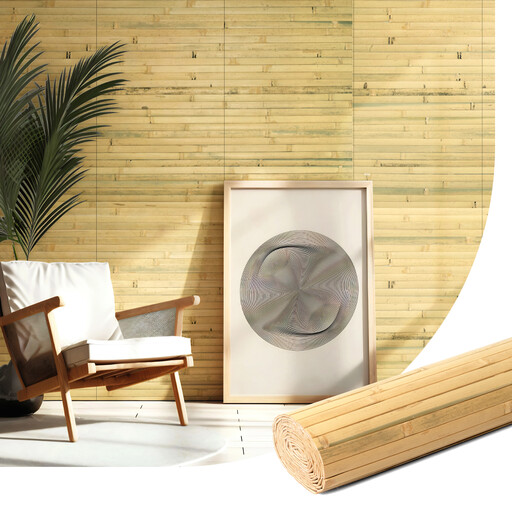
Why We Recommend This Product This model shares the same core material properties as the previous version: it is also made from 100% carbonised bamboo and supplied as a flexible roll. The difference lies in the surface finish. The "Nature Grain Texture" offers a more subtle, natural grain that creates a calmer, yet still organic, aesthetic. The functionality and ease of installation remain identical.
Pros
Who It's For This version is designed for users who appreciate the benefits of carbonised bamboo but prefer a more understated surface texture. It is well-suited for creating minimalist or nature-inspired interiors where the wall panelling is intended to play a harmonious and unobtrusive role.
Technical Specifications
| Specification | Description | | :--- | :--- | | Material | 100% renewable, carbonised bamboo | | Roll Dimensions | 244 cm (Length) x 30 cm (Width) | | Coverage Area | 0.74 square metres per roll | | Surface | Nature Grain | | Packaging | 1 roll per box |
Designing with natural materials isn't limited to walls. If you are looking to cover other areas such as furniture or ceilings in addition to your walls, you can find more suitable solutions and inspiration in our furniture & ceiling coverings category.
1. How do you install rolled bamboo wall panelling? Installation is typically done using a suitable, solvent-free mounting or contact adhesive. The adhesive is applied evenly to the back of the bamboo wallpaper or directly onto the prepared wall. Then, the roll is pressed against the wall and firmly secured with a pressure roller to eliminate any air bubbles. Always follow the adhesive manufacturer's instructions.
2. Is bamboo panelling suitable for damp rooms like bathrooms? Bamboo is a natural material and reacts to moisture. While carbonised bamboo offers higher resistance, prolonged exposure to high humidity or direct water splashes is not recommended. For use in bathrooms, only products that are specially sealed or designated for damp environments should be used. However, bamboo is very well-suited for living rooms, bedrooms, or hallways.
3. How do you clean and maintain bamboo wall panelling? Maintenance is straightforward. For cleaning, a dry or lightly dampened microfibre cloth is usually sufficient to remove dust. Avoid using harsh cleaning agents or abrasive sponges, as they can damage the surface.