
Lieferung heute & morgen

Qualitätsgarantie

Willkommens-Angebote freischalten: KOSTENLOSE Lieferung | Bis zu 80 % RABATT | Kostenlose 30-Tage-JoyPlus-Testphase
App herunterladen
A bamboo chopping board can be used in many ways for everyday cooking, food preparation and serving. However, attractive product descriptions do not automatically lead to the right purchasing decision. The actual dimensions, construction and care instructions are what really matter.
The term “large chopping board” is not standardised. A board measuring 35 × 24 cm offers considerably less working space than a model measuring 45 × 32 cm. Always check the length, width and thickness. You should also consider the available space on your worktop and in your kitchen cupboards.
A juice groove keeps liquids away from the worktop, but it is no substitute for thorough cleaning. A chopping board with a handle is not automatically easier to care for either: residue can collect in recesses and around joins. A smooth surface and easy access are more important for cleaning than decorative details.
Many bamboo models are designed to be hand-washed chopping boards and are not suitable for the dishwasher. High temperatures, prolonged soaking and repeated exposure to moisture can shorten the service life of glued or multi-part boards. Always look for clear information about cleaning and care.
Bamboo is a fast-growing raw material and is often processed into multi-layer boards. A bamboo chopping board is usually relatively lightweight and suitable both for food preparation and serving. When choosing one, a carefully finished surface, sturdy edges and consistent workmanship are important criteria.
A wooden kitchen board, such as one made from acacia wood, has a distinctive grain and is often used as a serving surface. Acacia models can, however, be heavier and thicker. A slate serving board provides a dark contrast to cheese, fruit and cured meats, but it is not suitable for every knife or cutting task. Slate should also be cleaned with a damp cloth and mild cleaning solution.
Greater material thickness can provide better stability, but it also increases weight and storage requirements. The Suncha model, for example, measures 45 × 32 × 2,6 cm, while the WMF board is listed as 45 × 30 × 1,9 cm. These dimensions allow for a direct comparison, but on their own they do not indicate whether a board is right for you.
A continuous juice groove is useful when cutting juicy fruit, vegetables or meat. Check whether it is deep enough and easy to access. A reversible surface can make the board more versatile for different foods. For hygiene reasons, raw meat and fish should not come into contact with other foods without suitable cleaning.
An integrated handle makes it easier to carry the board from the kitchen to the dining table. This feature can be particularly practical for a bamboo serving board, a charcuterie board or a cheese and cured-meat platter. On compact boards, the handle can also be used for hanging storage.
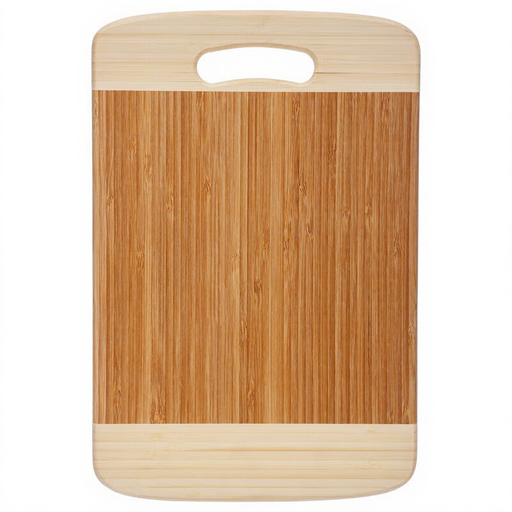
Why this product suits this profile: The compact 30 × 20 cm surface is suitable for smaller kitchens and everyday food preparation. The integrated handle makes it easier to carry and store.
The precise dimensions prevent the available working area from being misjudged. The care instructions specify hand washing, making the ongoing effort clear.
Bamboo construction, an integrated handle and a format designed for limited worktop space.

Why this product suits this profile: Measuring 45 × 30 cm, it provides generous working space. The continuous juice groove and reversible design support a range of preparation and serving tasks.
The product details clearly state the dimensions, material, juice groove and hand-washing requirement. This makes it easier to check whether the size and care requirements suit your household.
45 × 30 × 1,9 cm, a continuous juice groove and reversible use according to the product description.
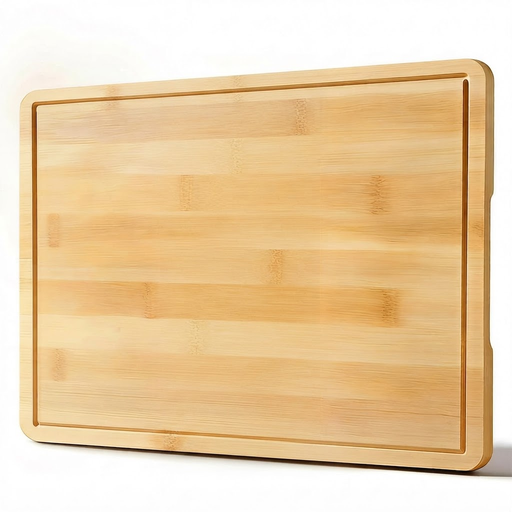
Why this product suits this profile: The stated 40,6 × 29,2 cm surface combines ample space with integrated handles. The juice groove is designed for juicy ingredients and serving food.
The description specifies hand washing, thorough drying and occasional oiling. This makes the care requirements clear before purchase.
40,6 × 29,2 cm, a deep juice groove and two integrated handles according to the supplier’s details.
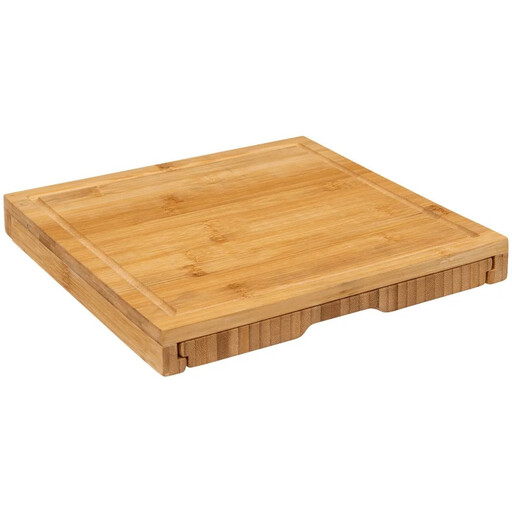
Why this product suits this profile: According to the product description, the 30 × 30 cm cheese board set includes four cheese knives and a storage drawer. It is designed for cheese platters, snacks and serving guests.
The contents are clearly specified. At the same time, the product information expressly states that the set is not dishwasher-safe.
30 × 30 cm bamboo board with four cheese knives and an integrated drawer.
A bamboo board should be washed by hand after every use with warm water and a mild cleaning solution. It should then be dried completely and stored upright or in a well-ventilated place. Avoid:
If you notice deep cracks, significant warping or persistent odours, replacing the board is advisable. Occasionally rubbing the surface with a suitable food-safe care oil can help maintain some models. The relevant manufacturer’s instructions remain the deciding factor.
A bamboo or acacia wood cheese board can be used for cheese, fruit, bread and cold snacks. A cheese board set with knives also saves you from buying extra accessories. For particularly large presentations, a 70 × 25 cm acacia wood serving board is a good option. Slate models are an alternative when you want a dark, rectangular presentation surface.
We have put together a complete, regularly updated list of products that fully meet these strict selection criteria and the safety regulations applicable in the EU.
Its lifespan depends on the material thickness, workmanship, use and care. Regular drying, avoiding soaking and following the manufacturer’s instructions can help extend its service life. Deep grooves, cracks or permanent warping are signs that the board should be replaced.
There is no universally valid answer. What matters is having a suitable surface, cleaning it properly and allowing it to dry completely. Neither bamboo nor plastic should continue to be used if it has deep cuts, cracks or ingrained food residue. Also check whether the product is explicitly intended for contact with food.
For a small gathering, around 30 × 20 cm or 30 × 30 cm is often sufficient. For several types of cheese, cured meat, fruit and side dishes, boards measuring around 40 cm or more are more practical. With long boards, make sure there is enough space on the table and that the board can be transported safely.