What should you look for when buying?
For shared meal planning, it’s not just about capacity in litres. Check that there’s room for individual portions, that the appliance can freeze fresh food at the rate you need and that its running costs suit you.
Existing four-star freezer compartment
A good choice if: you only prepare banana slices occasionally and the containers fit alongside your other frozen food.
Bear in mind: Limited space can make it harder to store several portions separately.
Freezer with compartments
A good choice if: several people regularly take out labelled individual portions or other foods.
Bear in mind: More capacity isn’t automatically better. Compare your needs with the specific model’s annual energy consumption.
Chest freezer
A good choice if: you regularly build up larger stocks and have enough floor space.
Bear in mind: To make shared access easier, label your portions and organise where you store them.
| Priority |
What to check when buying |
Who it matters most to |
| Finding portions again |
Check whether the containers fit into separate compartments and are easy to reach. |
If I’m planning individual portions for several meal-prep sessions, I want to be able to identify them easily. Around 33% of consumers prioritise being able to access portions separately. |
| Freezing fresh food |
Compare the planned quantity for each session with the freezing capacity in kg/24 h and the available storage space. |
If we’re freezing lots of bananas at once during a shared meal-prep session, freezing capacity matters as well as storage space. Around 27% of consumers prioritise freezing larger quantities. |
| Making the most of your space |
Check for a four-star rating, the container dimensions, the appliance’s external dimensions and the clearance needed to open the door. |
If there’s limited space in my kitchen or utility room, I want to know whether my existing compartment is enough or whether there’s really room for another appliance. Around 20% of consumers prioritise the space available. |
| Weighing up energy use |
For appliances of a suitable size, compare usable capacity with the EU label figure in kWh/year. |
If I’ll only use an extra appliance occasionally for meal prep, I also want to take its year-round energy use into account. Around 20% of consumers prioritise running costs. |
Freezers at Joybuy
This selection includes freezers with compartments, giving you separate areas for banana portions and other frozen food.
 No image available
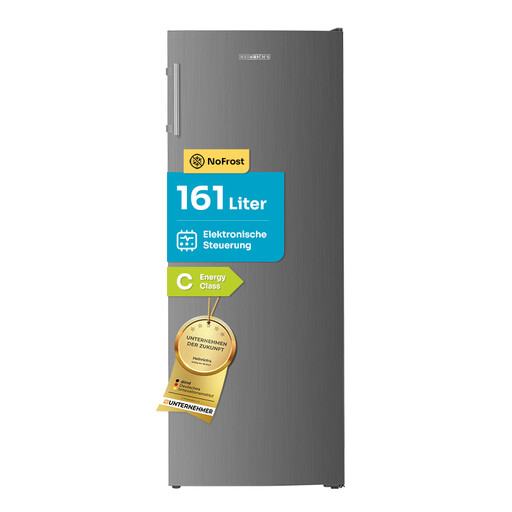
Heinrich’s freezer, 161 l
The listed drawers and shelves provide separate areas for storing portions.
161 l capacity; three freezer drawers and two shelves; energy class C. The product details list Fast Freeze at −22 °C and a temperature range of −14 °C to −22 °C.
View at Joybuy
 No image available
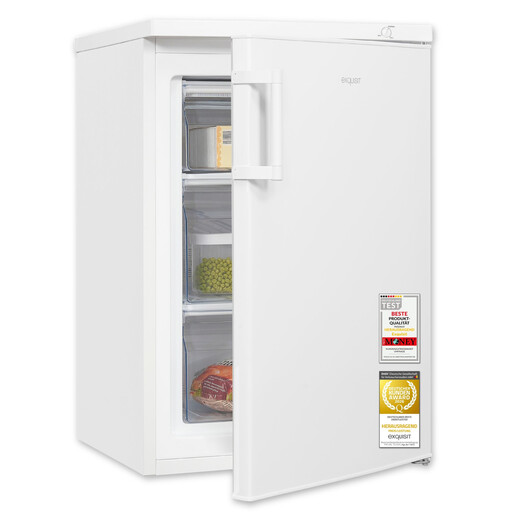
Exquisit GS581-H-010E, 85 l
The four-star freezer compartment and stated freezing capacity can help you choose an appliance for fresh portions.
85 l usable capacity; three drawers; freezing capacity of 4,0 kg/24 h. The product description says it needs to be defrosted manually if more than 5 mm of frost builds up.
View at Joybuy
 No image available
COMFEE’ RCU40WH2(E), 31 l
Its compact size and reversible door hinge may be useful when planning for a limited amount of space.
31 l capacity; four-star freezing; freezing capacity of up to 2 kg/24 h; 147 kWh/year; energy class E.
View at Joybuy
 No image available
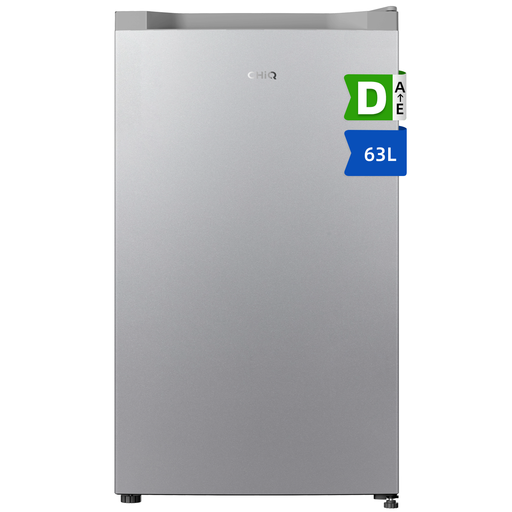
CHiQ JR63DSD, 63 l
Two adjustable drawers provide separate areas for storing smaller portions.
63 l capacity; four-star freezing; 47 cm wide; energy class D. The product title specifies manual defrosting.
View at Joybuy
 No image available
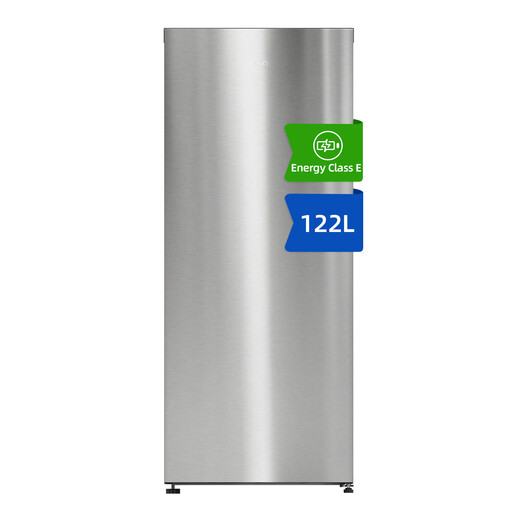
CHiQ JR122WSD, 122 l
The appliance is described as having four-star freezing and, according to the product details, can also be switched to fridge mode.
122 l capacity; NoFrost; Multi-Airflow; switchable cooling modes; energy class E.
View at Joybuy
Frequently asked questions
How should we prepare banana slices for a shared meal-prep session?
Peel ripe bananas, slice them and freeze the quantities you need in bags or suitable containers. Label the packaging with its contents, quantity and date. The Federal Centre for Nutrition recommends freezing Nicecream for at least four hours and, in another recipe, freezing it overnight. These recipe times aren’t a guaranteed freezing time for every appliance.
Can I freeze fresh banana slices in a three-star compartment?
According to the Federal Centre for Nutrition, a three-star compartment is for long-term storage, while a four-star compartment can also freeze fresh food. Check the rating before planning to use your existing compartment for freshly prepared portions.
How can I work out the energy costs of an extra freezer?
Multiply the specific appliance’s label figure in kWh/year by your electricity price per kWh. The consumer advice centre points out that actual energy use depends on how and where the appliance is used. Also consider whether its usable capacity suits your needs.
What are the rules in Germany for energy labels and old freezers?
The EU energy label, with a scale from A to G, applies to new household freezers covered by the scheme. The label must be visible in online listings. Old electrical appliances must not go in household waste. According to the Federal Environment Agency, when buying a new appliance of the same type, you can also return a large old appliance free of charge when it’s delivered, including for online purchases.


