A single portion to take with you
If you blend at home in the morning and want to use the same sealable cup at lunchtime, check the lid, fill markings and portion size. WMF and Bosch each list a 0.6-litre capacity for the cup blenders mentioned.


If you’re blending a banana smoothie in the morning to take in your lunch box, a compact mains-powered blender with a sealable blending and drinking cup is a sensible place to start. It lets you take a single portion with you without decanting it: WMF and Bosch each list a 0.6-litre cup for their Kult X Mix & Go and MMB2111S models. If you’re making several separate portions, two drinking cups, as supplied with the Philips HR2672/00, or the usable capacity of a larger jug may matter more. Check whether the specific model is suitable for frozen ingredients. A to-go lid does not keep your smoothie chilled, and the German Federal Institute for Risk Assessment stresses the importance of keeping perishable foods at the right temperature during transport.
If you blend at home in the morning and want to use the same sealable cup at lunchtime, check the lid, fill markings and portion size. WMF and Bosch each list a 0.6-litre capacity for the cup blenders mentioned.
If you’re packing separate smoothies for several people or days, the number of cups or the jug’s usable capacity will matter. Make separate plans for keeping the contents chilled, regardless of which blender you choose.
If you often add frozen fruit to your banana, check that the exact model you’re considering is approved for it. Bosch lists frozen fruit as suitable for the MMB2111S; this manufacturer’s claim does not automatically apply to other blenders.
A good fit if: you blend a portion at home and want to take it with you without decanting. The WMF Kult X Mix & Go and Bosch MMB2111S are each listed with a 0.6-litre cup.
The trade-off: One cup may not be enough for two portions packed at the same time, and the base needs to be plugged in while blending.
A good fit if: you want to pack two separate lunch portions; Philips lists two drinking cups for the HR2672/00.
The trade-off: Extra cups take up space and add to the washing-up.
A good fit if: you prepare several portions at once. For the refurbished Philips HR2041/41R1, the manufacturer lists a usable capacity of 1 l.
The trade-off: You’ll need suitable sealable containers for transport. The usable capacity is not the same as the maximum jug capacity of 1.9 l.
A good fit if: you genuinely want to blend somewhere without a plug socket. CHIP lists the Ninja Blast BC151EUBK as a cordless option.
The trade-off: You’ll also need to manage the charge level and clean the electrical base. The battery doesn’t replace a transport container or keep your smoothie chilled until lunchtime.
| What you need | What to check before buying | Who it matters most to |
|---|---|---|
| A single portion without decanting | Compare what’s included, the seal, fill markings and recipe quantity. WMF and Bosch each list a 0.6-litre capacity for the cups mentioned. | If I blend a portion in the morning, I want to take it in a sealable cup and plan separately for keeping it chilled. Around 40% of consumers prioritise taking their smoothie with them without decanting it. |
| Daily cleaning | Check each model and component individually to see which parts can be taken apart and are dishwasher-safe. Don’t assume the electrical base can be treated like the cups. | If I use my blender regularly on weekdays, I want to know how to clean the cup, lid and seals. Around 30% of consumers prioritise ease of cleaning. |
| Frozen fruit | Check whether the exact model is approved for frozen fruit, the permitted fill level and the instructions. Bosch lists frozen fruit as suitable for the MMB2111S. | If I add frozen fruit to my banana, I want to know whether the specific blender is suitable rather than choosing based on wattage alone. Around 20% of consumers focus mainly on frozen ingredients. |
| Several lunch portions | Compare usable jug capacity, not just the maximum; check the number of cups in the specific set and whether you have suitable containers for transport. Philips lists two cups for the HR2672/00 and a usable capacity of 1 l for the refurbished HR2041/41R1. | If I prepare several portions separately, I need enough individual cups or a jug with sufficient usable capacity. Around 10% of consumers base their choice mainly on capacity for several portions. |
The refurbished Philips HR2041/41R1 has a maximum jug capacity of 1.9 l, but a usable capacity of 1 l. When planning lunch portions, it’s the amount you can actually use that counts.
Compare the usable capacity and fill markings with the amount you want to prepare.
A larger batch may mean extra blending cycles or separate containers for transport.
A tight seal won’t keep your smoothie cold. The German Federal Institute for Risk Assessment stresses that perishable foods need to be kept at the right temperature during transport and storage.
Plan how you’ll keep it chilled, especially if your smoothie contains perishable ingredients and you won’t drink it until lunchtime.
A compatible extra 0.6-litre bottle is sold separately for the WMF Kult X Mix & Go. What’s included with one particular set won’t necessarily be included with other variants.
Check the full model number, what’s included and any stated accessory compatibility.
You may need an extra compatible cup. Check whether it’s included in the set you’ve chosen or sold separately.
The Kult X Mix & Go is a compact mains-powered blender that lets you blend directly in the drinking cup.
The VitaPower Serie 2 MMB2111S is designed for making a single portion in a to-go cup.
The range includes compact blenders with several drinking cups, as well as a jug model.
The range includes the BlendBoss with a travel cup and the cordless Blast BC151EUBK.
The Pro 900 NB904CP is a compact option supplied with a 700 ml to-go cup.
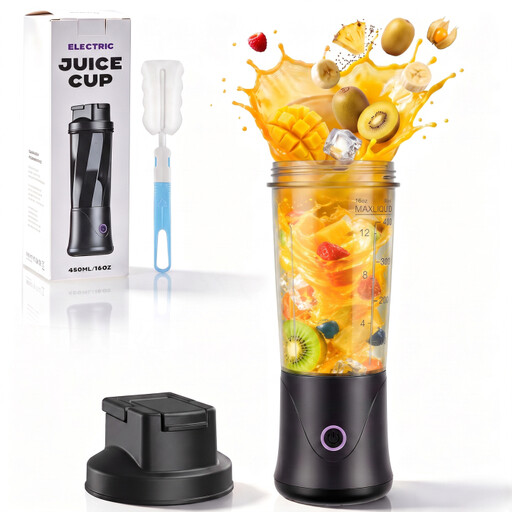
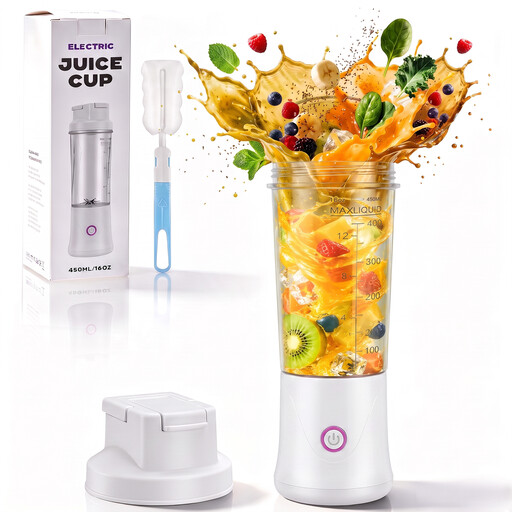
The Joybuy models below include portable cup blenders and a 3-in-1 model with a jug and drinking bottle, all suited to banana smoothies on the go.
 No image available
A good choice if you want to blend your smoothie directly in the cup and take it with you.
The title lists a 710 ml capacity and three automatic programmes. The product description mentions a leakproof lid and dishwasher-safe parts.
 No image available
A good choice if you want to take a smoothie with you in the drinking bottle and also use a jug to make larger batches.
The title also lists a 300 ml chopper cup, 24,000 rpm, six stainless steel blades and BPA-free materials. The product description says bananas are a soft ingredient suited to the first speed setting.
 No image available
A good choice if you want to blend a single portion in the cup and take it with you.
The product description recommends cutting ingredients into smaller pieces and adding enough liquid. It also says removable parts can be cleaned separately.
 No image available
A good choice if you want to make a single smoothie in the blending cup and drink it straight from there.
The product description also lists shakes, fruit drinks and protein blends as suitable drinks.
 No image available
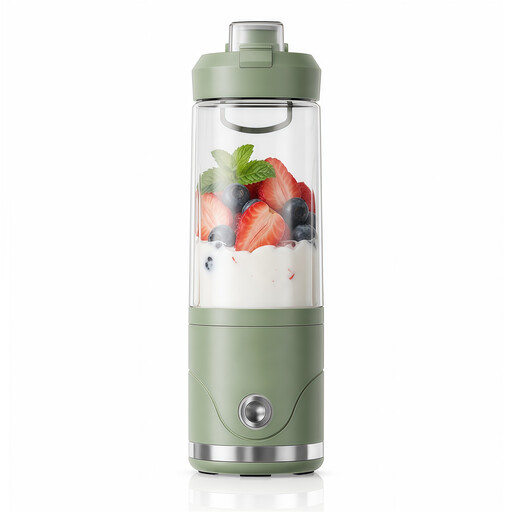
A good choice if you want to blend somewhere without a plug socket and need a cup for a single portion.
The title lists USB-C charging and six blades. The product description lists a 650 ml capacity and a self-cleaning mode.
A tight-fitting lid won’t keep your smoothie chilled. The German Federal Institute for Risk Assessment stresses the importance of keeping perishable foods at the right temperature during transport. For freshly made green smoothies, it recommends keeping them at no more than 7 °C until they’re consumed, ideally on the day they’re made. This isn’t a blanket recommendation for every banana-only recipe. If your smoothie contains perishable ingredients, make sure you have a suitable way to keep it chilled.
It depends on the model and the individual component. Bosch says some parts of the MMB2111S are dishwasher-safe, while Philips lists dishwasher-safe parts for the HR2672/00. Check the instructions for the cup, lid, seals and blades individually. These claims don’t automatically apply to the electrical base.
If your product is faulty, contact the seller. For goods bought from a business in the EU, the legal minimum period is two years from the date you receive them, as explained by Your Europe, the European Union’s information portal. Any additional manufacturer’s guarantee has its own terms and doesn’t replace your statutory rights.