
Lieferung heute & morgen

Qualitätsgarantie

Willkommens-Angebote freischalten: KOSTENLOSE Lieferung | Bis zu 80 % RABATT | Kostenlose 30-Tage-JoyPlus-Testphase
App herunterladen
By the Joybuy Product Recommendation Officer, July 05, 2026
Anyone who has tried making authentic baozi or mantou at home knows the challenge: the steamed buns don't turn out as brilliantly white and fluffy as they do in a restaurant. Often, the outcome isn't down to your folding technique or steaming basket, but a fundamental ingredient—the flour. The right Baozi flour is the key to achieving the perfect texture and colour.
This article serves as your guide. It explains what to look for when selecting flour for steamed buns and presents a curated list of products ideal for making Asian yeast-leavened pastries.
Choosing the right flour can make or break your baozi. Instead of relying on vague promises, it's helpful to focus on a few objective characteristics.
For the characteristically soft and delicate texture of baozi, a flour with a relatively low protein content (typically between 8% and 12%) is ideal. High-protein flours, often used for bread, develop a strong gluten network. This leads to a chewier, more bread-like crumb. A special Chinese wheat flour is often formulated to deliver just the right tenderness for baozi dough.
The brilliant white colour of professionally made mantou and baozi is a hallmark of quality. This is achieved by using flour with a very low ash content. Ash content indicates how many minerals from the grain's bran remain in the flour. A low value means that primarily the pure endosperm was milled, resulting in a lighter flour and, consequently, whiter buns. When you buy Asian flour, look for terms like "Special Flour for Steamed Buns" or "Hong Kong Flour," which often indicate a low ash content.
Some flours are already pre-mixed with leavening agents like baking powder or even yeast. These products, often labelled as "Self-Raising Flour," can simplify the preparation process, as the leavening agents are already included in the correct ratio. Other flours are pure wheat flour, giving you full control over adding yeast, sugar, and other ingredients according to your recipe. The choice depends on your personal preference and the degree of control you want over the dough.
Here is a selection of flours that are well-suited for making Asian steamed buns due to their specific properties.

Why it stands out: This flour is explicitly designed for making Chinese steamed buns and mantou. It consists of 100% wheat flour and is engineered to achieve a consistently soft and fluffy texture. With a protein content of 12.0 g per 100 g, it provides good structure without making the buns tough.
Pros:
Who it's for: Home cooks looking for a reliable base flour for traditional baozi and mantou recipes who want to control the amount of yeast and sugar themselves.
View Product: Paksa Flour for Steamed Bun 1kg
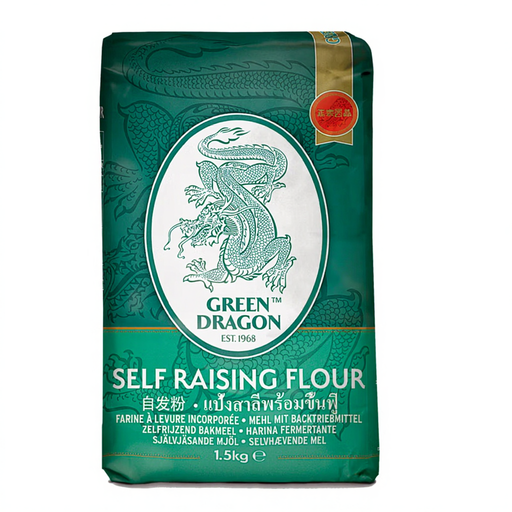
Why it stands out: This flour from the Green Dragon brand is a self-raising flour that already contains a blend of leavening agents. This ensures a reliable and even rise for your dough. It's valued not only for Western-style cakes but especially for Asian steamed buns and light doughs. The protein content is 10.0 g per 100 g, which promotes an exceptionally tender consistency.
Pros:
Who it's for: Anyone who wants to simplify the preparation process and is looking for a flour that guarantees a reliable rise. Ideal for beginners or for recipes that specifically call for self-raising flour.
View Product: Green Dragon Self Raising Flour 1.5kg
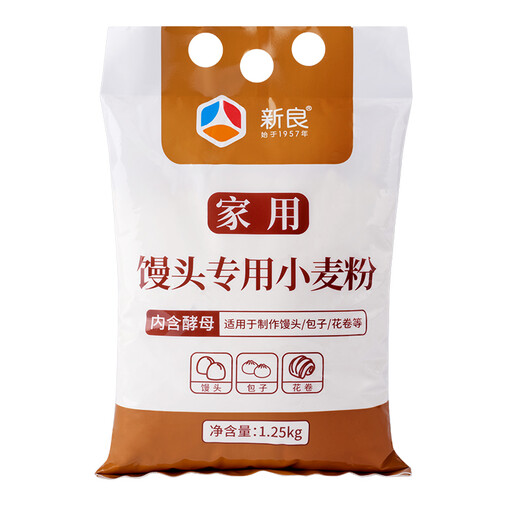
Why it stands out: This speciality flour from Xin Liang goes a step further, containing 1% yeast in addition to the wheat flour. According to the manufacturer, this allows you to skip the second proofing step, significantly speeding up the process. The fine powder has good water absorption and aims for white, airy results with a natural wheat aroma.
Pros:
Who it's for: For cooks seeking a quick and straightforward solution for daily steamed bun preparation who appreciate the convenience of a pre-mixed product.
View Product: Xin Liang Special Wheat Flour for Steamed Buns 1.25kg
The products featured are a targeted selection for making steamed buns. If you're looking for other types of flour for different baking projects or simply want to browse, you can find more alternatives in our broader category.
Explore Our Entire Range of Baking Flour Here
Yes, it's possible to use standard Western flours. However, all-purpose flour (similar to German Type 405) often results in a stickier dough, while bread flour (like German Type 550) can lead to a firmer, less fluffy result due to its higher protein content. The colour will also tend to be less white than when using a special Mantou flour. For a more authentic result, an Asian speciality flour is recommended.
In practice, there is usually no difference. Both baozi (filled steamed buns) and mantou (unfilled steamed buns) benefit from the same type of flour: a wheat flour with low protein and ash content for a soft texture and white colour. The terms are often used interchangeably.
Baozi flour, especially self-raising varieties, should be stored in a cool, dry place. After opening, it is advisable to transfer the flour to an airtight container. This protects it from moisture, which can impair the activity of the leavening agents and cause clumping, and preserves the flour's freshness.