
Lieferung heute & morgen

Qualitätsgarantie
App herunterladen
Kategorien
Choosing the right bar stool is a decision driven by functional requirements and spatial constraints. Whether for a kitchen island, a home bar, or as flexible seating, the correct balance of height, material, and ergonomics is crucial for practical value. This guide analyses the technical criteria to consider when selecting a bar chair or counter stool and presents a selection of models with different specifications.
The functionality of a stool is defined by measurable parameters. Three main factors are decisive here: seat height, material properties, and ergonomic features.
The terms bar stool and counter stool are often used interchangeably, but they refer to models for different counter heights. The optimal seat height ensures a comfortable posture and sufficient legroom.
As a rule of thumb, the distance between the seat surface and the underside of the counter should be 25–30 cm to allow for an ergonomic sitting position. An adjustable-height bar stool offers the greatest flexibility for different users and counters.
The durability and maintenance requirements of a kitchen stool depend directly on the materials used.
For long-term seating comfort, additional features are relevant.
The following models have been selected based on their specific technical properties and design features.
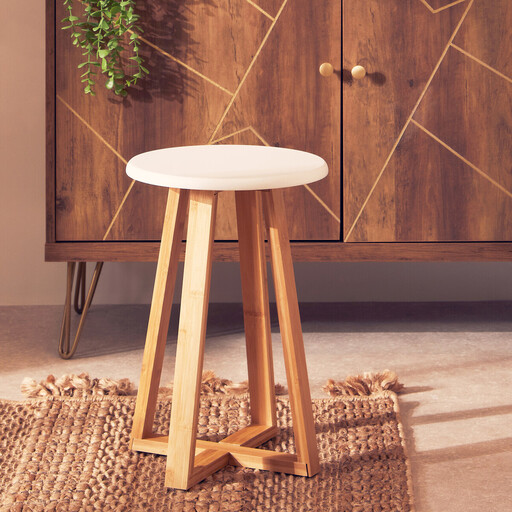
This model stands out for its minimalist design and compact construction. The combination of white lacquered MDF and natural bamboo gives it a Scandinavian-inspired aesthetic. Its low height makes it highly versatile.
This model is suitable as a low stool for occasional seating, as a side table, or as a decorative element. Due to its 43 cm seat height, it is not a classic counter stool but rather a versatile bistro stool for lower tables or as extra seating.
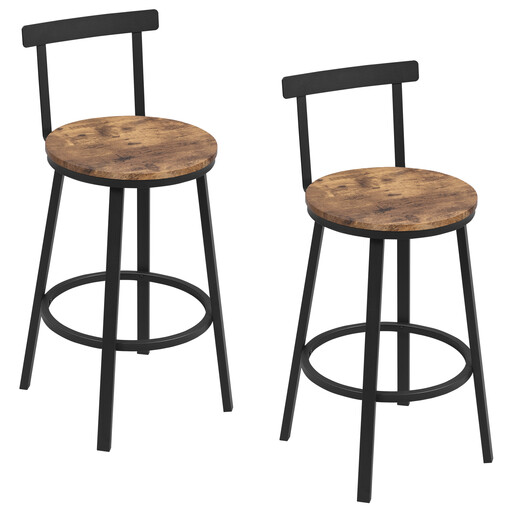
This bar stool set combines a robust steel frame with a seat in a rustic wood-effect finish. The fixed seat height of 71 cm is designed for standard kitchen counters. The integrated backrest and footrest provide basic ergonomic comfort.
This set is a functional solution for households with a kitchen counter of approximately 95–100 cm in height. It is aimed at users looking for a durable, low-maintenance bar stool set in an industrial style with a fixed height and basic back support.
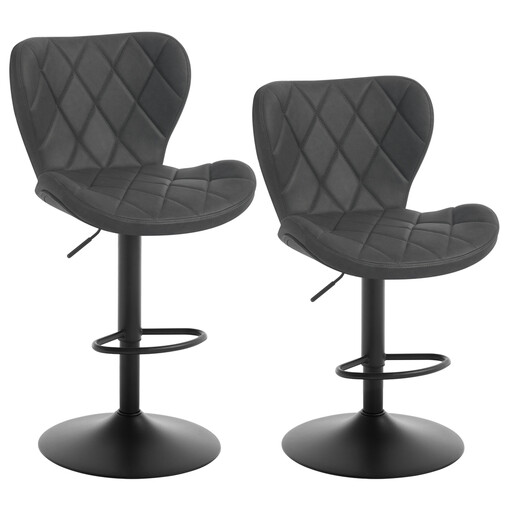
This model offers maximum flexibility with its stepless height adjustment and 360° swivel function. The padded faux leather seat and full backrest are designed for a high degree of seating comfort.
This adjustable-height bar stool is ideal for users who need an adaptable seating solution. It is suitable for both standard counters and taller bar tables. The comfortable padding and high backrest make it an excellent choice for extended periods of sitting in the kitchen, dining area, or a bistro.
If the featured models do not exactly match your requirements for design, material, or function, a broader selection can often provide the right solution. You can find a variety of other designs and specifications in our main category for Kitchen Stools.
1. How high should a bar stool be? The ideal seat height depends on the height of your counter or table. Measure the height of the countertop and subtract 25–30 cm. For a 90 cm high kitchen counter, a seat height of about 60–65 cm is appropriate. For a 110 cm high bar, you will need a seat height of about 80–85 cm.
2. What is the difference between a bar stool and a counter stool? A counter stool is designed for standard kitchen counters (approx. 90 cm high) and has a seat height of about 60–65 cm. A bar stool is intended for taller bar counters (approx. 105–110 cm) and has a seat height of about 75–80 cm.
3. How much weight can a bar stool support? The weight capacity varies depending on the model and construction. Most commercially available bar chairs are designed to support a load between 100 kg and 150 kg. Precise details on the maximum load capacity can be found in the manufacturer's technical specifications. It is important not to exceed this limit.