
Lieferung heute & morgen

Qualitätsgarantie

Willkommens-Angebote freischalten: KOSTENLOSE Lieferung | Bis zu 80 % RABATT | Kostenlose 30-Tage-JoyPlus-Testphase
App herunterladen
A bar stool should suit your kitchen island, home bar or café, while being safe and comfortable to use. In practice, poor purchases are often down to unsuitable dimensions, materials that are difficult to care for or an extra feature that has been overvalued – rather than the design. Checking a few technical details before you buy can help narrow down your options considerably.
Some product descriptions give the height of the entire bar stool rather than its seat height. What matters when choosing is the space between the seat and the table top or counter. As a general guide:
An adjustable-height bar stool can accommodate different table heights. However, check that its stated adjustment range is suitable for the actual height of your breakfast bar.
A swivel bar stool lets you change direction without moving the frame. This is handy at a kitchen island or in a café, but it doesn’t tell you on its own how comfortable the stool is. Also check:
Velvet can feel comfortable, but depending on its colour and finish, dust or stains may be more noticeable in everyday use. If the stool will be used frequently at home, check the care instructions before buying.
With a bar stool set, it’s important to check whether the maximum weight capacity applies to each stool or to the set as a whole. A clear figure such as ‘120 kg per stool’ is more useful for planning than a general description such as ‘sturdy’. The stool’s own weight, base size and number of legs also affect how easy it is to handle.
First, measure the height of your table or counter. Then compare the seat height, overall width and seat depth. If you’re placing several kitchen bar stools side by side, also consider the distance between seats. Armrests can make a stool more comfortable, but they take up more room and may stop it sliding under some worktops.
In a small kitchen, a compact breakfast bar stool without armrests may be a good choice. For longer periods of sitting, a bar stool with a backrest and an integrated footrest is often more practical. A bar stool with a footrest can take the pressure off your legs, provided the footrest is at a suitable height.
Choose a material that suits where and how you’ll use the stool:
For restaurants and cafés, easy-clean surfaces, a stable base and a clearly stated weight capacity are particularly important. For home use, you may want to give more weight to the material, how it fits your room and how long you expect to sit on it.
Even a pre-assembled bar stool should be checked before first use for loose fittings, wobbly legs and an uneven surface beneath it. On adjustable models, check the gas lift, seat fixings and adjustment mechanism regularly. Bar stools are not designed to be used as steps or stepladders. Follow the manufacturer’s safety instructions.
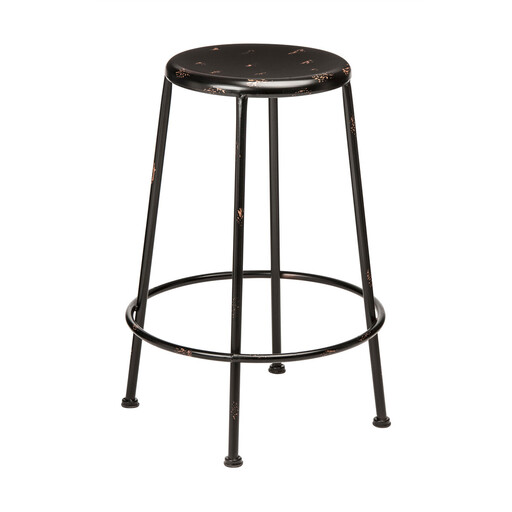
Why this product suits this profile: This compact metal bar stool is ideal if you’re looking for a simple seat for the kitchen, home bar or occasional use.
The product details clearly state the material, dimensions and integrated footrest. This makes it easier to judge whether it will fit than a description focused purely on design.
Frame made from 100% iron, 70 cm high, with a four-legged design and footrest. Wipe the surface clean with a soft cloth.
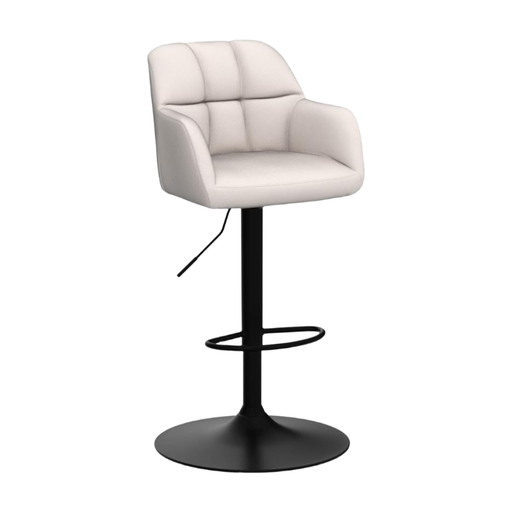
Why this product suits this profile: This set combines velvet upholstery, a backrest, armrests, adjustable height and a swivel function – ideal if you’re looking to bring several comfort features together.
The seat height adjusts from 65 to 87 cm, so you can check whether it will fit your table before buying.
360-degree swivel, footrests and a stated weight capacity of 120 kg per stool. The set includes two bar stools.

Why this product suits this profile: Two adjustable seats are well suited to kitchen islands, home bars, cafés or other areas where several people sit regularly.
The care instructions recommend spot-cleaning with a soft cloth and mild detergent. They also advise checking the fittings and height-adjustment mechanism regularly.
Velvet upholstery, a low backrest, armrests, 360-degree swivel and adjustable seat height from 65 to 87 cm. The product details state a weight capacity of 120 kg per stool.
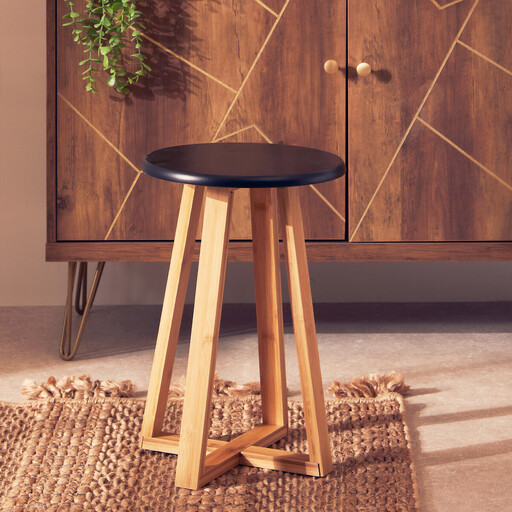
Why this product suits this profile: At 43 cm high, this model is better suited to low seating areas, side tables or occasional seating than to a conventional high counter.
Its compact height and dimensions of 30 × 30 × 43 cm are clearly stated. This helps you avoid accidentally buying a low stool for a high kitchen counter.
Bamboo MDF construction, a black and natural finish, and a stated weight capacity of 50 kg. Wipe clean with a soft cloth.
We’ve put together a complete, regularly updated list of products that meet these strict selection criteria and the safety requirements applicable in the EU.
Measure from the finished floor to the underside of the worktop. Leave around 25 to 30 cm between the seat and the worktop. For a kitchen island around 90 cm high, a model with a seat height of roughly 60 to 70 cm is often a good fit. Adjustable models give you more flexibility.
A backrest can provide extra support when you’re sitting for longer periods. However, seat height, seat depth, padding and a footrest are still important. In a small room, also check whether the stool can slide fully under the worktop with the backrest in place.
Velvet should generally be cleaned gently with a soft brush or a suitable upholstery attachment. Treat stains locally and follow the manufacturer’s instructions. Excessive moisture, harsh cleaning products and prolonged exposure to direct sunlight can damage the finish or affect the colour.