
Lieferung heute & morgen

Qualitätsgarantie

Willkommens-Angebote freischalten: KOSTENLOSE Lieferung | Bis zu 80 % RABATT | Kostenlose 30-Tage-JoyPlus-Testphase
App herunterladen
Stools and benches are more than just simple seats. They are versatile multitaskers that can create storage, serve as a flexible surface, or add the perfect finishing touch to a room. However, the vast selection also comes with potential pitfalls. Many buyers only realise after a few months that their new piece of furniture wobbles, the upholstery is wearing out, or its functionality doesn't hold up in daily life. This guide will help you navigate common purchasing traps and make an informed decision.
Before you invest, you should be aware of the three most common issues that lead to dissatisfaction:
To avoid the problems mentioned above, focus on three objective criteria. These will help you assess a product's quality, independent of marketing promises.
The stability of a stool or bench is directly dependent on its frame material.
The specified static load capacity is a key indicator. It tells you how much weight the furniture can safely support in a stationary state. For a single stool, this value should be at least 100 kg, and correspondingly higher for a bench. For an upholstered stool, the quality of the foam is crucial. High-density foam provides better seating comfort and retains its shape for longer.
Measure carefully before you buy. A footstool should match the height of your sofa or armchair's seat. A stool for a dining table needs a seat height of about 45–48 cm. For children, models like a grow-with-me children's stool are ideal, as the seat height can be adjusted. For a storage bench, the specified volume in litres is a useful point of comparison.
Here are some models that are well-suited for specific use cases, based on objective features.
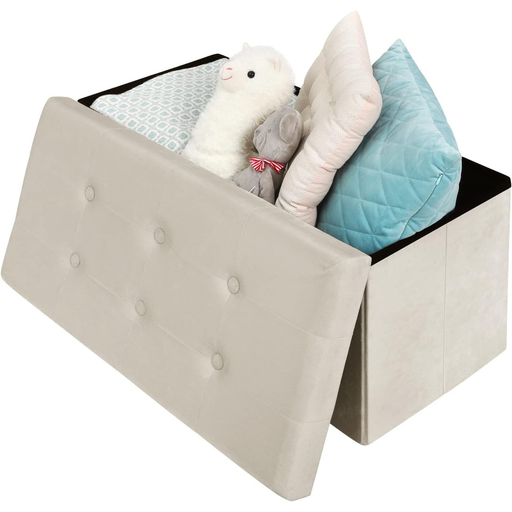
Why It's a Match: Perfect for anyone seeking a multifunctional solution. This bench combines comfortable seating with a generous 80 litres of storage space—ideal for blankets in the living room or shoes in the hallway.
The E1-grade MDF construction and a specified static load capacity of 300 kg counteract the pitfall of an unstable structure. Its foldable design also makes it practical and versatile.
A combination of high load capacity, large storage volume (80 L), and space-saving foldability when not in use.
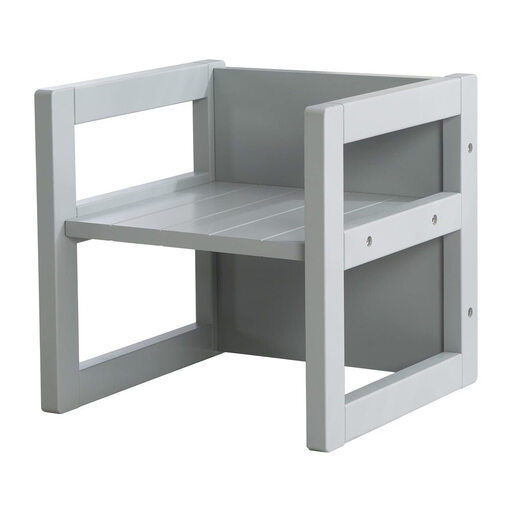
Why It's a Match: This stool is a long-term investment for a child's room. By simply turning the stool, you can set three different seat heights (14 cm, 18 cm, 29 cm), allowing it to grow with your child.
The grow-with-me design eliminates the need to constantly buy new furniture. The MDF construction and rounded edges are designed for safety and use by children.
3-in-1 function with three adjustable seat heights, suitable for toddlers up to primary school age. The load capacity is specified at approx. 80 kg.
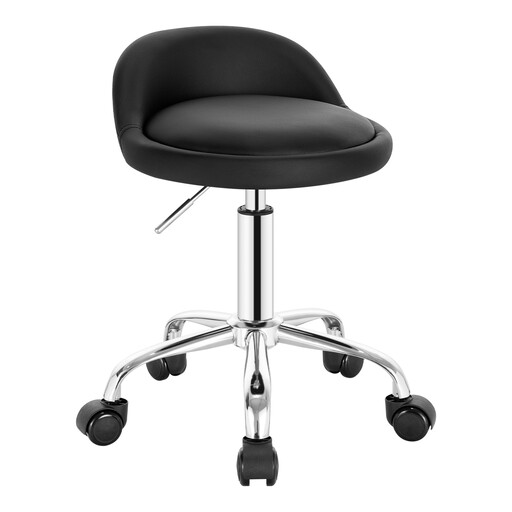
Why It's a Match: This rolling stool is designed for dynamic environments like a home office, studio, or salon. The stepless height adjustment and 360° swivel offer maximum flexibility at work.
The pitfall of impractical design is bypassed with a gas lift for height adjustment (47-59 cm) and smooth-running castors. The chrome-plated steel base and 120 kg load capacity ensure the necessary stability.
High mobility thanks to a 5-star base with castors and stepless height adjustment. The faux leather is also easy to clean.
Whether it's an elegant **armchair with ottoman** for your reading nook, a practical **vanity table with stool**, or a unique **designer stool**—the selection is vast. We have compiled a current list of products that stand out based on clear criteria.
Pay attention to the static load capacity listed in the product description. This value indicates how much weight the furniture can safely support when stationary. For a stool regularly used by adults, a value of at least 100–120 kg is recommended. For benches, the value should be correspondingly higher, ideally over 200 kg if multiple people will be sitting on it.
The ideal height depends on its intended use. As a rule of thumb:
Yes, as long as they are designed for that purpose. Models with a solid frame made of MDF or solid wood and a clearly stated, high static load capacity (e.g., 300 kg like the featured WOLTU bench) are explicitly designed as seating and offer a safe and stable place for adults to sit. Always check the manufacturer's specifications for maximum load capacity.