
Lieferung heute & morgen

Qualitätsgarantie

Willkommens-Angebote freischalten: KOSTENLOSE Lieferung | Bis zu 80 % RABATT | Kostenlose 30-Tage-JoyPlus-Testphase
App herunterladen
A jar of Barilla Pesto can make a quick lunch much easier: cook the pasta, stir in the pesto and serve. Even so, it’s worth checking the variety, ingredients and pack size before you buy. Words such as ‘Italian’, ‘creamy’ or ‘traditional’ don’t tell you on their own whether a product suits your dietary requirements and the dish you have in mind.
Green pesto can contain rocket, chilli, lemon, pistachios or other ingredients as well as basil. If you’re after the classic herby flavour, check the exact variety name. Pesto alla Genovese usually contains basil, cheese, oil and nuts, though recipes can vary.
The tomato content can vary considerably in Pesto Rosso and pesto with tomatoes. So check the ingredients list for the position and percentage of tomato paste, tomato pulp or sun-dried tomatoes. A higher tomato content doesn’t automatically mean a particular flavour quality, but it does help you make an informed comparison.
These claims describe different properties. Gluten-free pesto can still contain milk or cheese, and vegetarian pesto isn’t automatically vegan. With vegan pesto, also check the ingredients and allergen information for milk, whey or cheese. If you have an allergy, always follow the information on the jar you receive.
Common pesto ingredients include oil, herbs, vegetables, cheese and nuts. Pay particular attention to:
Unopened Barilla Pesto in a jar should generally be stored in a cool, dry place. For several varieties, the product information says to refrigerate after opening and use within five days. So it’s worth choosing a jar size that suits how much your household is likely to use.
Green basil pesto is a good choice for classic pasta dishes. Red varieties with tomatoes work well with more robust dishes, bruschetta or vegetables. Ricotta pesto can offer a creamier texture, while chilli varieties add a spicy kick.
Pesto isn’t usually cooked separately for long. Instead, stir it straight into the hot pasta after draining. A tablespoon or two of pasta water can loosen the sauce and help it coat the pasta evenly.
Ridges, spirals and tubes hold sauce in different ways. Fusilli and Penne Rigate cling to pesto thanks to their shape and texture. Ridged Tortiglioni also work well with thicker sauces. A Pasta and Pesto Value Pack combines 500 g of pasta with around 190 to 200 g of pesto. It’s handy for several portions, as long as the included flavour suits your household.
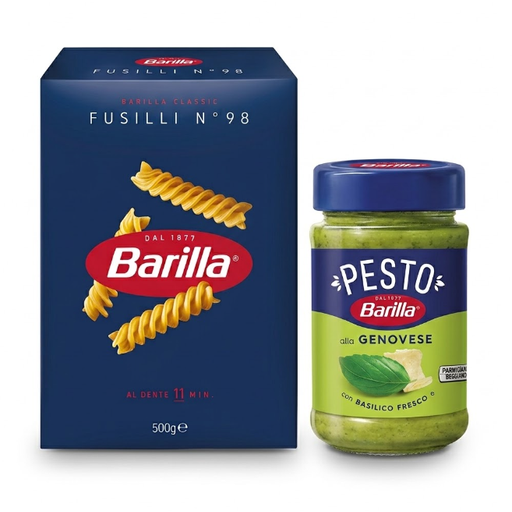
Why this product suits you: Pasta and green pesto come together in one pack, so there’s less to choose from at the supermarket. It’s a good option for households looking for an easy meal with a classic herby flavour.
The pack clearly shows which pasta and pesto variety it contains, helping you avoid accidentally choosing a flavour that’s very different from what you had in mind.
500 g of Fusilli with 190 g of Pesto alla Genovese; the spiral shape holds sauce well.
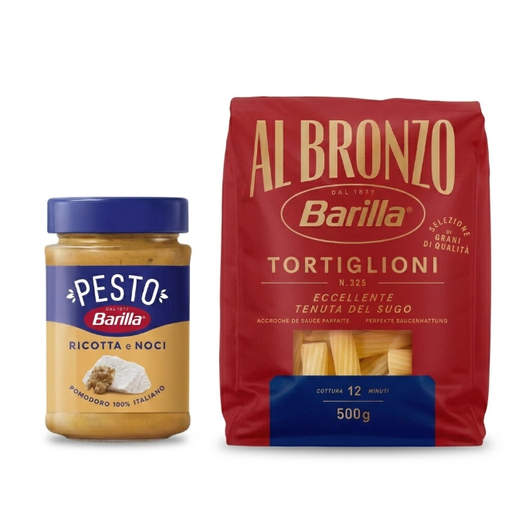
Why this product suits you: This combination pairs Tortiglioni made from 100% durum wheat semolina with a creamy ricotta and walnut pesto. It’s for anyone who pays attention to pasta shape, bite and sauce texture.
The product description specifies the bronze-drawn finish, ridged tube shape and cooking time of around twelve minutes, making key selection details easy to check.
Ridged Tortiglioni with 500 g of pasta and 190 g of ricotta and walnut pesto; contains milk and nuts.
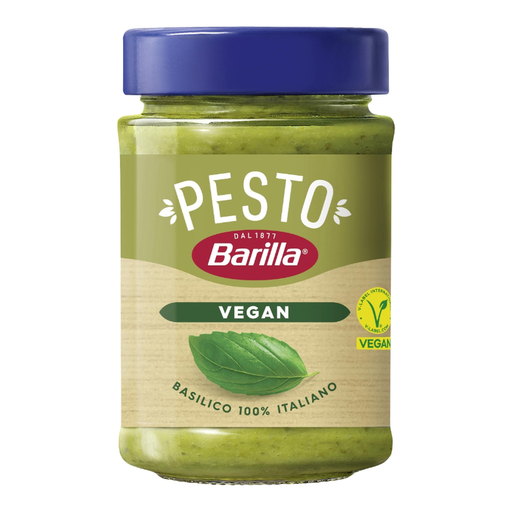
Why this product suits you: The recipe is described as vegan, gluten-free and lactose-free, making it a suitable choice for households looking to avoid cheese and milk ingredients.
The stated properties reduce the risk of buying a classic pesto containing milk or cheese. If you have an allergy, the packaging information remains essential.
195 g jar; described as vegan, gluten-free and lactose-free, with 35.6% basil according to the product information.
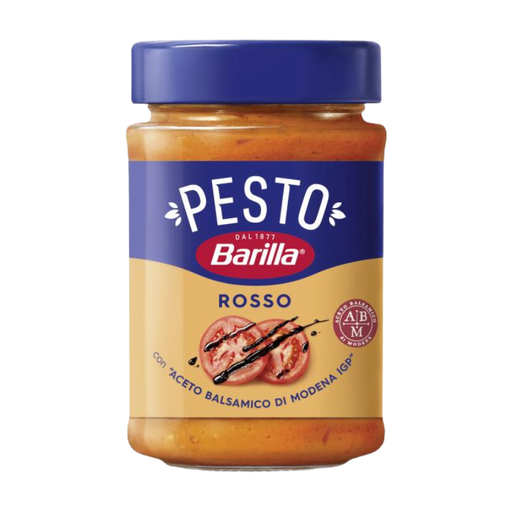
Why this product suits you: According to the product information, this red variety contains tomato pulp, tomato paste and Aceto Balsamico di Modena PGI. It goes well with pasta, bread and Mediterranean vegetable dishes.
The specific ingredients make its tomato flavour clear, rather than relying on the word ‘red’ alone.
200 g pack; according to the product information, it contains 37% tomato pulp and 15% concentrated tomato paste.
We’ve put together a complete, regularly updated list of products that meet these strict selection criteria and fully comply with the safety regulations in force in the EU.
For a quick meal, pesto is usually mixed with 120 to 150 g of cooked pasta per portion. The exact quantities depend on the pasta shape, how intense you want the flavour to be and the size of the jar. Stir the pesto well, then mix it straight into the hot pasta. There’s no need to heat it for long, especially if you want to preserve the delicate herby flavours.
Once opened, keep the jar in the fridge. Using a clean spoon, sealing the lid tightly and following the use-by guidance on the label can help prevent unnecessary food waste. Take particular care to read the allergen information on products containing milk, ricotta, mozzarella or nuts.
Several of the pesto varieties mentioned are labelled gluten-free. However, that doesn’t automatically apply to a Barilla Pasta and Pesto set, as the pasta it contains may include gluten from durum wheat. So check the pesto and pasta separately.
For several products, the recommendation is to refrigerate the opened jar and use it within five days. Always follow the information on the individual label, as recipes and packaging can vary.
Fusilli, Penne Rigate and Tortiglioni have ridges or grooves that can help creamy and chunky sauces cling to the pasta. For a classic green dish, choose Pesto alla Genovese; Pesto Rosso with tomatoes offers a bolder, Mediterranean flavour.