
Lieferung heute & morgen

Qualitätsgarantie

Willkommens-Angebote freischalten: KOSTENLOSE Lieferung | Bis zu 80 % RABATT | Kostenlose 30-Tage-JoyPlus-Testphase
App herunterladen
By the Joybuy Product Recommendation Officer, August 29, 2026
The desire for café-quality coffee at home has caused demand for a great Barista Oat Milk to skyrocket. However, the market is crowded, and not every product labelled "Barista" delivers the desired result. Many coffee lovers invest in expensive espresso machines and high-quality beans, only to be disappointed by an unsuitable milk alternative.
Before you buy your next multi-pack, you should be aware of three common pitfalls that lead to unsatisfying results:
This guide explains the crucial parameters for selection and presents a few options for different user profiles.
To avoid the problems mentioned above, a closer look at the product's characteristics is essential. Three technical factors are decisive for the performance of a barista oat drink.
The ability to form a stable and fine-pored microfoam depends directly on the drink's composition.
The ingredient list reveals how well a product is optimised for use in coffee. Look for the following components:
The goal of a good lactose-free barista milk alternative is to complement the coffee, not dominate it. A neutral, slightly sweet profile that doesn't taste too strongly of cereal allows the character of the coffee bean to shine through. Products developed specifically for baristas are typically balanced in flavour to harmonise with a wide variety of coffee roasts.
The choice of the right product depends on your personal priorities—whether taste, ingredients, or value for money are most important.
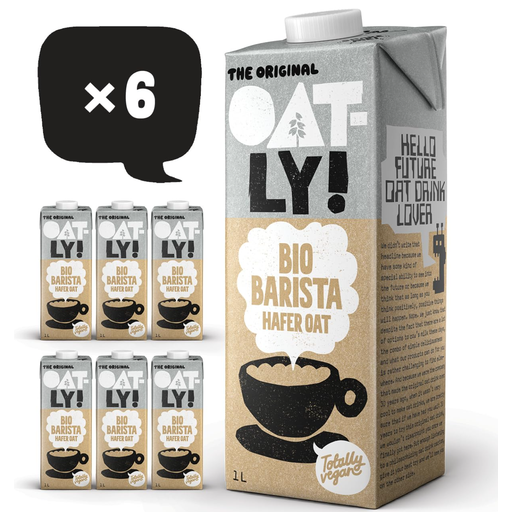
Why This Fits Their Persona: Ideal for users who value high-quality organic ingredients and a pure, subtle flavour that allows the coffee bean's aromas to take centre stage.
The special barista formula creates a stable, fine-pored microfoam, avoiding the "big bubble" foam. Its mild taste doesn't overpower the coffee.
Ingredients from organic farming; reliable foam creation for latte art; neutral flavour profile.
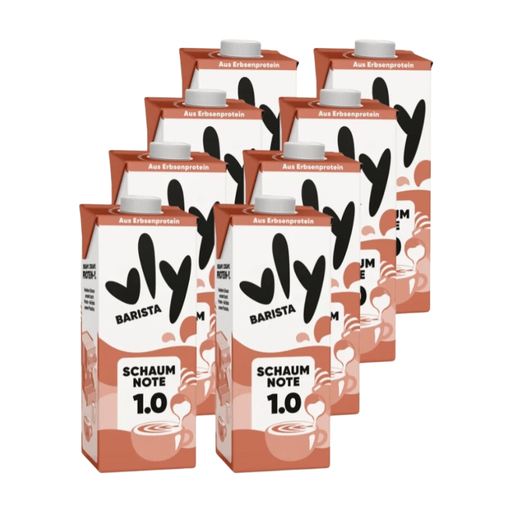
Why This Fits Their Persona: Suitable for users who focus on specific nutritional profiles, such as higher protein and less sugar, and who are looking for a soy-free and gluten-free option.
The pea protein base provides excellent foam stability without the typical cereal aftertaste. The formula is designed for neutrality and stability in coffee.
Pea protein-based (2.0g protein/100ml); soy-free, gluten-free, and nut-free; low in sugar according to the manufacturer.
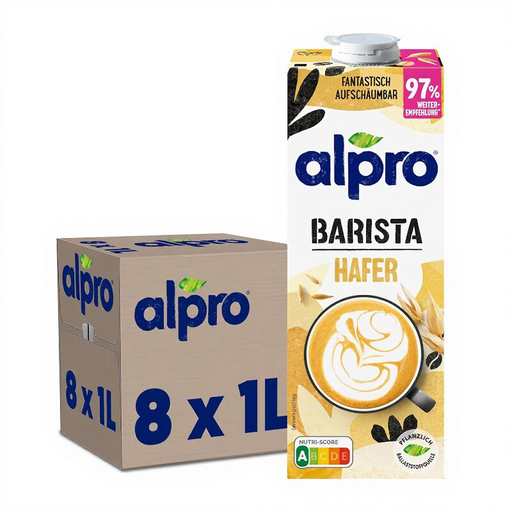
Why This Fits Their Persona: Perfect for daily use and for households with high consumption. Offers reliable performance and good value for money, especially when purchased in a multi-pack.
As an established product developed in collaboration with baristas, it offers consistent frothing performance and reliably avoids curdling in coffee.
Good value for money in the 8-pack; proven and consistent quality; widely available and easy to source.
We have compiled a complete, up-to-date list of products that fully meet these strict selection criteria and local regulations.
The most common cause is temperature. For optimal foam, the oat milk should be chilled before frothing. Heat it to a maximum of 65°C during the frothing process. A higher temperature can destroy the protein structure and prevent foam from forming. Also, shake the carton vigorously before each use, as fat and other components can settle.
In principle, most barista editions are designed for this purpose. However, the quality of the microfoam needed for detailed latte art can vary. Products with a balanced ratio of fat (approx. 3%) and protein, as well as the right stabilisers, are generally more suitable as they produce a finer, more stable, and glossier foam.
After opening, the carton should always be kept tightly sealed in the refrigerator. Follow the manufacturer's instructions on the packaging, but as a rule, the contents should be consumed within 5 to 7 days to ensure freshness and optimal frothing properties.