Bark explorers
If you want to capture fine patterns and small features in detail, compare close-up modes, reproduction ratios and the room available for lighting. For guidance, see the advice from OM Digital Solutions, Nikon, Canon and Sony.


For spontaneous close-ups without changing lenses, a compact camera with a dedicated close-up mode is a good option to explore. If you want tiny bark details to fill the frame, consider a system camera with a compatible macro lens. A travel zoom may be more practical if you also want to photograph whole trees and landscapes, and its close-up capabilities are good enough for bark. Don’t compare focus distance alone: look at the framing you can achieve and how much room you’ll have for lighting. Sony explains that a 1:1 reproduction ratio means the subject is reproduced life-size on the sensor.
If you want to capture fine patterns and small features in detail, compare close-up modes, reproduction ratios and the room available for lighting. For guidance, see the advice from OM Digital Solutions, Nikon, Canon and Sony.
If you want to take photos on the go without changing lenses, look for a compact body and check the conditions it is designed to withstand. OM Digital Solutions and PENTAX, via Ricoh Imaging Europe, describe these features for their respective compact cameras.
If you want to photograph whole trees and landscapes as well as bark, a versatile range of framing options may matter more than maximum magnification. Panasonic and Sony outline features to consider for travel and close-up photography.
Choosing a camera for bark photography on a countryside break depends on whether you prioritise fine detail, easy photography on the go, versatile holiday subjects or control over sharpness.
A good fit if: you want to take spontaneous bark photos on walks without changing lenses. OM Digital Solutions specifies close-ups from as near as 1 cm and waterproofing to 15 m for the Tough TG-7; Ricoh Imaging describes a macro ring light on the PENTAX WG-8.
The trade-off: A short focusing distance doesn’t prove that the camera offers a 1:1 reproduction ratio. dkamera.de considers the TG-7’s detail reproduction adequate at ISO 100 and ISO 200; this assessment doesn’t automatically apply to the WG-8.
A good fit if: you want tiny bark features to appear large in the frame, or you already own a compatible camera body. Nikon specifies a 1:1 reproduction ratio for the NIKKOR Z MC 50mm f/2.8; Canon gives the RF 100mm F2.8L Macro IS USM a maximum magnification of 1.4x.
The trade-off: The body and lens need to be compatible, and carrying both adds to your walking kit. Nikon states that at the closest focusing distance, there is about 5 cm between the lens and subject.
A good fit if: you mainly want one camera for trees, landscapes and other holiday subjects. Panasonic specifies a 30x optical zoom for the LUMIX DC-TZ99, equivalent to 24–720 mm in 35 mm format.
The trade-off: The zoom range doesn’t tell you how large a small bark detail will appear in the frame. Check the close-up mode and framing at the zoom setting you’ll need.
| What matters | What to check before buying | Who is this important to? |
|---|---|---|
| Capturing fine bark details at a large size | Compare the framing you can achieve and, where specified, the reproduction ratio of the camera and lens combination. A short focusing distance alone doesn’t prove that you can achieve 1:1 magnification. | If I want small bark patterns to appear as large as possible, framing matters more to me than a single focus distance. Around 37% of consumers put this focus on detail first. |
| Easy photography on the go | Check the protection rating for the complete camera body and whether the built-in lens can focus close enough. Factor any extra lighting into your packing plans, too. | If I want to take photos on walks in changeable weather without changing lenses, I look for body protection and a camera that’s easy to pack. Around 27% of consumers prioritise this combination. |
| Photographing bark and holiday subjects | Check the optical focal-length range, then separately check which close-up shots are possible at the zoom settings you need. | If I want to show the whole tree and landscape as well as the bark, I need a range of framing options. Around 18% of consumers put versatile holiday subjects first. |
| Controlling sharpness and light | Check whether you can position light precisely and whether a feature such as Focus Stacking could work for your subject. Panasonic lists Focus Stacking for the DC-TZ99. | If I want the texture of uneven bark to look sharp even in low light, I plan for both shooting distance and lighting. Around 18% of consumers prioritise control over sharpness and light. |
Focusing distance and reproduction ratio describe different things. A short minimum focusing distance doesn’t automatically tell you how large the bark subject will appear on the sensor.
If tiny details are your main subject, compare the framing on the specific model and its stated reproduction ratio. Sony explains what 1:1 means; OM Digital Solutions specifies a 1 cm minimum focusing distance for the TG-7.
A macro lens such as the NIKKOR Z MC 50mm f/2.8 needs a compatible camera. Without a compatible body, you can’t use the lens as a standalone camera.
Check the mount and what’s included with the specific version of the product before choosing a system.
Protection ratings and detail reproduction are separate features. dkamera.de considers the OM SYSTEM Tough TG-7’s detail reproduction adequate at ISO 100 and ISO 200; this doesn’t support a general claim about all rugged compact cameras.
Choose body protection to suit the conditions you’ll use the camera in, and plan for lighting or a stable setup separately.
The Tough TG-7 is a rugged compact camera for spontaneous close-ups on walks.
The WG-8, sold by Ricoh Imaging, combines a rugged compact body with a built-in zoom and macro ring light.
The LUMIX DC-TZ99 is aimed at travellers who want to capture a variety of holiday subjects without changing lenses.
The NIKKOR Z MC 50mm f/2.8 is a macro lens option for compatible mirrorless Nikon Z cameras.
The RF 100mm F2.8L Macro IS USM is a macro lens option for compatible Canon RF cameras.
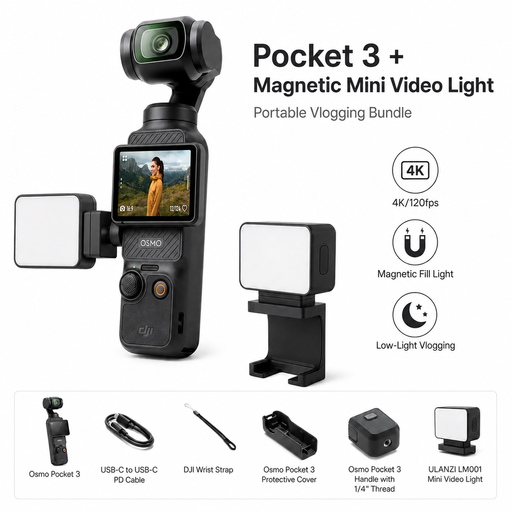
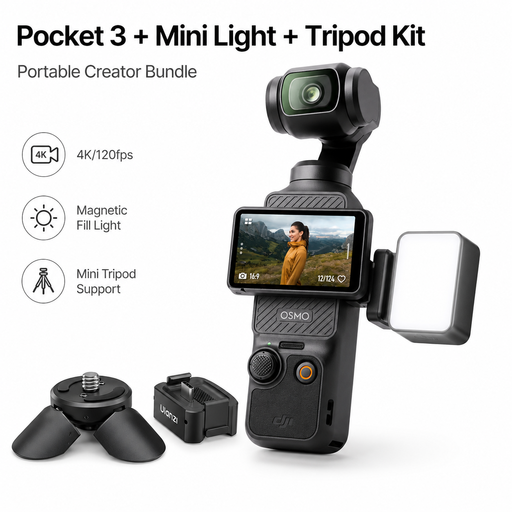
The following Joybuy offers are DJI Osmo Pocket 3 bundles for travel and vlogging. Check separately whether the close-up distance and framing suit your bark subjects.
 No image available
The product name describes this bundle as suitable for travel and content creation. Before choosing it, check that its framing at close range will work for your bark subjects.
The listing mentions a 1-inch CMOS sensor, 4K/120fps, a 3-axis gimbal and a magnetic fill light.
 No image available
The product name describes this bundle as suitable for travel and content creation. Check that the close-up distance and framing are good enough for the bark textures you want to photograph.
The listing mentions a 1-inch CMOS sensor, 4K/120fps, a 3-axis gimbal, a magnetic fill light, an adapter and a mini tripod.
No, not if you mainly want to show larger areas of bark or the whole tree. For tiny details that fill the frame, reproduction ratio is a useful feature to compare. Sony explains that 1:1 means a life-size image on the sensor.
A macro lens is a good option if you want small bark features to appear large and have a compatible camera body. A travel zoom can capture a variety of subjects without changing lenses, but its zoom range alone doesn’t tell you how well it can capture tiny details at close range.
After taking a photo, check which areas of the bark are sharp. A smaller aperture can increase depth of field, but lets less light reach the sensor. Extra lighting or a stable camera position can therefore be useful. Canon Academy explains how this works, while Nikon recommends using a stable setup and small LED lights for macro photography.
The lens must fit the camera body’s mount. Also check whether the specific offer includes both the body and lens: a macro lens on its own isn’t a camera.
According to information from the European Union, purchases covered by the rules and made from a retailer come with a legal guarantee of at least two years from the date you receive the goods. This is separate from a voluntary manufacturer’s warranty.
For online purchases covered by the rules and made from a retailer, you generally have 14 days from delivery to cancel. This right doesn’t apply to purchases from private individuals, so check who the seller is before placing your order.