Small batches of pesto
If you mainly make small amounts of pesto, choose a container that suits the quantity so you don’t have to use a large appliance for every batch.


For small batches of pesto, a compact chopper is a natural place to start. If you also want to purée soups, you could choose a hand blender set that actually includes a chopper. The container size, speed control and included accessories should suit the quantity you want to prepare and how you prefer to use the appliance. The Federal Centre for Nutrition recommends stirring in the olive oil after chopping the other ingredients. If you’re eating later, store your portion hygienically and keep it chilled: the German Federal Institute for Risk Assessment advises against storing homemade fresh herbs in oil for later use.
If you mainly make small amounts of pesto, choose a container that suits the quantity so you don’t have to use a large appliance for every batch.
If mealtimes are staggered, plan to keep the later portion chilled and hygienically stored. The German Federal Institute for Risk Assessment advises against storing fresh herbs in oil for later use.
If you want to use one appliance not only for pesto but also to chop other ingredients or purée food, check what comes with the specific model variant.
Start by considering portion size and any other uses; controls, cleaning and storage are separate factors to think about.
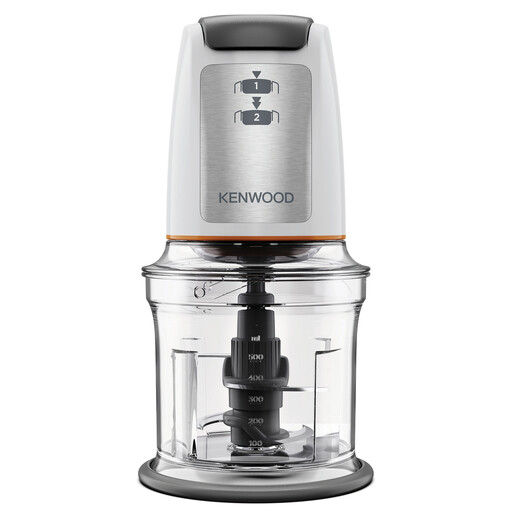
A good fit if: You mainly process small amounts of basil, nuts and cheese for one or a few meals. Kenwood lists a 500 ml capacity and two speeds for the CHP61.100WH; WMF lists a 0.3 l capacity for the KÜCHENminis.
The trade-off: A smaller container limits the amount you can process at a time. Manufacturer specifications do not establish an independent comparison of pesto quality.
A good fit if: You regularly purée other foods as well as making pesto, and want a set with a suitable chopper. Braun lists a 350 ml herb chopper for the MQ 7045 X; according to the manufacturer, the Bosch MSM6M831 includes a 500 ml chopper.
The trade-off: A hand blender on its own is no substitute for a chopper. Check the full model number and what’s included.
A good fit if: You genuinely prepare larger quantities or have other blending tasks to tackle. Philips lists a 2 l glass bowl for the HR1503/00 chopper and a 2 l jug for the HR3030/00 blender.
The trade-off: A larger capacity isn’t automatically an advantage for a small batch of pesto. Choose according to the quantities you actually prepare and how you’ll use the appliance.
| What matters when buying | What to check | Who it matters most to |
|---|---|---|
| Getting the quantity right | Compare your usual batch size with the container capacity and check whether the set includes a chopper. | If I’m making just a small amount of pesto for one or a few meals, I want a container that suits the quantity. Around 36% of consumers prioritise being able to process small quantities. |
| A portion for later | Plan suitable separate storage and keep perishable food chilled until you eat it; a blender is not a preserving appliance. | If people eat at different times, the later portion needs to be kept chilled and hygienically stored. Around 29% of consumers are primarily concerned with safely handling food for later meals. |
| Texture and control | Check the speed or pulse controls on the specific model. The Federal Centre for Nutrition recommends stirring in the olive oil after chopping the other ingredients. | If I want to control how chunky or smooth the pesto is, it’s important to have control over the chopping process. Around 21% of consumers prioritise controlling the texture of their pesto. |
| Accessories and cleaning | Check the full model variant, the accessories included and the cleaning instructions for each part. | If I want to use the appliance for other kitchen tasks too, I need to know which attachments are actually included and how to care for them. Around 14% of consumers focus on versatility and cleaning. |
Preparation advice is not a guarantee of safety. The Federal Centre for Nutrition describes adding oil to the surface as one option for longer storage; however, the German Federal Institute for Risk Assessment advises against storing homemade fresh herbs in oil for later use.
If you’re eating at different times, make only what you need and keep the later portion chilled until it’s time to eat. Don’t assume that a layer of oil guarantees a particular storage time.
Accessories for sets such as the Braun MQ 7045 X and Bosch MSM6M831 are listed by model. The product family name alone doesn’t tell you which attachments are included in the variant you’ve chosen.
Before buying, compare the full model number with the details on the specific pack.
If the attachment you need isn’t included, you may need a different set or to buy an additional accessory.
Manufacturer specifications for power and container size do not, by themselves, prove that one appliance makes pesto with a better texture than another. A large container may also be unnecessary for small batches.
First consider your portion size, the level of control you want and any other uses. Then compare the specifications for the specific model variant.
The Easy Chop CHP61.100WH is a standalone mini chopper for smaller quantities.
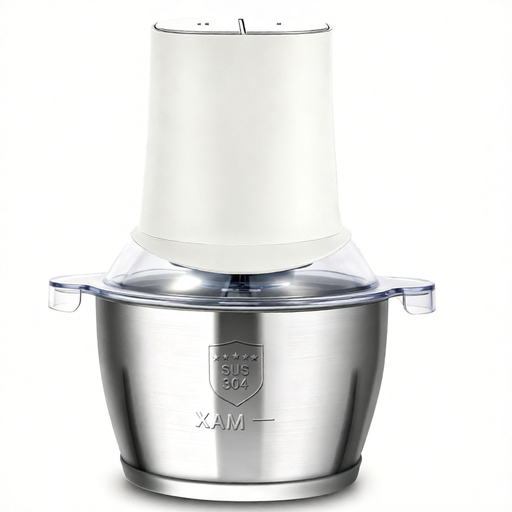
With a capacity of 0.3 l, the KÜCHENminis chopper is a compact option for small quantities.
The MultiQuick 7 MQ 7045 X set combines a hand blender with an herb chopper and other attachments.
The ErgoMaster MSM6M831 set includes a chopper and whisk as well as a blending foot.
Philips offers the HR1503/00 chopper with a large bowl; the HR3030/00 is a jug blender for other blending tasks.
This selection includes choppers and blenders with chopper attachments for small to larger batches of pesto. Choose according to the capacity you actually need and note the stated usage limits for each appliance.
 No image available
The 300 ml chopper is suitable for small batches of pesto; the product description also lists pesto as a use.
800 W, two speeds and a pulse function. According to the product title, the set also includes a 600 ml drinking bottle and a 1,500 ml blending jug.
 No image available
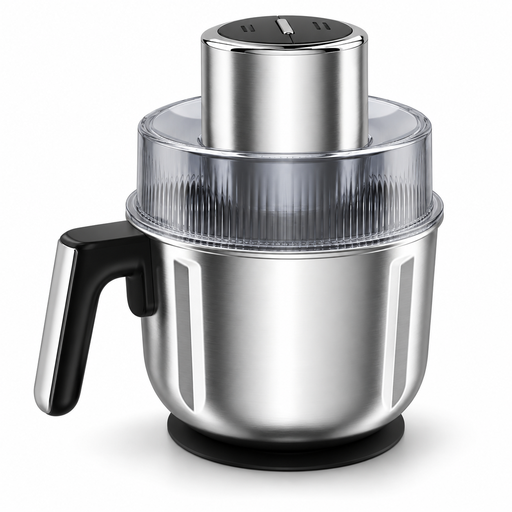
The 2 l bowl is designed for larger quantities. If you’re making small batches of pesto, check that its capacity suits the amount you usually prepare.
Four blades and three speeds.
 No image available
The description lists herbs, dips and sauces as possible uses; the three bowls offer different capacities for preparing food.
Bowls with capacities of 1.8 l, 2 l and 2.5 l, plus a 350 W motor. The description lists two speeds.
 No image available
The product description lists pesto as a use; the 0.5 l container is suitable for small to medium quantities.
0.5 l, 500 W and two speeds.
 No image available
The description lists nuts as an ingredient, but also sets a capacity limit. Don’t process hard nuts if doing so would exceed the appliance’s capacity.
2 l, 300 W, two speeds and four stainless steel blades. Run for no more than 40 seconds at a time, then leave to rest for at least 2 minutes.
If pesto is your main use, compare compact choppers by container size and controls. If you also want to purée food, a hand blender set could suit you – just check that the specific variant includes the chopper you need.
Don’t treat freshly made pesto as food that can be kept safely at room temperature. The German Federal Institute for Risk Assessment recommends keeping perishable food as cold as possible until it is eaten, and advises against storing homemade fresh herbs in oil for later use. This does not establish a general safe storage time for every recipe.
It depends on the model. WMF lists the container, lid and blade for the KÜCHENminis chopper; Philips lists the bowl and blade for the HR1503/00. For the MQ 7045 X, Braun specifically refers you to the instructions for details of dishwasher-safe parts. Don’t assume general information about accessories applies to the motor unit.
No. Your statutory rights are against the seller; a manufacturer’s guarantee is a voluntary additional promise with its own terms. The consumer advice centre recommends considering the guarantee separately from your statutory rights.
Electrical appliances covered by the relevant harmonised EU rules must meet the applicable conformity requirements, including any required CE marking. Parts that come into contact with food must also meet EU requirements for food contact materials. CE marking is a manufacturer’s declaration, not individual approval by a government authority.