
Lieferung heute & morgen

Qualitätsgarantie

Willkommens-Angebote freischalten: KOSTENLOSE Lieferung | Bis zu 80 % RABATT | Kostenlose 30-Tage-JoyPlus-Testphase
App herunterladen
Choosing a new basin faucet might seem straightforward at first glance. But beneath the shiny surfaces and modern designs lie details that determine durability and everyday convenience. The wrong height can lead to constant water splashes, while inferior materials may show unsightly limescale spots or even corrosion after just a short time. This guide will help you identify the crucial features and make an informed decision that suits your basin and your needs.
Before we dive into the technical details, you should be aware of the most common mistakes that often lead to post-purchase disappointment.
To avoid a bad purchase, focus on three objective criteria. These determine the functionality and lifespan of your new bathroom mixer faucet.
The material is the foundation of any high-quality faucet.
The harmony between the faucet and the basin is not just an aesthetic issue, but a functional one.
The heart of every single-lever mixer is the cartridge.
Here are some models that represent a considered choice for specific user profiles, based on their objective features.
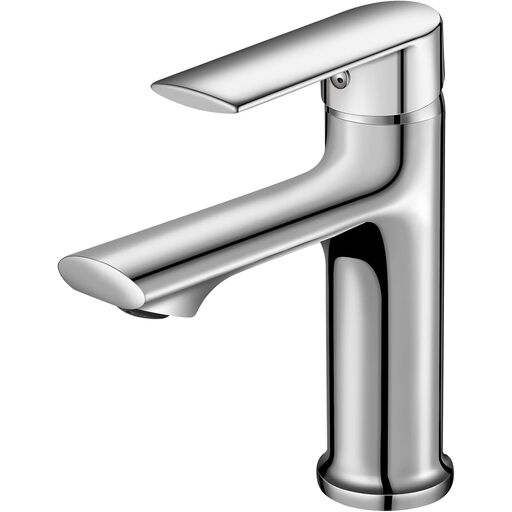
Why this model is a good fit: Ideal for a quick and straightforward upgrade of standard bathrooms or guest WCs. The design is universal, and the standard connections make installation manageable for DIY enthusiasts.
According to the manufacturer, the 15° angled spout is designed to minimise splashing—a direct countermeasure to the pitfall of an improper stream direction. The included 3/8-inch hoses ensure compatibility.
The combination of a ceramic valve and a water-saving system addresses both longevity and efficiency in a budget-friendly package.
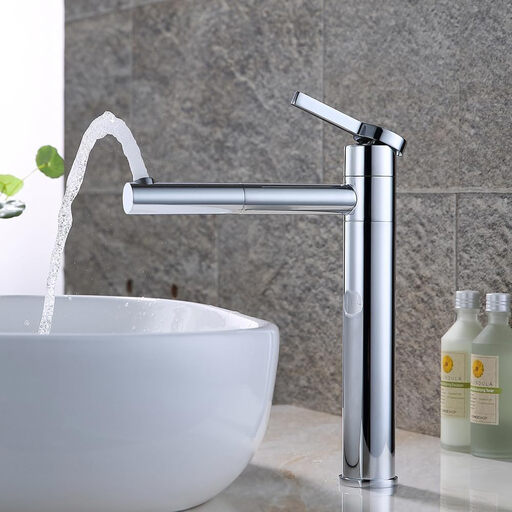
Why this model is a good fit: Specifically designed for vessel sinks. The tall spout height and dual 360° rotation of the body and spout offer maximum flexibility to position the water stream precisely.
This model solves the core problem of incorrect proportions for vessel sinks with its tall design (215 mm spout height) and extreme flexibility. It is explicitly designed as a faucet for a vessel sink.
The construction from lead-free 304 stainless steel offers high material quality. The dual swivel function is a clear unique selling point for demanding installations.
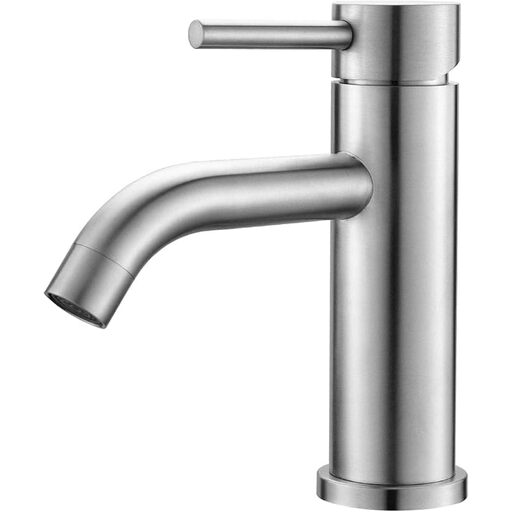
Why this model is a good fit: For anyone seeking a robust and low-maintenance solution for the family bathroom. The brushed stainless steel surface is resilient, and the proven components promise a long service life under heavy use.
Instead of a delicate high-gloss finish, this model relies on solid stainless steel. The ceramic cartridge, tested for 500,000 cycles according to the manufacturer, directly addresses concerns about wear and leaks.
The combination of brushed stainless steel and a cartridge tested for longevity makes this faucet a low-maintenance and resilient choice.
We have compiled a complete, up-to-date list of products that meet these strict selection criteria and quality standards.
Yes, replacing a basin faucet is generally manageable for experienced DIYers. Modern faucets often come with flexible connection hoses (standard G 3/8 inch) and mounting kits that simplify installation. It is important to turn off the main water supply before starting and to check that all necessary seals and tools are available. If you are unsure, it is advisable to hire a professional plumber.
The ideal height depends on your basin. For a standard built-in basin, there should be enough space between the faucet's spout and the basin rim for handwashing (approx. 10-15 cm). For a vessel sink, the faucet must be correspondingly taller so that the water stream can comfortably reach over the rim without splashing. Measure the height of your basin and add the desired clearance to determine the required spout height.
A brass bathroom faucet consists of a copper-zinc alloy, which is then usually chrome-plated or given another coating. It is the proven standard and offers good value for money. A stainless steel faucet is made of the same rustproof material throughout. It is often slightly more expensive but is considered particularly hygienic, robust, and durable. The choice is ultimately a balance between budget, desired look (glossy vs. matte/brushed), and durability requirements.