Full views of baskets
When photographing whole baskets on a small table, the angle of view, camera position and kit contents all need to work together. Canon Germany’s shop lists an EOS R50 kit with the RF-S 18–45 mm lens.


For whole baskets, getting the right framing is more important to start with than choosing a macro lens. A standard zoom can be a sensible starting point, provided the basket fits in the frame from the camera position available. If you want to show weave details large in the frame, check for a compatible macro lens and its reproduction ratio. Focus bracketing can help with deep, stationary baskets, provided your camera and lens support the capture and compositing process you want to use.
When photographing whole baskets on a small table, the angle of view, camera position and kit contents all need to work together. Canon Germany’s shop lists an EOS R50 kit with the RF-S 18–45 mm lens.
If you want individual fibres or joins to appear large in the frame, the specific lens and its reproduction ratio are key. Nikon Germany gives the NIKKOR Z MC 50 mm 1:2.8 a reproduction ratio of 1:1.
If you’re photographing several baskets or colour variations, a repeatable composition, consistent lighting and controlled white balance can help. Canon Germany recommends using a tripod for consistent compositions; Nikon Germany advises using light that is as even as possible and setting the white balance in advance.
First, check where you can position the camera and the framing you need. Then choose a lens and camera features to suit your priorities, whether that’s a full view, weave details, consistent colours or sharpness across several depths.
| What you need | What to check before buying | Who it matters most to |
|---|---|---|
| Whole basket in a confined space | Check the kit lens, focal length range and framing from your planned camera position. | If I want to show the whole basket despite limited space, the angle of view needs to suit the table and subject. Around 33% of consumers put the full view first. |
| Show the weave large in the frame | Check the reproduction ratio, compatible mount and usable working distance together. | If I want the fibres and joins to fill the frame, the magnification of the specific lens matters; at close working distances, you also need room for lighting. Around 25% of consumers prioritise details like these. |
| Consistent colours | Check white balance, RAW shooting and how to achieve even lighting with your chosen camera. | If I want to compare the colours of several baskets, I need lighting that stays as consistent as possible and controlled white balance. Around 25% of consumers focus above all on repeatable colours. |
| Sharpness across several depths | Understand the difference between focus bracketing and in-camera compositing; check that your specific lens is supported. | If I want the front and back of a deep, stationary basket to appear sharp, it’s important to know which capture and compositing features the camera and lens combination offers. Around 17% of consumers prioritise sharpness across several depths. |
According to Canon Germany’s shop, the documented EOS R50 kit includes an RF-S 18–45 mm lens. Canon Germany gives this lens a maximum reproduction ratio of 0.16x at 45 mm with autofocus; it is not a 1:1 macro lens.
Check the full lens name in the box contents and compare its reproduction ratio with the size you want your weave details to appear.
You may need to buy an additional compatible lens for large close-up shots.
Focusing distance and reproduction ratio describe different characteristics. At very close distances, there may also be less room for lighting.
Check magnification and usable working distance together for your planned table setup, and consider where you’ll position your lights.
You may need more space or a different lighting position to achieve the right lighting setup.
Focus bracketing captures images with different focus planes. Compositing them is a separate step and depends on the camera and lens combination. OM Digital Solutions lists specific compatible lenses for the OM-5 Mark II.
Check that your specific lens is supported and plan for a stable setup. Canon recommends using a tripod for the process described.
Depending on your workflow, you may need to take extra shots and spend time processing the images afterwards.
The EOS R50 with an RF-S standard zoom is an option for flexible full views; consider a macro lens as a separate addition.
The Z system can be set up for full views and close-up details using different lenses.
The α6700 paired with a separately selected E 30 mm F3.5 Macro is one option for APS-C table photography with weave details.
The OM-5 Mark II is worth considering for stationary subjects with depth, if you want to use Focus Stacking with a specifically supported lens.
The products below offer different approaches to framing and camera positioning. For basket photography, also check that the camera type, lens and shooting features suit your needs for macro details or focus bracketing.
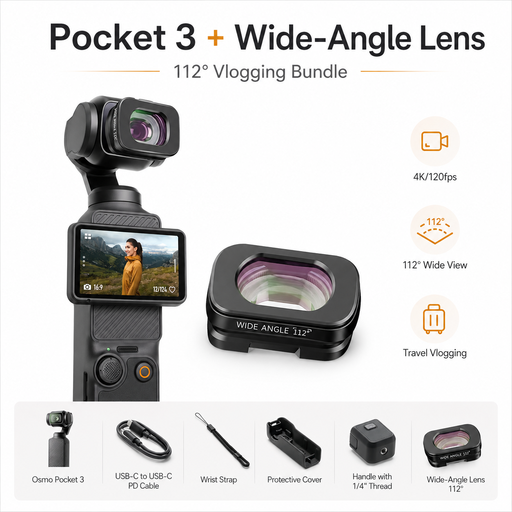 No image available
The bundle includes a wide-angle lens and a rotating screen. Check that the field of view and camera position suit your table setup.
1-inch CMOS sensor; 4K/120fps; 3-axis gimbal; 2-inch touchscreen.
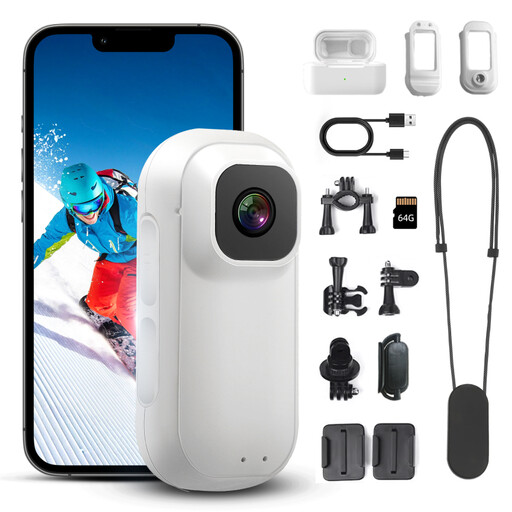 No image available
The rotating lens and built-in colour display are features to consider when planning your camera angle.
64 GB; 2.7K; 1.47-inch colour display; 120° wide-angle view.
 No image available
The kit includes a zoom lens for changing your framing. Check from your planned camera position whether the whole basket will fit in the frame.
APS-C; Sony E-mount; 16–50 mm power zoom lens; tilting display.
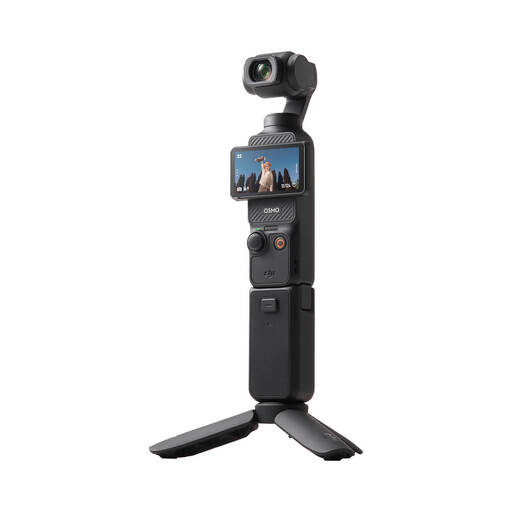 No image available
The rotating touchscreen may influence where you position the camera. Check separately whether the lens and focusing options meet your needs for detail shots.
1-inch sensor; 4K/120fps; mechanical 3-axis stabilisation; rotating 2-inch touchscreen.
Not necessarily. For a full view, first check the framing and the camera position available; a macro lens is mainly useful if you want weave details to appear large. The RF-S 18–45 mm included in an EOS R50 kit documented by Canon Germany and a 1:1 macro lens have different magnification specifications.
Keep the camera and framing consistent with a tripod, use lighting that’s as even as possible and set the white balance to suit. If the lighting changes, check the white balance again.
Compare the exact kit contents with your needs for a lens, memory card, tripod and lighting. OM Digital Solutions says the OM-5 Mark II body requires a separate SD card and does not include a separate battery charger; check the contents of the specific offer.
When you buy goods as a consumer, you have statutory rights against the seller if they’re faulty; the EU explains that the minimum period is two years. For goods bought online, consumers generally have a 14-day right to cancel from the date of receipt, as explained by the Verbraucherzentrale. This is separate from any voluntary manufacturer’s warranty. If you’re buying as a business, check the applicable requirements separately.