
Lieferung heute & morgen

Qualitätsgarantie
App herunterladen
Kategorien
Choosing a bath mat involves balancing functional criteria like safety, hygiene, and material properties. A bath rug's primary purpose is to absorb water after a shower or bath and to reduce the risk of slipping on smooth tiles. The material's properties are crucial in determining the product's performance and durability.
The decision for a suitable shower mat should be based on an analysis of objective parameters. The following criteria are relevant for evaluation.
The material is the deciding factor for feel, absorbency, and drying speed.
Cotton Bath Mat: Cotton is a natural fibre prized for its high absorbency and soft texture. The quality is often indicated in GSM (grams per square metre). A higher GSM value (e.g., 700 g/m² or more) indicates a denser, plusher, and more absorbent fabric. Cotton mats offer high comfort but tend to take longer to dry.
Bamboo Bath Mat: Mats made of bamboo consist of glued or interconnected wooden slats. They are not traditional textile rugs. Their strength lies in their surface structure: water drains through the slats or evaporates quickly from the sealed surface. A bamboo mat is therefore inherently quick-drying and easy to clean due to its smooth surface.
Chenille Bath Mat (Polyester): Chenille refers to a fabric with a velvet-like surface, usually made from synthetic fibres like polyester. The characteristic, protruding fibre ends create a very large surface area, which allows for an extremely high water absorption capacity. A chenille bath mat is often particularly soft and absorbent. Thanks to its polyester properties, it is also quick-drying and durable.
High absorbency is crucial for keeping the floor dry. Materials like high-GSM cotton and high-density chenille polyester excel here.
A non-slip bath mat is a key safety feature. This is usually achieved with a rubberised or latex-coated backing. For heavy, dense mats, their own weight can also contribute to slip resistance. Bamboo mats are often equipped with rubber stoppers on the underside to prevent them from sliding on wet tiles.
Hygiene in the bathroom requires regular cleaning of the shower mat. A machine-washable bath mat is a significant practical advantage. Textile mats made of cotton or polyester are generally machine washable. The manufacturer's specific care instructions (temperature, spin cycle) must be followed. Bamboo mats, on the other hand, are cleaned manually with a damp cloth.
Based on the technical criteria mentioned, we present a selection of products with different material properties.
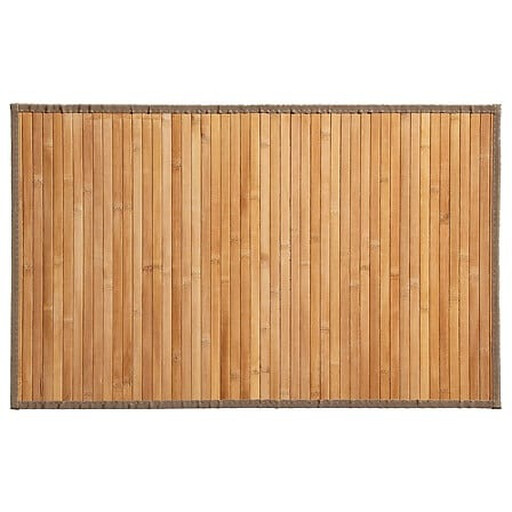
Why we recommend this product: This model leverages the natural properties of bamboo. The slatted design allows for rapid water drainage and evaporation, which minimises drying time and promotes hygiene. The design is focused on functionality and a minimalist aesthetic.
Advantages:
Who it's for: For users who prefer a low-maintenance, quick-drying, and hygienic solution with a modern, natural look.
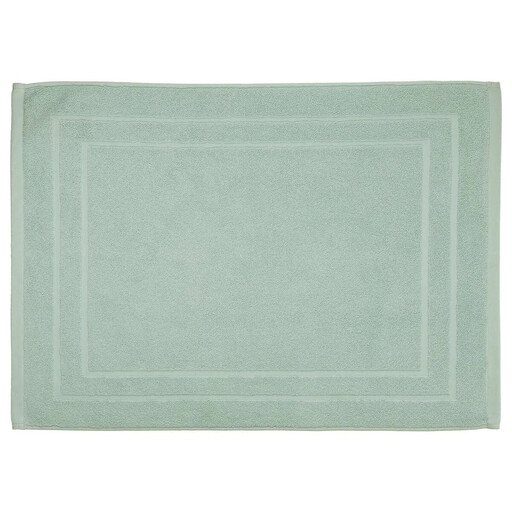
Why we recommend this product: This 100% cotton bath mat is distinguished by its heavy fabric weight of 700 g/m². This value signifies a high fibre density, which ensures excellent absorbency and a soft, comfortable feel underfoot.
Advantages:
Who it's for: For users who appreciate the classic comfort and high absorbency of a dense cotton mat and value a soft feel underfoot.
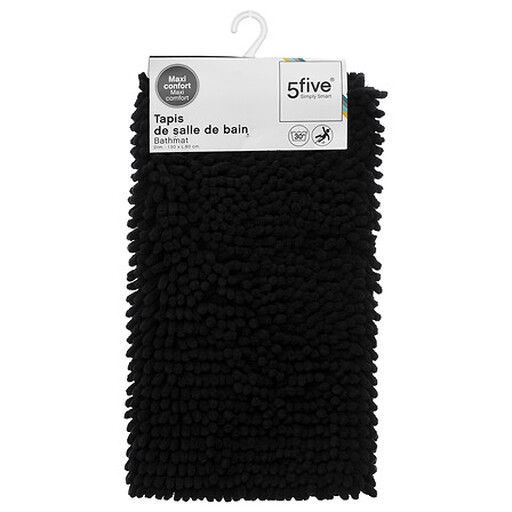
Why we recommend this product: This model combines a large surface area with the benefits of chenille polyester. With a very high fabric weight of 1800 g/m², this mat offers maximum surface area for water absorption and an extremely soft feel.
Advantages:
Who it's for: For those seeking maximum comfort, exceptionally high absorbency, and a luxurious, velvety-soft feel under their feet.
Besides the classic bath rug or shower rug, there are other functional mats that help with moisture control in the home. For the kitchen sink or worktop areas, where splashes also occur, special draining mats optimised for absorbing smaller amounts of water are a good option.
Discover our selection of draining mats
1. How often should a bath mat be washed? The washing frequency depends on usage. In a multi-person household, weekly washing is recommended to prevent the build-up of germs and moisture. In a single-person household, an interval of two weeks may be sufficient. Always follow the manufacturer's care instructions.
2. What makes a bath mat non-slip? Slip resistance is usually achieved through a backing made of materials like rubber, latex, or silicone. These materials create high friction on smooth floors like tiles, preventing the mat from slipping, even when wet. Heavy, dense mats can also be stabilised by their own weight.
3. Which bath mat material dries the fastest? Synthetic fibres like polyester (e.g., in chenille mats) and microfibres tend to dry faster than thick cotton because they do not store water in the core of the fibre. Bamboo mats are the fastest to dry by design, as water drains off or evaporates from the surface rather than being absorbed by the material.