
Lieferung heute & morgen

Qualitätsgarantie

Willkommens-Angebote freischalten: KOSTENLOSE Lieferung | Bis zu 80 % RABATT | Kostenlose 30-Tage-JoyPlus-Testphase
App herunterladen
A new bathroom cabinet should bring order to your space, but the sheer number of options can be overwhelming. Often, what looks like a bargain turns out to be impractical or starts to swell and warp in the humid bathroom climate. This guide highlights the key features to look for, helping you avoid costly mistakes and find a functional solution for your bathroom.
Many bathroom cabinets look appealing at first glance but reveal their weaknesses only through daily use. Watch out for these three common problems:
To make a durable and practical choice, you should carefully examine three technical aspects before making a decision.
The longevity of a bathroom cabinet depends directly on its material. Look for furniture made from MDF (Medium-Density Fibreboard), which is inherently denser and more resistant to moisture than simple particle board. However, the surface treatment is crucial:
Measure the available space precisely—height, width, and depth. Also, account for the swing clearance of any doors. Different types are suitable depending on the space and your needs:
Freestanding cabinets offer flexibility, while wall-mounted cabinets keep the floor clear, making cleaning easier. Regardless of the type, safety features are non-negotiable:
Here are a few models tailored to specific needs and room situations that successfully avoid the common pitfalls mentioned.
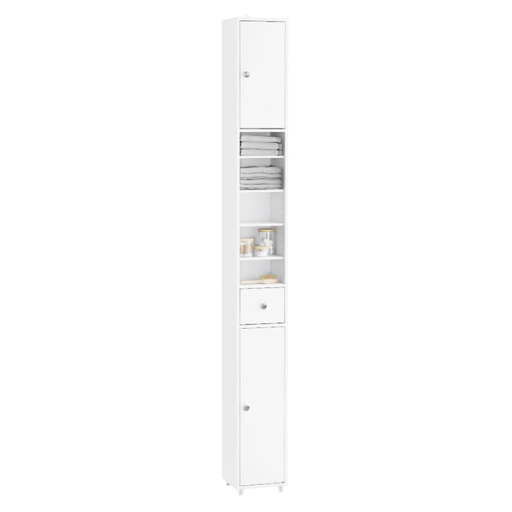
Why It's a Great Fit: Perfect for renters or homeowners with very small bathrooms or unused niches. This model makes optimal use of the room's height without taking up valuable floor space.
The 6 height-adjustable shelves offer maximum flexibility, bypassing the problem of rigid compartments. The MDF material with a matte lacquer finish is better suited for humid environments than unsealed particle board.
Its extremely slim profile of just 20 x 20 cm makes it a solution for the tightest of spaces. According to the manufacturer, an anti-tip kit for wall mounting is included.

Why It's a Great Fit: A classic and functional solution for anyone looking for the proven combination of a mirror and storage above the sink without a large budget.
With a shelf that's adjustable to three different heights (13 cm, 19.5 cm, 27 cm), it offers the flexibility that rigid models lack. This allows taller items to be stored with ease.
The frameless mirrored doors give the cabinet a modern look and make cleaning easier. An open shelf at the bottom provides additional, quick-access space for everyday items.

Why It's a Great Fit: Ideal for transforming the unused space under a pedestal sink into valuable, enclosed storage. Especially suitable for those who prefer a natural aesthetic.
The bamboo material is naturally water-repellent, making it a durable choice for the bathroom and minimising the problem of swelling. The louvred doors ensure good ventilation of the interior.
The combination of a precise P-trap cutout (20 x 15 cm) and a three-level adjustable shelf makes this cabinet both a perfect fit and flexible on the inside.
We've compiled a complete, up-to-date list of products that fully meet these strict selection criteria and UK safety regulations.
1. How can I effectively protect an engineered wood bathroom cabinet from moisture? The most important step is to ensure good ventilation in the bathroom. After a shower or bath, air out the room thoroughly to quickly reduce humidity. Wipe away any water spots on the cabinet's surface immediately with a dry cloth. Regularly check that the edge seals are intact and touch up any small nicks on lacquered surfaces if necessary.
2. What should I consider when wall-mounting a mirrored cabinet? Before drilling, check the composition of your wall. For solid concrete or brick walls, the included hardware is usually sufficient. For drywall or plasterboard, you will need special hollow-wall anchors to ensure a secure hold. Use a stud finder or pipe detector to make sure you don't drill into any electrical or water lines. Installation is ideally a two-person job.
3. Will any under-sink cabinet fit under any sink? No. Before buying, measure the width, depth, and height of the available space under your sink. The size and position of the P-trap cutout in the cabinet are critical. Compare these dimensions with the measurements of your P-trap and water connections to ensure the cabinet will fit without any conflicts.