
Lieferung heute & morgen

Qualitätsgarantie

Willkommens-Angebote freischalten: KOSTENLOSE Lieferung | Bis zu 80 % RABATT | Kostenlose 30-Tage-JoyPlus-Testphase
App herunterladen
By a Joybuy Product Recommendation Officer
An uncluttered bathroom significantly contributes to a sense of well-being. However, a lack of suitable storage often makes it difficult to keep cosmetics, towels, and cleaning supplies neatly organised. The range of bathroom furniture is vast, and choosing the right bathroom cabinet can quickly become overwhelming. This article serves as a guide to help you navigate your options. It introduces various cabinet types and provides practical tips to make it easier for you to select a functional and fitting solution for your bathroom storage.
Before you make a decision, several fundamental criteria should be considered. These will help you find a model that not only looks great but also meets your everyday needs.
The type of cabinet largely depends on the available space and its intended purpose.
Measure the intended space precisely—height, width, and depth. Remember to account for the swing radius of doors and the distance to other sanitary fixtures.
The material is crucial in the humid climate of a bathroom. Coated MDF (medium-density fibreboard) boards are a common and practical choice. They are low-maintenance and resistant to moisture, as long as the surface remains intact. Pay attention to cleanly finished edges and a water-repellent coating.
Consider which features are important to you. Adjustable shelves offer flexibility to adapt the interior to items of different heights. Sliding doors are a great option for tight bathrooms, as they don't require extra space to open.
Also, check the installation method. While an under-sink cabinet is often freestanding, wall and mirror cabinets must be securely mounted to the wall. Ensure your wall can support the load and that the necessary mounting hardware is suitable for your wall type.
Here is a selection of functional bathroom cabinets that cater to different space and usage requirements.

Why It Stands Out: This mirror cabinet combines closed and open storage. The two frameless mirrored doors give it a modern look and make cleaning easy. An open compartment at the bottom provides quick access to daily-use items.
Pros:
Who It's For: For users seeking a multifunctional solution in a compact bathroom that combines a mirror and storage. It is ideal for keeping cosmetics, dental care products, and small utensils organised and within reach.
View Details for the Yaheetech Mirror Cabinet

Why It Stands Out: This under-sink cabinet is specifically designed to make optimal use of the often-neglected space beneath the washbasin. With its siphon cut-out, it fits around the drain pipes, creating concealed storage.
Pros:
Who It's For: For renters and homeowners looking for a simple and effective solution to store towels, cleaning supplies, or toilet paper out of sight under the sink.
View Details for the WOLTU Under-Sink Cabinet
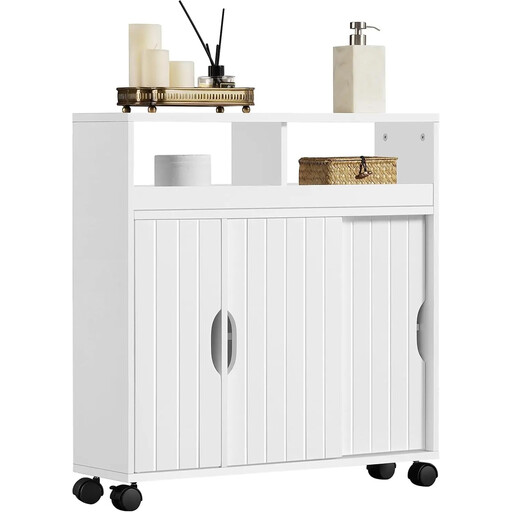
Why It Stands Out: This slim bathroom cabinet is designed as a rolling cart and fits perfectly into narrow niches. Its mobility and space-saving design make it an extremely flexible storage solution.
Pros:
Who It's For: For anyone looking to transform unused, narrow gaps in the bathroom or other rooms into practical storage. It is especially beneficial in rental properties where flexible and non-permanent solutions are preferred.
View Details for the Yaheetech Niche Cabinet
Was the perfect model for your needs not among this selection? A well-organised space starts with the right bathroom storage. Discover more sizes, styles, and configurations in our bathroom furniture category.
Discover More Bathroom Floor Cabinet Storage Here
For the secure installation of a wall cabinet, the type of wall is crucial. Use the provided mounting hardware if it is suitable for your wall (e.g., a solid wall). For hollow walls (e.g., plasterboard), special hollow-wall anchors are required. Before drilling, use a stud finder to ensure there are no electrical or water lines in the wall. Always follow the manufacturer's installation instructions and do not exceed the specified maximum load capacity.
For bathroom furniture, materials with high moisture resistance are essential. Coated MDF or particleboard are a common and cost-effective choice. The coating (often melamine or lacquer) protects the wood material from swelling. It is important that the edges are cleanly sealed. Solid wood can also be used but must be specially treated (oiled or lacquered) to withstand moisture and is generally more maintenance-intensive.