
Lieferung heute & morgen

Qualitätsgarantie

Willkommens-Angebote freischalten: KOSTENLOSE Lieferung | Bis zu 80 % RABATT | Kostenlose 30-Tage-JoyPlus-Testphase
App herunterladen
A cluttered bathroom can make starting your day a challenge. When towels, cosmetics, and cleaning supplies don't have a designated spot, clutter can quickly take over. A well-chosen bathroom cabinet not only creates order but can also significantly enhance the room's aesthetic. As your Joybuy Product Recommendation Officer, I've made it my mission to provide you with objective, practical information. This guide is designed to help you make an informed decision and find a storage solution that meets your needs.
Selecting the right cabinet depends on several factors. To make the best choice, you should consider the following aspects.
The bathroom is a high-humidity environment. Therefore, the material of your bathroom cabinet should be moisture-resistant. Many modern bathroom furniture pieces are made from E1-grade MDF (Medium-Density Fibreboard). A high-quality paint or coating protects the material from water vapour and splashes while also making the surface easy to clean. A soft, damp cloth is usually all that's needed for cleaning.
Carefully measure the available space in your bathroom before making a decision. Consider not only the width and depth but also the height.
Stability is crucial, especially for tall cabinets. Many models come with an anti-tip kit, which allows the cabinet to be secured to the wall. This increases stability and safety in the household. Look for clear, illustrated assembly instructions and labelled parts to make the setup process easier.
Based on functionality, material, and design, we have curated a selection of models that can serve as versatile storage solutions.
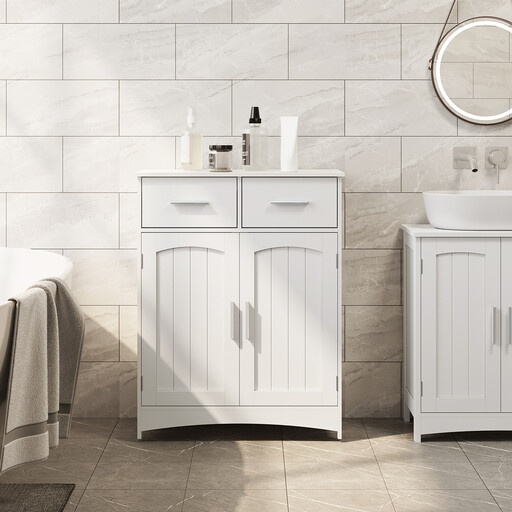
Why it stands out: This multipurpose cabinet thoughtfully combines closed and open storage options. The mix of two drawers and a two-door compartment with an adjustable shelf makes it a flexible solution for various rooms.
Pros:
Who it's for: For those looking for a classic white bathroom cabinet with a balanced mix of drawers and shelf compartments. Its dimensions of 60 x 76 x 30 cm (W x H x D) make it suitable for medium-sized bathrooms, hallways, or living rooms.

Why it stands out: This model is designed as a tall bathroom cabinet and, with its slim profile, makes ideal use of the room's height. It's an excellent solution for turning unused corners or narrow wall sections into valuable bathroom storage.
Pros:
Who it's for: For users who want to create maximum storage on a minimal footprint in a small bathroom or niche. The simple white design blends seamlessly into existing decor.
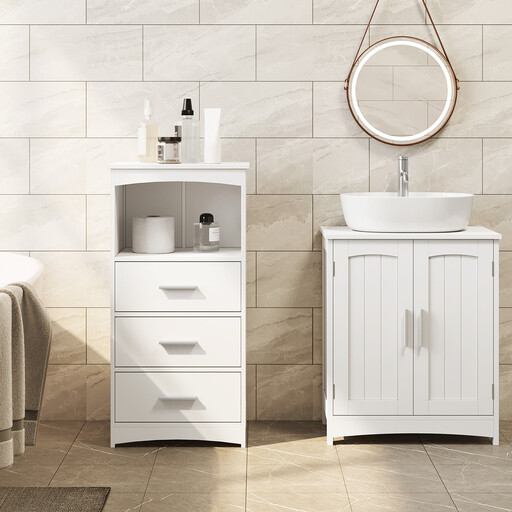
Why it stands out: This bathroom sideboard is distinguished by its clear layout: three spacious drawers provide protected storage, while an open compartment allows quick access to frequently used items.
Pros:
Who it's for: Ideal for anyone who prefers organisation by drawers. This cabinet works perfectly as a bathroom cabinet but can also be used as a nightstand or small side cabinet in other living areas thanks to its simple design.
The models featured here offer a glimpse into the variety of storage solutions available. If you're looking for more specific designs or sizes, there are other alternatives to explore.
Discover our entire collection of White Bathroom Corner Cabinets to find the perfect solution for your home.
When choosing a bathroom cabinet, three main points should be considered: the material, the size, and the safety features. The material should be moisture-resistant, such as coated MDF. The size and layout (shelves, drawers) should match your available space and storage needs. Safety aspects like an anti-tip kit are particularly relevant for taller cabinets.
MDF (Medium-Density Fibreboard) panels with a protective paint or melamine resin coating are a common and practical choice for bathroom furniture. The material is dimensionally stable, and the sealed surface withstands the typical humidity in a bathroom. Metal parts for hinges and handles ensure durability.
To securely fasten a bathroom cabinet, you should always use the included anti-tip kit. Follow the manufacturer's assembly instructions carefully. The device is typically mounted to the upper part of the cabinet and the wall. Use wall plugs and screws that are appropriate for your wall type (e.g., drywall, concrete, brick) to ensure a firm hold.