
Lieferung heute & morgen

Qualitätsgarantie

Willkommens-Angebote freischalten: KOSTENLOSE Lieferung | Bis zu 80 % RABATT | Kostenlose 30-Tage-JoyPlus-Testphase
App herunterladen
A new bathroom cabinet promises order and more storage space, but the reality is often different. Many models quickly turn out to be a bad purchase—whether due to swollen materials, wobbly doors, or an impractical layout. As a Joybuy Product Recommendation Officer, I see daily which details make the difference between a short-term fix and a long-lasting addition to your home. This guide will help you avoid the most common pitfalls and make an informed decision.
Before you invest, you should be aware of the typical weaknesses that often only become apparent after assembly or after a few weeks in a humid bathroom environment.
To avoid these traps, focus on three objective criteria. These will largely determine the functionality and lifespan of your new bathroom furniture.
The material is the foundation for longevity in the bathroom.
Precise measurement is the key to avoiding disappointment.
A stable footing is not a luxury, but a necessity.
Here are some models that represent a considered choice for specific needs and room situations, based on objective features.
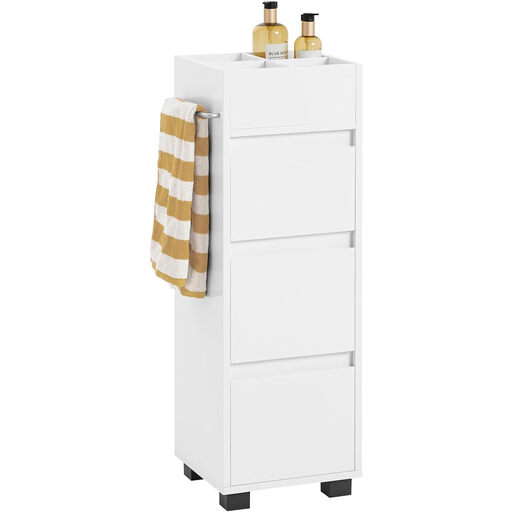
Why this model is a great fit: With a footprint of just 30x30 cm, this narrow cabinet is specifically designed to make optimal use of unused niches next to the toilet or in small bathrooms, creating valuable storage space.
The combination of open compartments and drawers avoids the "Space Trap" by allowing flexible organization for items of different sizes. The lacquered MDF surface protects against moisture.
The side-mountable towel holder provides an additional function in a very small space. According to the manufacturer, the maximum load capacity is 40 kg.
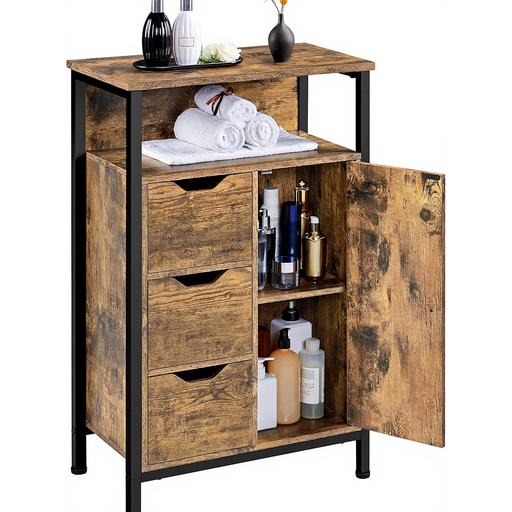
Why this model is a great fit: This model is a versatile **multi-purpose cabinet**. The mix of drawers, an open compartment, and a cabinet section with a door is ideal for keeping the belongings of different family members separate and organized.
The construction of FSC-certified MDF boards and a stabilizing metal frame counteracts the "Stability Trap." The adjustable shelf in the cabinet section solves the problem of impractical compartment sizes.
The high load capacity of the tabletop at 46 kg (according to the manufacturer) and the smooth-running drawers with ball-bearing slides are features of solid workmanship.
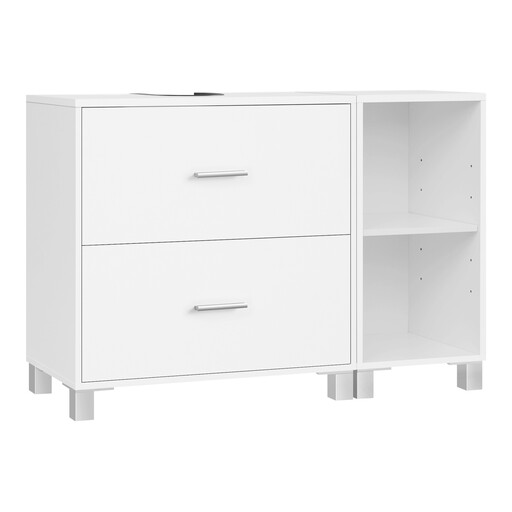
Why this model is a great fit: This **under-sink cabinet** is a well-designed solution to transform the often-unused space under the sink into functional storage. It is particularly suitable for bathrooms where every centimeter counts.
The model is made from E1-grade engineered wood and is described as water-repellent, which helps prevent the "Material Trap." The included anti-tip device directly addresses the issue of safety.
The side cabinet can be flexibly positioned on the left, right, or even separately. Its shelf is adjustable to five positions, allowing for high adaptability to different needs.
A well-organized space starts with the right storage. If you're looking for more solutions that have been vetted for functionality and durability, you'll find a suitable selection here.
The most effective method is prevention. Ensure good ventilation in the bathroom by airing it out after showering or bathing. Immediately wipe up any water splashes on the surface and edges of the cabinet with a dry cloth. Avoid leaving wet towels on the cabinet for extended periods.
Yes, securing the cabinet to the wall with the provided anti-tip device is an essential safety step. Especially with taller and narrower cabinets, it prevents tipping over, which can lead to serious injuries. The installation is straightforward and crucial for the stability and safety of the furniture.
No. Before buying an under-sink cabinet, you must carefully check the dimensions of your sink. Measure the width and depth of the pedestal (if any) and the position of the p-trap. Compare these measurements with the p-trap cutout specifications in the product description to ensure the cabinet will fit.