
Lieferung heute & morgen

Qualitätsgarantie

Willkommens-Angebote freischalten: KOSTENLOSE Lieferung | Bis zu 80 % RABATT | Kostenlose 30-Tage-JoyPlus-Testphase
App herunterladen
A new bathroom cabinet should organize your space and elevate its look. But the selection is vast, and not every model delivers on its promise. Often, small but critical flaws can render a piece of furniture useless after a short time or become a daily nuisance. To help you make an informed decision, we'll reveal the three most common purchasing traps and what you should focus on instead.
A low price is tempting, but it often comes with compromises in quality. These three issues are especially common with bathroom furniture:
To avoid these problems, you should check three core aspects before buying. These largely determine the longevity and functionality of your new bathroom furniture.
The material is the most critical factor for moisture resistance.
Measure precisely before you buy:
A good bathroom cabinet is stable and safe to use.
Instead of presenting an overwhelming list, we have selected a few models based on typical user profiles.
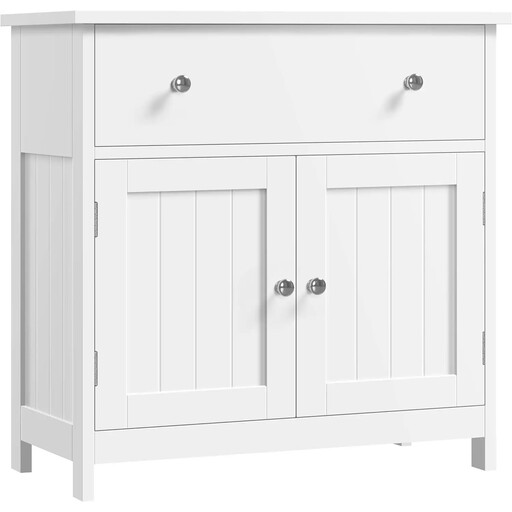
Why It's a Match: A straightforward and cost-effective solution for concealing unsightly pipes and creating essential storage for toiletries and cleaning supplies. Ideal for a first apartment or a guest bathroom.
The water-resistant coating on the MDF panels protects against direct splashes and moisture damage, a common problem with budget-friendly bathroom furniture.
Classic under-sink cabinet with a p-trap cutout (20 x 15.3 cm); combines a drawer and two doors for flexible storage.

Why It's a Match: Perfect for those who need maximum, organized storage in tight niches or small bathrooms without cluttering the space. A practical storage unit for corners.
With a width of just 32 cm, this slimline bathroom cabinet fits into gaps where standard furniture is too large, cleverly solving the problem of unused corners and lack of space.
Three smooth-gliding drawers allow for neat organization of cosmetics and small items. The freestanding design is supplemented with an anti-tip device for safety.
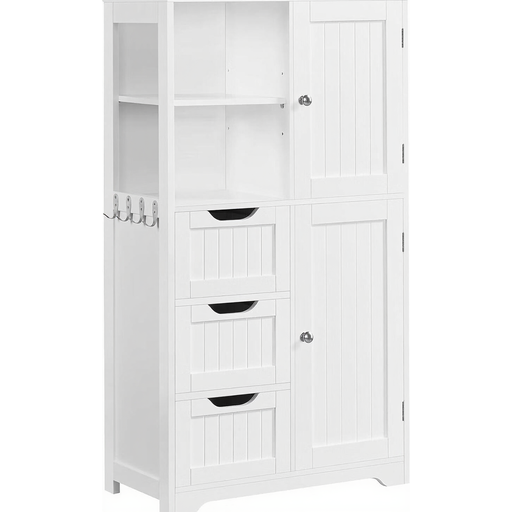
Why It's a Match: Perfect for users seeking a comprehensive storage solution that goes beyond a simple cabinet and also looks great in a hallway or kitchen.
Instead of a rigid construction, this cabinet offers height-adjustable shelves and external hooks, making it more adaptable than models with fixed compartments.
A combination of cabinet doors, drawers, and practical hooks for towels; includes an anti-tip device for enhanced stability and safety.
We have compiled a complete, up-to-date list of products that fully meet these strict selection criteria and safety standards.
Measure two things: 1. The distance from the wall to the center of the drain pipe (this determines the depth of the cutout). 2. The width of the pipe itself. For a safe fit, add one to two centimeters to both measurements and compare the result with the manufacturer's product data for the "p-trap cutout".
The most important step is to immediately wipe away any puddles or splashes with a dry cloth. Also, ensure good ventilation in the bathroom to reduce overall humidity. Avoid harsh chemical cleaners that could damage the furniture's protective coating.
Although there is no universal legal requirement for private use, using an anti-tip device is strongly recommended. Especially for tall or narrow cabinets and in households with children, securing the unit to the wall is a crucial safety feature to prevent tipping accidents. Most manufacturers include a corresponding mounting kit.