
Lieferung heute & morgen

Qualitätsgarantie

Willkommens-Angebote freischalten: KOSTENLOSE Lieferung | Bis zu 80 % RABATT | Kostenlose 30-Tage-JoyPlus-Testphase
App herunterladen
A cluttered bathroom can make for a stressful start to your day. When toiletries, towels, and cleaning supplies don't have a designated spot, chaos quickly takes over. The right bathroom cabinet can bring order, but the market is vast, and not every model delivers on its promise. Before you make a decision, it's crucial to understand the common pitfalls that often only become apparent after your purchase.
The 3 Most Common Mistakes When Buying a Bathroom Cabinet:
To avoid a bad purchase, you should focus on a few fundamental features that determine the longevity and functionality of your new bathroom furniture.
The key to durability in the bathroom is moisture resistance. Look for the following materials and properties:
The available space dictates the type of cabinet. A thoughtful choice can maximize storage in the bathroom without overwhelming the room.
Small details make a big difference in daily use. Look for adjustable shelves to flexibly adapt the interior to your needs. For all freestanding cabinets that are taller than they are wide, an anti-tip device for securing it to the wall is essential. This prevents the cabinet from tipping over.
Here are some models tailored to specific needs and room situations.
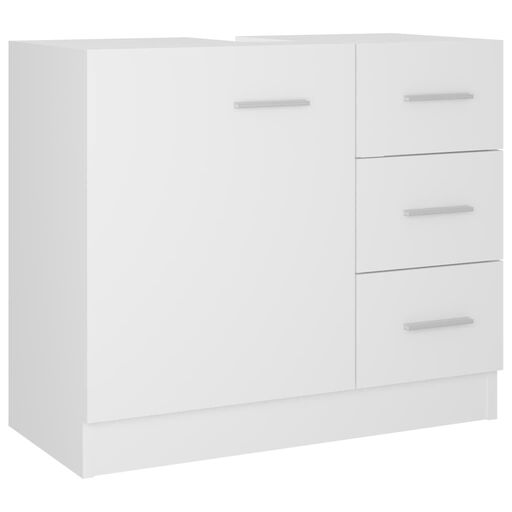
Why This Fits Their Persona: Ideal for renters or homeowners looking for a straightforward and cost-effective solution to make smart use of the space under the sink. Its simple design as a white bathroom cabinet fits into almost any bathroom.
This model is specifically designed as an under-sink cabinet and accounts for the P-trap space, which avoids typical fitting problems. The included anti-tip device also addresses the safety risk.
A combination of an open compartment and closed drawers for flexible storage. The engineered wood construction is intended for bathroom use.
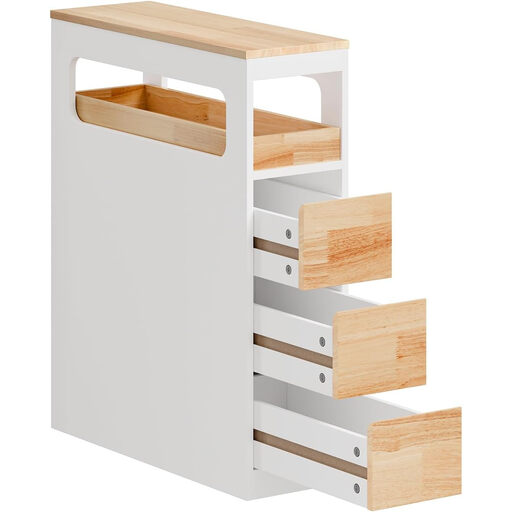
Why This Fits Their Persona: Perfect for anyone struggling with a galley-style bathroom, a small guest toilet, or an unused niche. This cabinet is a prime example of furniture for small bathrooms, as it minimises depth and width.
Its extremely narrow design solves the problem of limited space without compromising on storage. The material (E1-grade MDF) is suitable for humid environments and more durable than basic particleboard.
The wheels (two with brakes) offer maximum flexibility for cleaning or when needs change. Three drawers and an open compartment ensure organised storage.
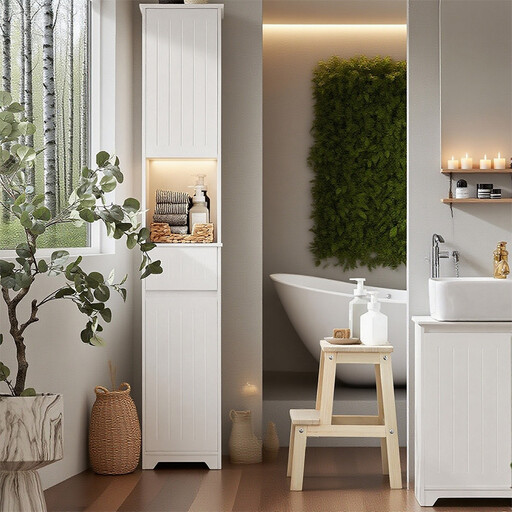
Why This Fits Their Persona: Anyone who needs to store a lot but wants to sacrifice minimal floor space will find the solution in this tall bathroom cabinet. It makes optimal use of the room's height and conceals everything from towels to cleaning supplies behind closed doors.
The tall, narrow design requires stability. This model is made from moisture-resistant MDF (Class E1) and includes mounting hardware for secure wall attachment to prevent the risk of tipping.
The shelves behind the doors are adjustable to three different heights. This allows for individual customisation to fit the size of the items being stored, from tall bottles to small jars.
We have compiled a complete, up-to-date list of products that fully meet these strict selection criteria and German safety regulations.
The most important measure is good ventilation in the bathroom to reduce overall humidity. Always wipe up water splashes on the cabinet immediately with a dry cloth. Regularly check that the edge seals are intact and avoid leaving wet towels on the cabinet for extended periods.
Most products come with detailed step-by-step instructions and numbered parts. Assembly is generally manageable for one person. For larger pieces of furniture like a tall cabinet, a second person can be helpful. It is advisable to check that all parts are present and undamaged before starting assembly.
An anti-tip device is usually a bracket or strap used to secure a piece of furniture to the wall. It is crucial for preventing tall or top-heavy cabinets from falling over. This poses a serious safety risk, especially in households with small children who might try to climb on the cabinet. Therefore, installing the anti-tip device should never be skipped.