
Lieferung heute & morgen

Qualitätsgarantie

Willkommens-Angebote freischalten: KOSTENLOSE Lieferung | Bis zu 80 % RABATT | Kostenlose 30-Tage-JoyPlus-Testphase
App herunterladen
A cluttered bathroom can make for a difficult start to the day. Often, the issue isn't a lack of tidiness, but a lack of storage space in the bathroom. Every square centimetre becomes precious, especially in small or narrow rooms. A well-chosen bathroom cabinet can remedy this, not only by creating order but also by enhancing the room's ambiance.
My name is Joybuy, and as your Product Recommendation Officer at Joybuy, I see it as my mission to provide you with clear and objective information. This guide is designed to help you make an informed decision and find the right cabinet for your needs—without the marketing hype. We will look at different types, materials, and functional features relevant to bathroom furniture for small bathrooms.
The selection of bathroom furniture is vast. To make the right choice, three criteria are particularly important: the material, the cabinet type, and the functional details.
The bathroom is a high-moisture environment. Therefore, the material of your cabinet must be resistant to steam and water splashes.
Depending on the layout and available space, different cabinet types are suitable for maximising storage.
Small details can significantly improve daily use. Adjustable shelves allow for flexible customisation of the interior to fit the size of your items. Doors with a soft-close function close quietly and protect the material. On some models, wheels provide mobility, so the cabinet can be easily moved when needed.
Based on the criteria mentioned, we have compiled a selection of functional and space-saving models suitable for various requirements.
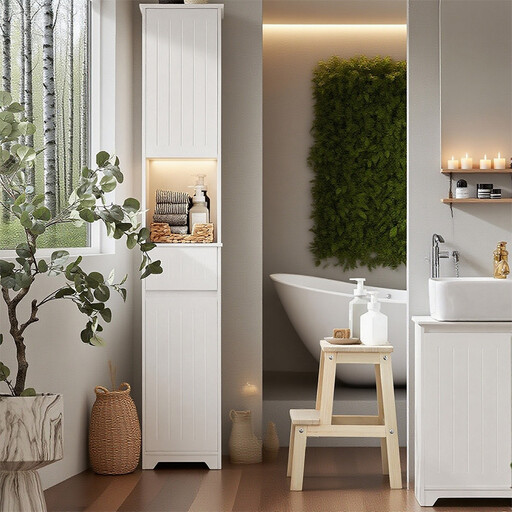
Why it stands out: This tall bathroom cabinet makes optimal use of vertical space with a height of 170 cm and a footprint of just 30x30 cm. Its simple, white design blends discreetly into most bathroom interiors.
Advantages:
Who is it for? For those who want to create maximum vertical storage in a narrow bathroom and are looking for a timeless, functional piece of furniture.
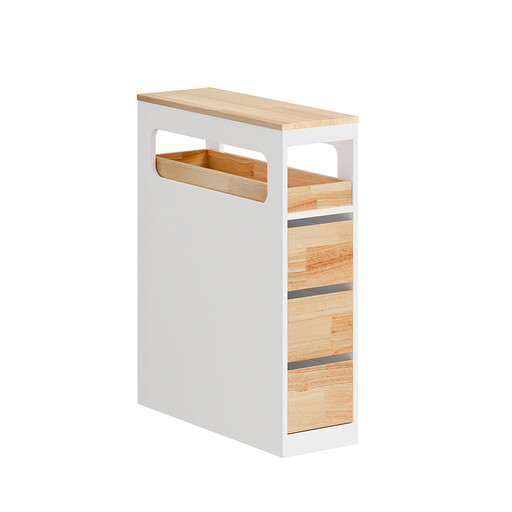
Why it stands out: This model combines flexibility with structured storage. Thanks to its four wheels (two of which have brakes), it can be moved effortlessly and securely locked in place when needed. The combination of a white body and a top panel made of natural rubberwood adds a modern touch.
Advantages:
Who is it for? For users who need a mobile and flexible storage solution for a small bathroom or a guest toilet and appreciate a mix of closed and open compartments.
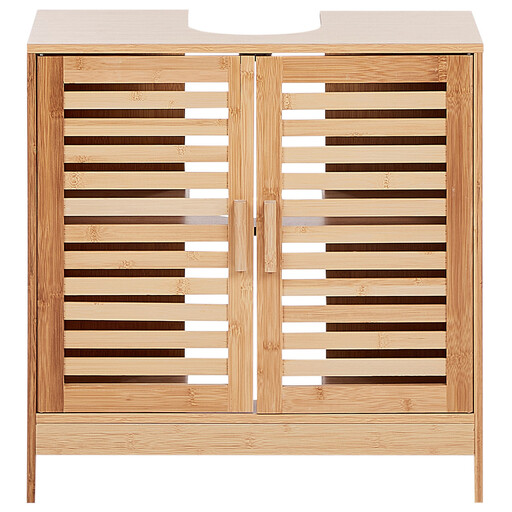
Why it stands out: This under-sink cabinet brings a natural and warm atmosphere to the bathroom with its light bamboo wood. The louvered doors are not only a visual detail but can also help to ventilate the inside of the cabinet.
Advantages:
Who is it for? For anyone who wants to make sensible use of the unused space under the sink while opting for natural materials and a warm, inviting design.
A wooden bathroom cabinet can give your bathroom a particularly cosy touch. If you are drawn to the natural look of materials like bamboo or other types of wood, there are many more options to explore.
Discover our diverse selection of Wooden Bathroom Furniture and find the perfect piece for your home.
Materials that have high resistance to moisture are suitable for bathroom furniture. Coated MDF panels (E1 standard) are a common and low-maintenance choice. Solid wood is also an option, provided it has been treated with special lacquers or oils to protect it from moisture. Bamboo is a great alternative, as it is naturally resistant to moisture and dimensionally stable.
To create more storage space in a small bathroom, you should make optimal use of the area. A tall bathroom cabinet utilises vertical space. An under-sink cabinet transforms unused space into valuable storage. A narrow bathroom cabinet or an open bathroom shelving unit fits into tight niches and provides space for daily essentials.
Whether a cabinet needs to be mounted to the wall depends on the model. Wall-hung cabinets naturally require secure mounting. For tall, narrow, freestanding cabinets (like a tall cabinet), an anti-tip kit for wall attachment is often included and recommended to ensure stability and prevent tipping. Smaller, freestanding cabinets generally do not require wall mounting. Always refer to the manufacturer's assembly instructions for this.