
Lieferung heute & morgen

Qualitätsgarantie

Willkommens-Angebote freischalten: KOSTENLOSE Lieferung | Bis zu 80 % RABATT | Kostenlose 30-Tage-JoyPlus-Testphase
App herunterladen
A tidy bathroom significantly contributes to your sense of well-being. However, in many homes, whether rented apartments or owned properties, available space is limited. Towels, toiletries, and cleaning supplies can quickly accumulate, creating clutter. A well-chosen bathroom cabinet can solve this problem by creating valuable storage space in the bathroom and establishing a clear, organised structure.
This guide is here to help. We'll introduce different types of bathroom cabinets and provide you with objective criteria to help you select a functional and suitable solution for your space.
The decision for a new bathroom cabinet depends on several factors. To make an informed choice, you should consider the following points.
The available space is the primary factor in determining which cabinet type is suitable. Each style utilises the space in a different way.
The bathroom is a high-moisture environment, so the choice of material is crucial for the longevity of your bathroom furniture. Many modern cabinets are made from engineered wood, such as MDF (medium-density fibreboard), which is finished with a melamine resin coating. This coating makes the surface water-resistant, scratch-proof, and easy to clean. A damp cloth is usually all that's needed for cleaning. Pay attention to seamlessly finished edges to prevent moisture from seeping in.
Measure the intended space precisely before purchasing. Consider not only the width and depth but also the height. Check that doors and drawers can be fully opened without hitting other objects or the wall. For an under-sink cabinet, it is also crucial to match the dimensions and position of the siphon cutout with your sink's drain pipe. Most furniture is designed for self-assembly and comes with a detailed instruction manual.
Based on functionality, design, and space utilisation, we have curated a selection of models that meet the typical demands for modern bathroom storage.
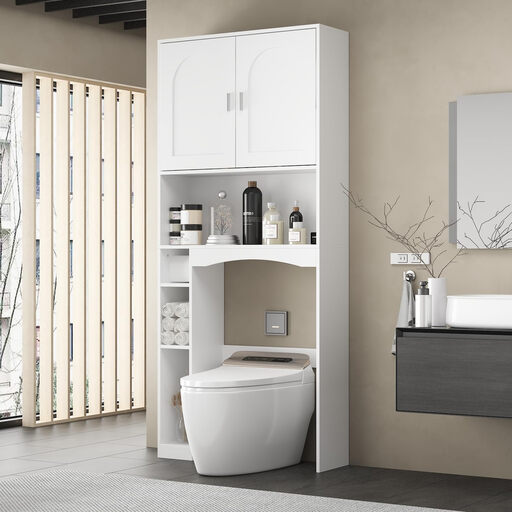
Why it stands out: This model is designed to make optimal use of the often-neglected space above the toilet. The combination of closed compartments behind two doors and several open shelves offers flexible organisation. Its simple white design blends discreetly into most bathroom interiors.
Advantages:
Who is it for? For users who need additional storage in small to medium-sized bathrooms without taking up more floor space. Ideal for storing toiletries, small towels, and decorative items.
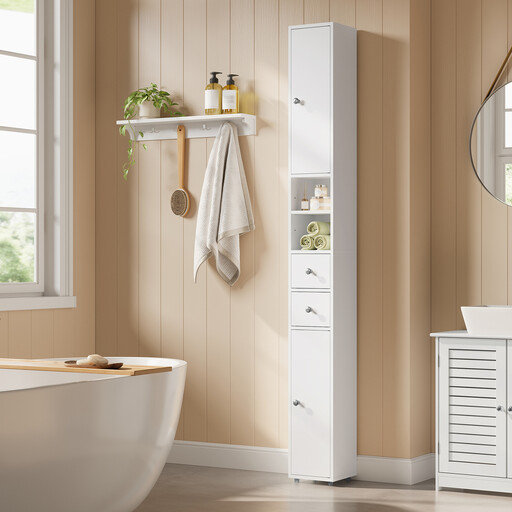
Why it stands out: With a footprint of just 20 x 20 cm, this tall cabinet is a solution for very tight spaces. It maximises the room's height and offers a surprising amount of storage thanks to a clever layout of drawers, open compartments, and doors.
Advantages:
Who is it for? For anyone looking to equip an unused corner or a narrow niche in the bathroom, hallway, or kitchen with a vertical and discreet storage solution.
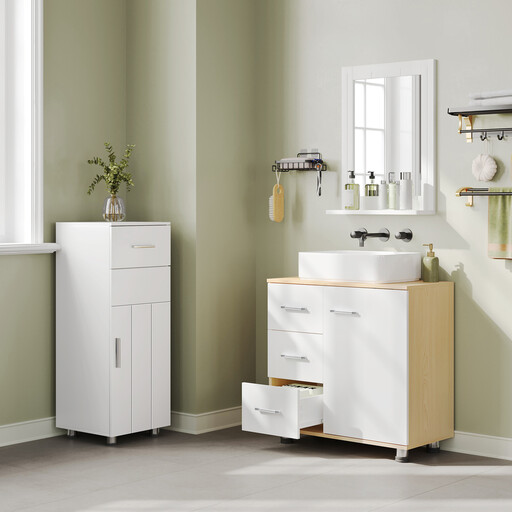
Why it stands out: This under-sink cabinet combines functionality with a modern design. The white and light oak fronts create a stylish visual accent. The layout, featuring three drawers and a cabinet compartment, allows for separate and organised storage of various items.
Advantages:
Who is it for? For users who want to organise the space under their sink while adding a modern, two-tone accent to their bathroom. The combination of drawers and a door compartment is practical for families or couples.
If you are looking for other designs or specific sizes, especially if you prefer a consistent white bathroom furniture style, you will find a wider selection in our collection. Discover more options that suit your bathroom and help you stay organised.
Discover our selection of white cabinets with shelves
The space required depends entirely on the type of cabinet. A slim tall cabinet can fit into a space as small as 20x20 cm but requires sufficient ceiling height. For an under-sink cabinet, the width of the sink and the distance to the toilet or shower are crucial. Always measure the available space carefully and plan for a few extra centimetres of clearance to ensure doors and drawers can open without obstruction.
Tall and narrow cabinets, in particular, should be fixed to the wall for safety reasons to prevent them from tipping over. Most manufacturers include an anti-tip kit for this purpose—usually a bracket or strap that is screwed to the cabinet and the wall. This is an essential safety measure, especially in households with children. Ensure that the mounting is done on a load-bearing wall.
The main difference is the siphon cutout. An under-sink cabinet has a cutout in its top panel, and often in the back panel as well, to accommodate the sink's drain pipes. A general bathroom base cabinet has a solid top panel and can be placed freely in the room, but it is not suitable for direct installation under a sink.