
Lieferung heute & morgen

Qualitätsgarantie

Willkommens-Angebote freischalten: KOSTENLOSE Lieferung | Bis zu 80 % RABATT | Kostenlose 30-Tage-JoyPlus-Testphase
App herunterladen
A cluttered bathroom can make for a stressful start to your day. When towels, cosmetics, and cleaning supplies don't have a designated spot, chaos quickly takes over. The right bathroom cabinet is often the solution, but the selection is vast, and not every model lives up to its promise. As your Joybuy Product Recommendation Officer, I'll help you identify common purchasing pitfalls and make a functional choice for your home.
Many buyers experience disappointment shortly after their purchase. The furniture swells up, doors no longer close properly, or the new cabinet doesn't even fit in the intended space. This doesn't have to happen. Pay attention to the following three common problems to avoid a bad buy:
To steer clear of these problems, you should check a few key features before buying. These will determine the longevity and functionality of your new bathroom furniture.
The material is crucial for durability in the bathroom. Look for models made from E1-grade MDF (Medium-Density Fibreboard). These are naturally denser and more dimensionally stable than simple particleboard.
Even more important is the surface treatment. A high-quality lacquer finish, ideally with UV protection, or a melamine resin coating effectively seals the material against moisture. Check that the edges and insides are also cleanly finished. A white bathroom cabinet with a smooth, easy-to-clean lacquer finish is often a good choice, as dirt and water spots can be easily removed.
Take the time to measure before you order. Note not only the available width, height, and depth, but also specific dimensions:
Think about what you want to store. A cabinet with only open shelves can quickly look messy. A completely closed model can appear bulky. A combination is often ideal:
Here are some models tailored to specific needs and room situations.
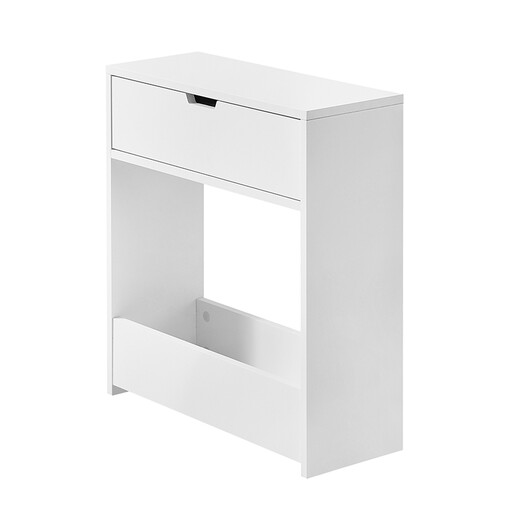
Why This Fits Their Persona: Ideal for renters or homeowners with very small bathrooms who want to make smart use of unused niches, such as the space between the toilet and the wall.
The construction from lacquered MDF boards (E1 class) is moisture-resistant and prevents swelling. Its specific, narrow shape solves the problem of finding a suitable solution for tight gaps.
Ultra-slim design (20 cm) for utilising niches. Provides targeted storage for toilet paper and cleaning supplies.
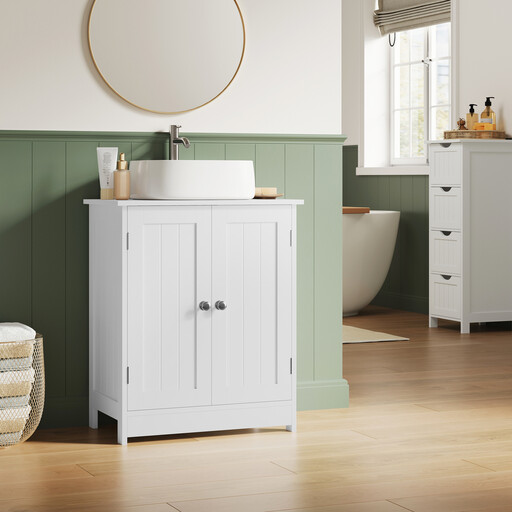
Why This Fits Their Persona: A pragmatic and budget-conscious choice for anyone looking for a standard solution for their sink and who values customisable storage space.
Prevents the "siphon conflict" by providing clear dimensions for the cutout (20 x 15.5 cm) and advising users to measure beforehand. The UV lacquer finish protects the MDF boards from moisture damage.
Adjustable shelf for flexible adaptation to tall bottles or stacks of towels. Magnetic doors for secure closing.
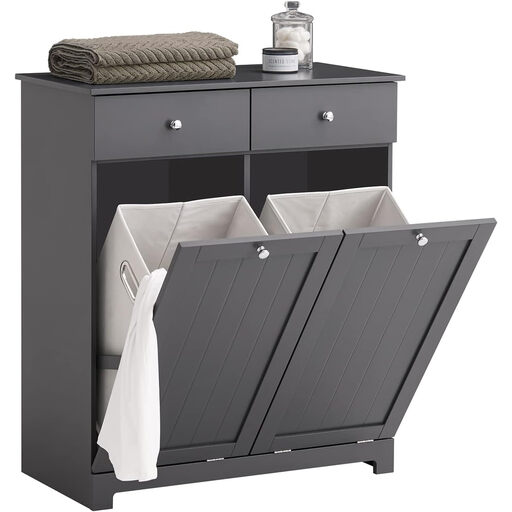
Why This Fits Their Persona: Perfect for families or couples looking for an all-in-one solution to both store bathroom essentials and discreetly sort laundry, ensuring lasting order.
This multifunctional piece of furniture prevents the need to buy multiple, often unstable, individual items. The robust construction with a load capacity of up to 70 kg counteracts the stability risk.
Combines a bathroom chest with two drawers and two removable laundry bags. Creates order on multiple levels.
We have compiled a complete, up-to-date list of products that fully meet these strict selection criteria and UK safety requirements.
Yes, securing it to the wall is strongly recommended to increase safety. A freestanding bathroom cabinet, especially a tall and narrow model, can become top-heavy when loaded. In households with children, installing the supplied anti-tip device is essential to prevent accidents.
Care is straightforward. Wipe the surfaces regularly with a soft, slightly damp cloth. Do not use aggressive abrasive cleaners or harsh chemical agents, as these can damage the lacquer. It is important to always remove standing water, such as puddles on the top surface, immediately to prevent moisture from penetrating any potential micro-cracks.
The best method is to measure precisely before buying. If the cabinet has already been delivered and the opening is only slightly off, a skilled DIYer can carefully adjust it with a jigsaw. However, it is crucial to then thoroughly seal the new cut edges with a waterproof varnish or silicone to protect the material from moisture. For larger discrepancies, exchanging the product is the safer option.