
Lieferung heute & morgen

Qualitätsgarantie

Willkommens-Angebote freischalten: KOSTENLOSE Lieferung | Bis zu 80 % RABATT | Kostenlose 30-Tage-JoyPlus-Testphase
App herunterladen
A bathroom cabinet should keep towels, toiletries, toilet paper and cleaning products neatly stored. It also needs to fit the available space and cope with humidity and the occasional splash of water. In smaller German bathrooms in particular, incorrect measurements, unsuitable materials or an impractical interior layout can quickly lead to a poor purchase.
A cabinet that is 30 cm deep can already get in the way near a door, beside the sink or in a narrow passage. So don’t just measure the available wall width. Also check:
Many bathroom cabinets are made from MDF, chipboard or plastic. A coated wood-based panel can protect the surface from normal humidity and light splashes. However, water left standing around edges, feet or untreated cut surfaces can still cause the material to swell.
Look for raised feet, water-repellent surfaces, doors that close properly and adequate ventilation. A polypropylene bathroom shelf should be assessed differently from an MDF bathroom cabinet.
A large compartment works well for towels, but smaller toiletries can quickly get lost in it. Combinations of closed compartments, open shelves, drawers and adjustable shelves are more practical. Also check the maximum load capacity. Heavy supplies or glass bottles shouldn’t be placed on a thin shelf with a low load capacity.
For small rooms, a narrow bathroom cabinet with a shallow depth or a tall model can be a good choice. A freestanding bathroom cabinet can be positioned flexibly, but it should stand on a level surface and be secured against tipping in accordance with the instructions.
A bathroom cabinet with doors offers better protection for towels and toilet paper against dust. Open compartments, on the other hand, are handy for products you use frequently and allow better ventilation. For the space under the sink, you’ll need a cabinet with a suitable U-bend cut-out. Without one, an under-sink cabinet usually can’t be fitted flush against the wall.
For MDF and chipboard, sealed surfaces, sturdy edges and clearance from the floor are important considerations. E1 MDF refers to an emissions class for wood-based panels; the specific material details in each product listing are what matter. Polypropylene shelves are easy to clean and won’t rust, but they look and feel different from bathroom furniture made from wood-based panels and metal.
Wipe away splashes promptly and avoid leaving water standing. Store cleaning products out of children’s reach.
A bathroom cabinet with adjustable shelves can accommodate bottles and boxes of different heights. Check the following:
An anti-tip kit doesn’t replace the need for a level surface. Tall or narrow furniture should be secured to the wall as instructed.
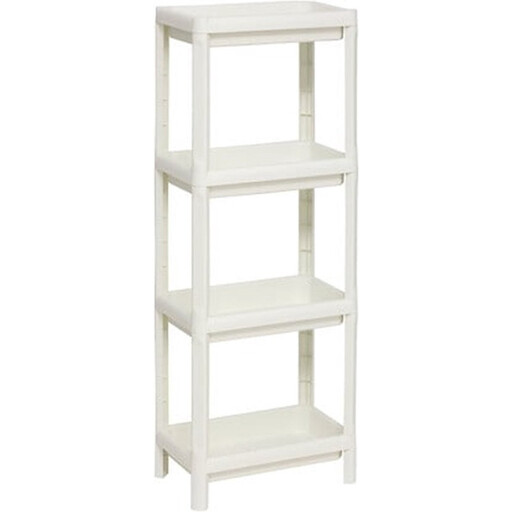
Why it suits this profile: This open shelving unit requires no tools to assemble and has four levels for towels, toiletries or storage boxes. Measuring 37 × 22 × 100 cm, it fits into many narrow alcoves.
Its compact dimensions and open design reduce the risk of choosing a cabinet that’s too deep or difficult to access.
Polypropylene construction, four shelves, tool-free assembly and a stated load capacity of up to 20 kg per shelf.
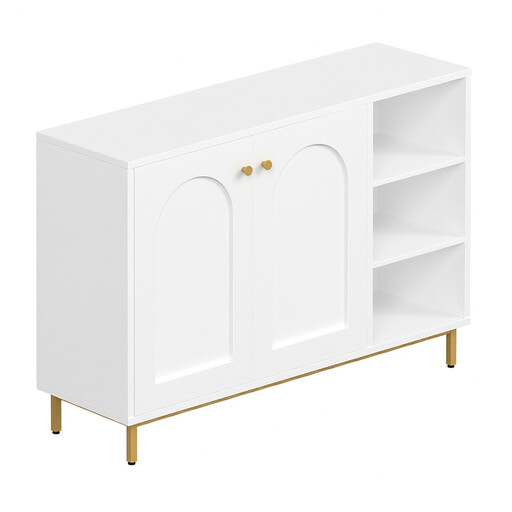
Why it suits this profile: This sideboard combines enclosed cupboard space with three open shelves. According to the product details, it measures approximately 35,5 × 100,5 × 75,5 cm.
Three height-adjustable shelves make it easier to store bottles and storage boxes of different sizes.
MDF wood-based panels, metal components, raised clearance from the floor, and a combination of enclosed and open storage.
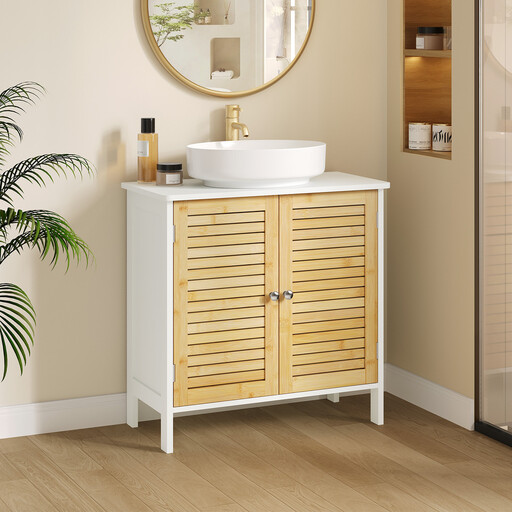
Why it suits this profile: This under-sink cabinet has two doors, a removable, adjustable shelf and a 10 × 22,5 cm cut-out for the U-bend.
The dedicated cut-out means you won’t need to modify the cabinet to fit it around the U-bend. Even so, check the measurements before buying.
60 × 60 × 30 cm, magnetic catches, metal fittings and water-repellent surfaces according to the product description.
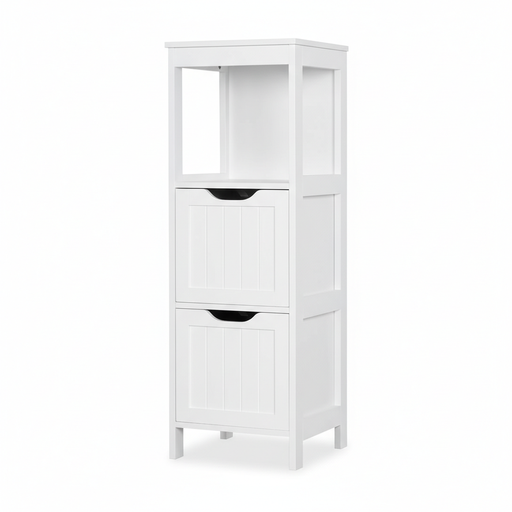
Why it suits this profile: Measuring 30 × 30 × 89 cm, this model combines two removable drawers with an open compartment. That makes it a good fit for corners and tight spaces.
Its small footprint helps you make the most of the available space without putting a deep cabinet in the way.
Two removable drawers, an open compartment, white-painted MDF panels and a stated total load capacity of 12 kg.
We’ve put together a complete, regularly updated list of products that meet these strict selection criteria and the safety regulations in force in the EU.
Place the unit on a level, dry surface and use the anti-tip kit supplied. Particularly tall, narrow cabinets or those loaded with heavy items should be secured to the wall. Only drill if you’ve checked that there are no pipes or connections where you plan to drill.
It depends on where the furniture will be placed and how it will be cared for. Polypropylene is rust-resistant and easy to clean. MDF or chipboard with a sealed surface often has a more homely look, but shouldn’t be exposed to damp for long periods. Whatever the material, protect the edges, feet and backs from water.
For a small bathroom, a narrow tall cabinet combined with an under-sink cabinet is often enough. Plan for closed compartments for supplies and cleaning products, as well as open shelves for the products you use every day. Adjustable shelves make it easy to adapt the layout if bottle sizes or the contents of your bathroom change.