
Lieferung heute & morgen

Qualitätsgarantie
App herunterladen
Kategorien
Efficient use of bathroom storage space is a functional necessity, particularly in apartments and homes with limited square footage. A well-chosen bathroom cabinet provides structure, protects personal care products from moisture and dust, and contributes to a clean, organised aesthetic. The selection of the right model hinges on three central factors: available dimensions, material, and the specific cabinet type that best suits your individual requirements.
This guide analyses the technical criteria to consider when selecting a bathroom cabinet and presents a curated selection of models with different functional strengths.
The decision for a specific piece of bathroom furniture should be based on an objective analysis of your space and needs. The following aspects are of key importance.
The most common types of bathroom cabinets are designed for different spatial situations.
The bathroom is a humid environment, which places high demands on material durability.
Freestanding, tall, and narrow cabinets pose a tipping hazard. An anti-tip kit for securely anchoring the unit to the wall is an essential safety feature. This hardware is included with many models, and its installation is crucial to ensure stability. Before purchasing, you should assess the composition of your bathroom wall to ensure a secure attachment is possible.
The following products have been selected for their specific design features and practical utility in meeting common user requirements.
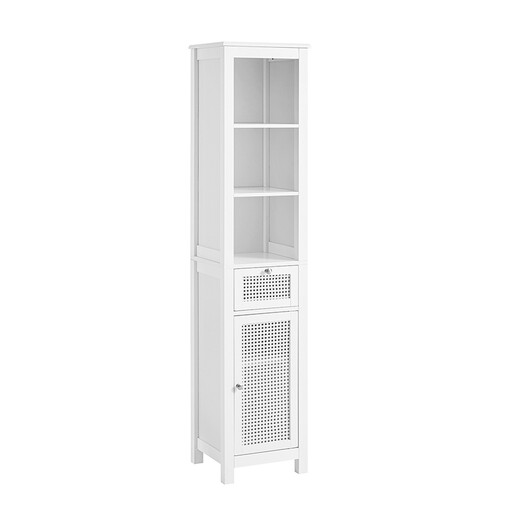
Why We Recommend This Product: Designed as a tall bathroom cabinet, this model maximises storage on a minimal footprint (35 x 32 cm). The combination of open compartments, a drawer, and a louvered door section offers flexible organisational options. The louvered door aids ventilation and helps prevent mould, a crucial advantage in the humid bathroom environment.
Pros:
Who It's For: Ideal for those in rental apartments or with small guest bathrooms who need a space-saving yet stylish storage solution. Its slim design makes it the perfect choice for unused corners.
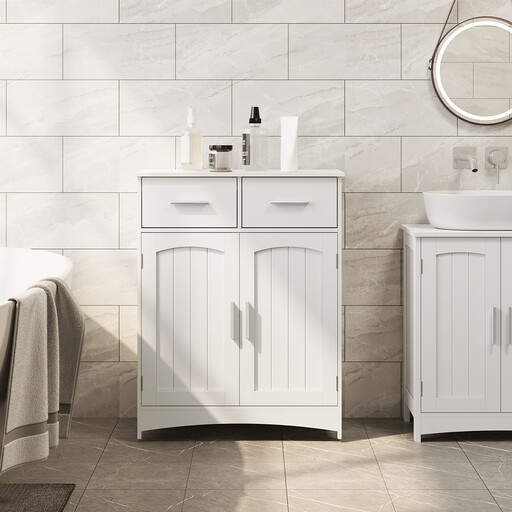
Why We Recommend This Product: At 60 cm wide, this bathroom sideboard offers a balanced combination of drawers, cabinet compartments, and a generous top surface. The shelf behind the doors is adjustable, allowing it to accommodate taller items like cleaning supply bottles. The closed fronts with magnetic catches effectively protect contents from dust and splashes.
Pros:
Who It's For: Users who need a multifunctional cabinet with a mix of open-access surface area and protected storage. It works well as a classic white bathroom cabinet for mid-sized bathrooms but can also be used in hallways or other rooms.
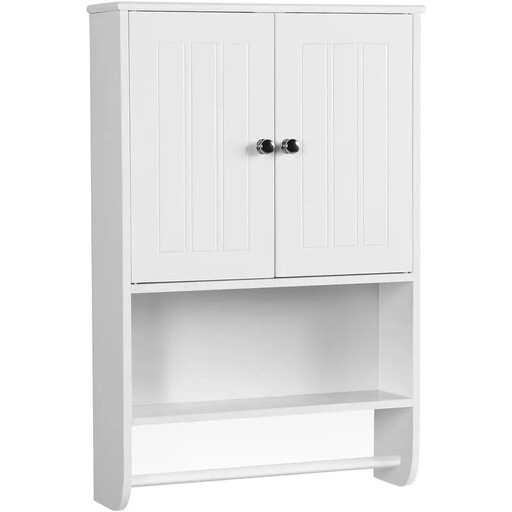
Why We Recommend This Product: Designed as a wall-mounted bathroom cabinet, this model creates storage without taking up any floor space. The integration of an open shelf and a towel bar makes it a particularly functional unit for the area above a sink or toilet. The adjustable interior shelf allows for flexible customisation to fit the height of various toiletries.
Pros:
Who It's For: Perfect for very small bathrooms where every square centimetre counts. Those looking for an all-in-one solution for essential items and wanting to make efficient use of wall space will find this a suitable model.
The models presented cover specific use cases. If you haven't found the right solution for your spatial situation or aesthetic preferences, we recommend exploring a broader range. For a larger selection of models, including various designs and sizes, you can find more options in our Storage Cabinets category.
1. What is the best material for a bathroom cabinet? Materials like E1 class MDF boards with a high-quality, water-repellent surface seal (such as lacquer or a melamine resin coating) are a common and functional choice. They offer a good balance of stability, moisture resistance, and ease of maintenance. Design features like ventilation slots or louvered doors are an added benefit.
2. How do you securely attach a bathroom cabinet to the wall? For tall cabinets and other models prone to tipping, using the included anti-tip kit is mandatory. This is typically screwed to the upper part of the cabinet and a load-bearing wall (not a simple plasterboard wall without appropriate anchors). For wall-mounted cabinets, you must select the correct anchors and screws for your specific wall type (concrete, brick, etc.) to ensure a secure and lasting installation.
3. How much space should you allocate for a bathroom cabinet? Measure the available space precisely (width, depth, height). Be sure to account for the swing clearance of doors and drawers. Also, plan for sufficient distance from other bathroom fixtures like the shower or toilet to avoid restricting movement. For very tight spaces, slim tall cabinets or wall-mounted cabinets are often the best solution.
Written by: Joybuy Product Recommendation Officer