
Lieferung heute & morgen

Qualitätsgarantie

Willkommens-Angebote freischalten: KOSTENLOSE Lieferung | Bis zu 80 % RABATT | Kostenlose 30-Tage-JoyPlus-Testphase
App herunterladen
Choosing a new bathroom basin faucet can be a challenge. It’s not just a functional component; it’s a defining feature that shapes the aesthetic of your entire wash area. Whether you're replacing a faulty bathroom mixer tap, modernising your space, or installing a new vessel sink, the right faucet must align with your needs, style, and technical requirements.
This guide is designed to help you make an informed decision. We will outline objective selection criteria and present a curated selection of models with diverse features to simplify your search.
Before you decide on a model, a few key considerations will be helpful. The three central aspects are material, height, and operation type.
The most common materials for a bathroom faucet are brass and stainless steel.
The height of the faucet is crucial for comfort and usability.
The single-lever mixer in the bathroom has become the industry standard. Water temperature and flow can be regulated precisely and conveniently with just one handle. Most modern faucets are designed for single-hole installation, which simplifies the process. Ensure the connection hoses are the correct length and have the standard 3/8-inch connection common in Germany.
Here is a selection of faucets that cater to different requirements in terms of design, function, and application.
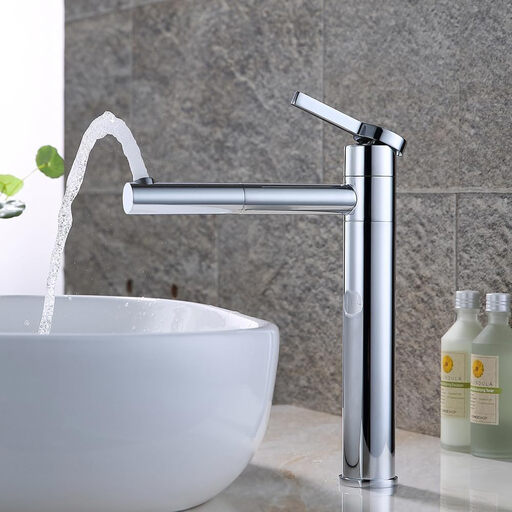
Why it stands out: This model is distinguished by its exceptional flexibility. Both the spout and the faucet body have a 360° swivel. This allows for maximum freedom of movement, making the faucet especially practical for vessel sinks or double basins. Made from lead-free 304 stainless steel with a polished chrome finish, it combines a modern look with robust materials.
Advantages:
Who is it for? For users who have a vessel sink and are looking for a tall, extremely flexible basin faucet with a modern design.
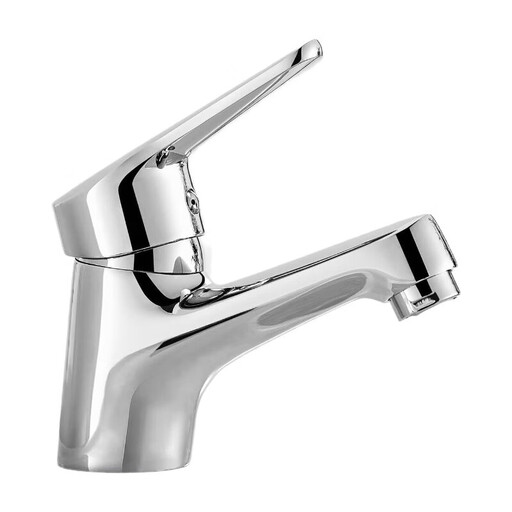
Why it stands out: The Ibergrif faucet is a solid and dependable choice for standard basins. It features a solid brass body with a glossy chrome finish, promising long-lasting durability. With its classic shape and standard height, it blends discreetly into most bathroom designs. According to the manufacturer, the ceramic cartridge has been tested for over 500,000 cycles to ensure drip-free operation.
Advantages:
Who is it for? Ideal for anyone looking for a durable and functional standard-sized bathroom faucet, whether for a rental property or as a hassle-free replacement for an old fixture.
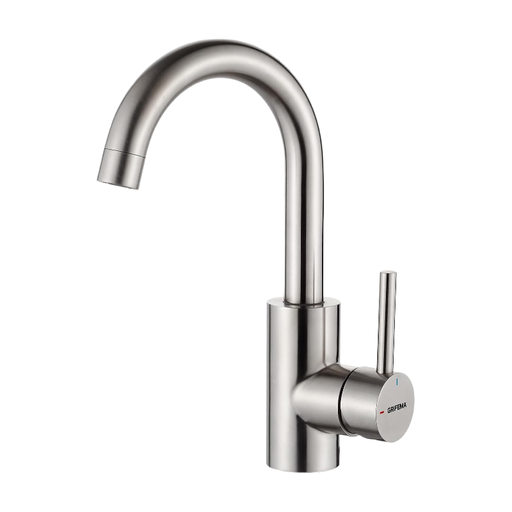
Why it stands out: This bathroom faucet from Grifema offers a stylish alternative to the classic gloss of chrome. Its brushed brass finish provides a modern, matte look and is more resistant to fingerprints and water spots. With a spout height of 180 mm and a 360° swivel spout, it combines elegant design with high functionality.
Advantages:
Who is it for? For design-conscious users who prefer a modern bathroom faucet with a matte finish and value easy installation and flexible use.
These three models are just a small sample of the available options. Every bathroom is unique and requires a tailored solution. If you are looking for other designs, finishes, or specific functions, you can find a wider selection in our comprehensive Basin Mixer Taps category to find the perfect faucet for your home.
A high-pressure faucet is needed when your water comes from two separate pipes (hot and cold) directly from the wall. This is the case in most households in Germany. A low-pressure faucet is only required if your hot water is heated by an unpressurised boiler or an under-sink water heater. These faucets have three connection hoses. All models presented here are high-pressure faucets.
The ideal height depends on the height of the vessel sink itself. The water spout should be positioned high enough above the basin's rim to allow for comfortable hand washing without splashing. A distance of 10 to 15 cm between the basin rim and the spout has proven effective in practice. Therefore, be sure to measure the height of your basin before purchasing.
A soft, damp cloth is usually sufficient for cleaning. For more stubborn dirt, a mild, pH-neutral cleaner can be used. Be sure to avoid abrasive cleaning agents, scouring pads, or harsh chemicals, as these can permanently damage the surface. Afterwards, rinse with clean water and polish with a dry cloth to prevent water spots.