
Lieferung heute & morgen

Qualitätsgarantie

Willkommens-Angebote freischalten: KOSTENLOSE Lieferung | Bis zu 80 % RABATT | Kostenlose 30-Tage-JoyPlus-Testphase
App herunterladen
Choosing a new bathroom faucet might seem straightforward, but the details are what determine its durability, functionality, and your long-term satisfaction. An unsuitable choice not only leads to daily frustration but can also result in costly repairs. Before you make a decision, it's crucial to understand the common pitfalls that can hide behind a shiny surface.
Many buyers focus on design while overlooking critical technical features. This often results in impractical solutions or products whose quality doesn't justify the price. This guide will help you separate the wheat from the chaff and make an informed decision.
To avoid a bad purchase, you should focus on three core technical aspects. These are the primary determinants of your new faucet's quality and functionality.
The internal components are crucial for a long service life. Pay attention to the following features:
Different installation types are available depending on the application. A basin faucet is usually installed directly on the sink or countertop via a single-hole installation. Ensure it has the standard 3/8-inch connection for the flexible hoses. A shower faucet or a complete shower system with a rain showerhead, on the other hand, is wall-mounted (surface-mounted or concealed installation) and requires different connections (usually 1/2-inch).
Modern faucets offer more than just water control.
Based on the quality criteria mentioned, we have compiled a selection of products for typical user profiles.
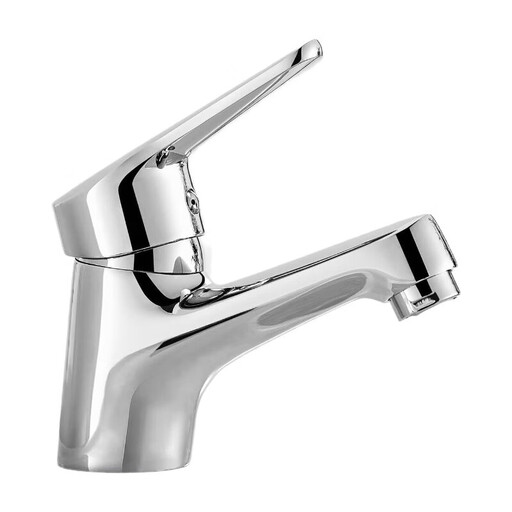
Why it's a good match: Ideal for renters or budget-conscious renovators looking for a reliable, standard solution. This faucet combines a classic design with solid engineering for daily use.
The solid brass body and ceramic cartridge prevent premature wear and leaks, unlike cheaper models with a zinc alloy core.
DVGW-certified connection hoses for tested safety. The integrated aerator provides a soft water stream and helps conserve water.
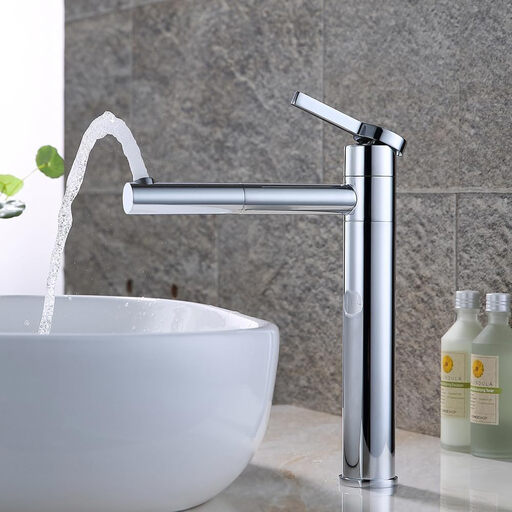
Why it's a good match: The tall design and flexible swivel range are specifically engineered for the demands of vessel sinks, offering maximum freedom of movement.
Elegantly solves the problem of mismatched height and spout reach. The 304 stainless steel body is rustproof and lead-free, ensuring high material quality.
The dual 360° rotation of both the faucet body and spout offers unparalleled flexibility, making it ideal even for double vanities.
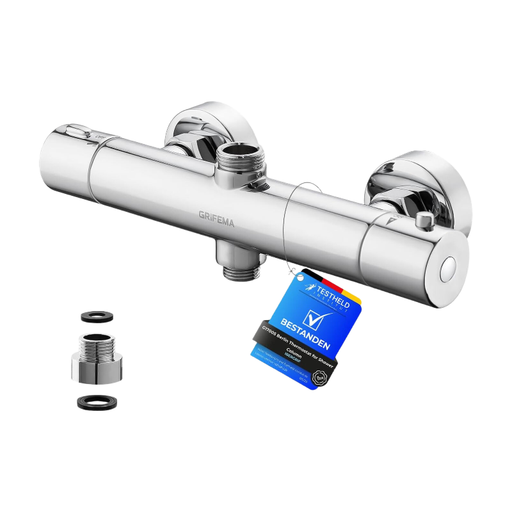
Why it's a good match: Provides a safe and comfortable shower environment with its constant temperature control and anti-scald protection, which is especially important in households with children.
The thermostat prevents sudden temperature spikes that can occur with basic mixers due to pressure fluctuations in the plumbing system.
Preset safety stop at 38°C provides effective anti-scald protection. Two outlets allow for the flexible connection of an overhead and a hand shower.
A careful selection is the key to long-lasting satisfaction in your bathroom. Discover more models that meet our criteria for quality, durability, and functionality.
1. How long does a bathroom faucet last on average? The lifespan of a bathroom faucet heavily depends on the material and the quality of the cartridge. A high-quality faucet made of solid brass with a ceramic cartridge can remain functional for 10 to 15 years or more with regular care. Cheaper models made of zinc alloy often show the first signs of wear after just 2 to 5 years.
2. Can I install a bathroom faucet myself? A standard basin faucet with flexible connection hoses (3/8-inch) can often be installed by experienced DIY enthusiasts. The required tools are generally minimal. However, for a wall-mounted shower faucet or complex concealed systems, hiring a professional plumber is recommended to prevent water damage to the building structure.
3. What does "water-saving" really mean for a faucet? The term water-saving refers to an aerator integrated into the spout. This component mixes air into the water stream. As a result, the stream feels full and soft, even though the actual amount of water flowing through is reduced by up to 30% or more. This lowers the consumption of both cold and hot water, thereby reducing utility costs.