
Lieferung heute & morgen

Qualitätsgarantie

Willkommens-Angebote freischalten: KOSTENLOSE Lieferung | Bis zu 80 % RABATT | Kostenlose 30-Tage-JoyPlus-Testphase
App herunterladen
Choosing the right bathroom lighting is crucial for both functionality and atmosphere. LED recessed spotlights for the bathroom, in particular, are a popular choice due to their modern look and energy efficiency. However, the market is flooded with products whose technical specifications can be confusing. Making the wrong choice not only leads to aesthetic disappointment but can also pose safety risks and require expensive repairs.
This guide will help you navigate the most common pitfalls and make an informed decision. We will focus on the three most critical mistakes made when selecting ceiling spotlights for the bathroom:
To avoid these mistakes, you should focus on a few crucial technical features. These parameters determine the safety, functionality, and longevity of your new bathroom lighting.
The IP (Ingress Protection) rating indicates how well a light is protected against the intrusion of foreign objects and water. For the bathroom, this is the most important parameter. The bathroom is divided into different protection zones:
For most ceiling installations outside the direct shower area, moisture-resistant lights with an IP44 rating are sufficient and a safe choice. Check this specification carefully to ensure safety and compliance with electrical regulations.
Before you buy, measure the available space in your ceiling void. Many modern LED spotlights for the bathroom are designed to be particularly slim, with installation depths of less than 35 mm. These models are ideal for renovations and ceilings with limited space.
Also, look for models with a direct 230V connection. These do not require a separate transformer, which significantly simplifies installation and eliminates a potential point of failure. The lights are connected directly to the mains electricity, speeding up the work for a qualified electrician.
The lighting mood in the bathroom should be flexible—bright and clear for the morning routine, warm and relaxing for an evening bath.
Here are some product recommendations tailored to specific user profiles and their requirements.
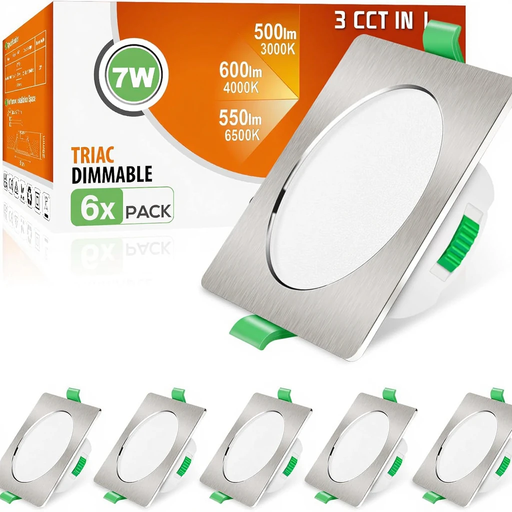
Why it's a great fit: Perfect for modernisations where the ceiling void is shallow. The square design also adds a contemporary touch.
With an extremely low installation depth of just 29 mm, this model bypasses the problem of spotlights being too deep. It fits into almost any suspended ceiling.
Offers full flexibility with 3CCT colour temperature selection, dimmability, and a direct 230V connection without a transformer.
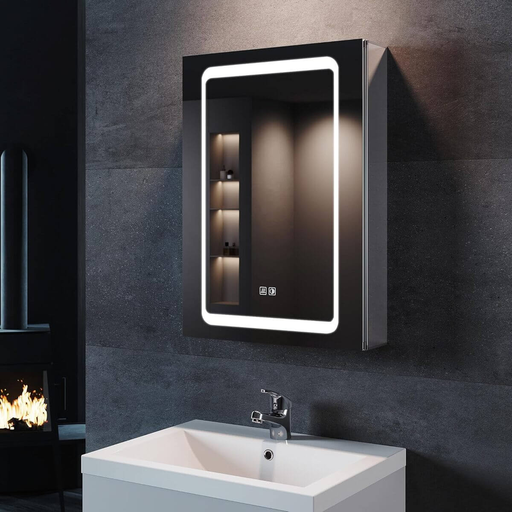
Why it's a great fit: An all-in-one solution that combines storage, lighting, a power socket, and an anti-fog function in one elegant design.
As an integrated system, all components are already perfectly matched. There are no compatibility issues between the light, switch, and power supply.
The mirror cabinet with lighting and a power socket, plus the anti-fog function, offers maximum convenience for the daily routine.
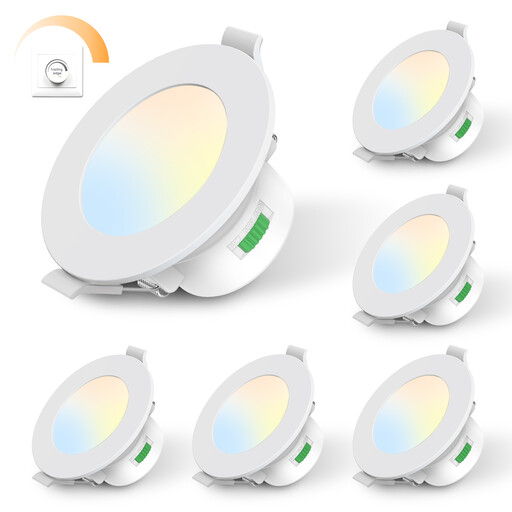
Why it's a great fit: Specifically designed for areas that may be exposed to direct splashes or jets of water, such as the ceiling above a shower cabin.
The high protection rating of IP65 (protection against water jets) goes beyond the standard splash protection (IP44) and reliably prevents moisture ingress.
Maximum safety for protection zone 1, combined with the flexibility of dimmability and selectable colour temperature for optimal illumination.
We have compiled a complete, up-to-date list of products that fully meet these strict selection criteria and safety regulations.
The required number depends on the room size, ceiling height, and the brightness (lumens) of the spots. As a rule of thumb for good general lighting, you can aim for about 300 to 400 lumens per square metre. For an 8 m? bathroom, that would be 2400 to 3200 lumens in total. With spots that each provide 800 lumens, you would therefore need 3 to 4 units to achieve even illumination.
Electrical installations in damp rooms are subject to strict regulations (e.g., IET Wiring Regulations in the UK). In particular, work on the 230V mains supply must be carried out by a qualified electrician. Even if installing transformer-free spots seems simpler, connecting them to the power grid should be left to a professional for safety reasons.
3CCT stands for "3 Correlated Colour Temperatures." It means that a single light fixture can produce three different light colours. Typically, these are Warm White (approx. 3000 Kelvin), Neutral White (approx. 4000 Kelvin), and Cool White (approx. 6500 Kelvin). The selection is usually made via a small switch on the spot's housing before the final installation in the ceiling. This gives you the flexibility to adjust the room's lighting atmosphere according to the application.