
Lieferung heute & morgen

Qualitätsgarantie

Willkommens-Angebote freischalten: KOSTENLOSE Lieferung | Bis zu 80 % RABATT | Kostenlose 30-Tage-JoyPlus-Testphase
App herunterladen
A towel rack in the bathroom is more than just a practical item. It helps keep the space organised, ensures towels dry quickly, and can be a real style statement. However, the market is flooded with models whose weaknesses often only appear after a few weeks in a humid bathroom environment. Before you make a decision, it's crucial to understand the common pitfalls that lead to frustration and unnecessary expense.
As your Joybuy Product Recommendation Officer, I'll filter the essential information for you, so you can make an informed choice based on facts, not marketing promises.
Many products look convincing at first glance but prove to be impractical in daily use. Pay special attention to these three weak points:
To avoid these mistakes, you should focus on three core technical parameters. These determine the durability and functionality of your towel rack.
The material is the foundation for longevity in a damp environment.
The choice between a permanently mounted and a flexible model depends on your bathroom and your needs.
Consider how much bathroom storage you need.
Here are some models tailored to specific user profiles that successfully avoid the pitfalls mentioned.
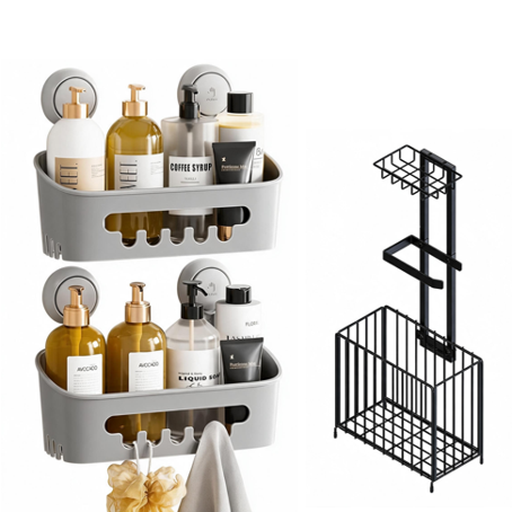
Why it's a great fit: This set is ideal for renters as it requires no drilling at all. The combination of a removable towel rack and two suction cup shower caddies maximises storage in the smallest of spaces without damaging the walls.
It completely solves the "unsuitable mounting" problem. The powerful suction cups are designed for a high load capacity of up to 10 kg, which avoids the typical instability of adhesive solutions.
Multifunctional set for towels and shower essentials. Allows for flexible positioning and can be removed without leaving any residue.
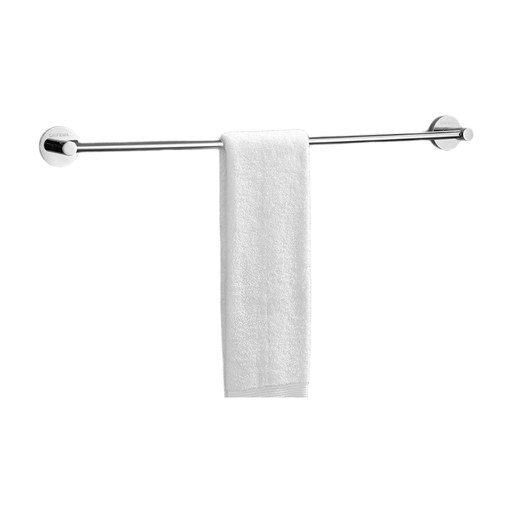
Why it's a great fit: For anyone who values durability and a timeless design. The brass body with a chrome finish is a classic combination known for its robustness and resilience in the bathroom.
It addresses the "inferior surface" trap. Brass does not rust, and the chrome plating provides a scratch-resistant, easy-to-clean protective layer. The secure screw mounting guarantees maximum stability.
High-quality material mix (brass) and a manufacturer-stated five-year guarantee, which indicates confidence in the product's quality.

Why it's a great fit: A towel ladder provides space on multiple levels for the whole family's towels. This bamboo model is not only functional but also a decorative element that brings warmth to the bathroom. It's flexible and requires no wall mounting.
It sidesteps the "unstable construction" and "unsuitable mounting" traps. By leaning against the wall, the structure is stable, as long as it's not used as a climbing frame. The bamboo material is well-suited for humid environments.
Large capacity on a small footprint. No installation required, can be repositioned flexibly. According to the manufacturer, the product is FSC-certified.
Well-planned bathroom storage is the key to a tidy and functional space. If you'd like to compare more models selected based on objective criteria like material quality and stability, you can find our complete overview here.
There is no fixed standard for a wall-mounted towel rack, but a common recommendation is a mounting height of about 100 to 120 cm (approx. 39 to 47 inches) from the floor. This ensures that even long bath towels do not touch the ground and are within easy reach. Next to the sink, a hand towel holder should be placed where it is easily accessible without being in the way.
Not necessarily. The problem isn't the colour, but the quality of the coating. A black towel rack finished with a high-quality powder coating will resist moisture and rust just as well as a chrome-plated model. However, with cheap, thinly painted versions, there is a higher risk that the coating will be damaged by scratches or impacts, causing the underlying metal to start rusting.
A towel stand is a completely freestanding structure, often with multiple arms or bars at different heights mounted on a base plate. A towel ladder, on the other hand, is a lean-to structure with rungs that leans against the wall without any fixtures. It is often more space-efficient and has a more decorative character, whereas a stand is typically designed for maximum functionality and air circulation.