
Lieferung heute & morgen

Qualitätsgarantie

Willkommens-Angebote freischalten: KOSTENLOSE Lieferung | Bis zu 80 % RABATT | Kostenlose 30-Tage-JoyPlus-Testphase
App herunterladen
A suitable bathroom towel rail needs to do more than provide a decorative place to hang towels. The available wall or floor space, the distance from the washbasin and whether drilling is permitted are all important considerations. Similar requirements apply in the kitchen, guest cloakroom or utility room.
Many unsuitable purchases result from three common pitfalls:
The mounting method determines how much space is needed and how permanently the towel rail can be used.
For the kitchen, a kitchen towel rail with a small footprint can be a sensible choice. Metal models are often easy to wipe clean; with wooden designs, moisture, the distance from the sink and the care instructions are particularly important.
Measure the intended area, including the door opening radius and the distance from the washbasin or shower. A 60 cm towel rail needs more than 60 cm of wall width. It also requires sufficient clearance at the sides so that towels can be placed on and removed from the rail easily.
With a freestanding towel rail, you should also consider the footprint and stability. For example, a three-tier model measuring 36 inches wide and 11.5 inches deep requires considerably more floor space than a slim wall-mounted rail.
A metal towel rail may be made from stainless steel, brass or coated steel. However, the material description alone says little about whether it is suitable. Important factors include:
Wood and metal often create a rustic or industrial look. With a rustic towel rail, the wooden surface should be cleaned regularly with a dry or only slightly damp cloth. Abrasive cleaners can damage coatings and surfaces.
For wall-mounted models, the mounting system must be suitable for the substrate. Wall plugs for solid walls are not automatically suitable for plasterboard. If mounting accessories are not supplied, you will need to select hardware that is suitable for the wall separately.
A towel rail is also not designed to be used as a grab rail. Heavy dressing gowns, wet bath towels or additional baskets should only be hung from it if the manufacturer expressly permits this.
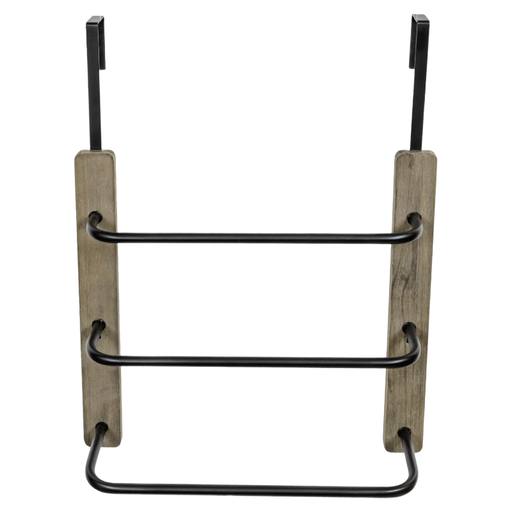
Why this product suits this profile: This model hangs over the door and, according to the product information, requires neither tools nor additional mounting hardware. It is suitable for doors up to 4.4 cm thick.
The door thickness is clearly specified. This allows you to check before buying whether the design is suitable for your door.
Three metal rails arranged one above the other, tool-free door mounting and dimensions of 56.9 × 45.2 × 19.6 cm.
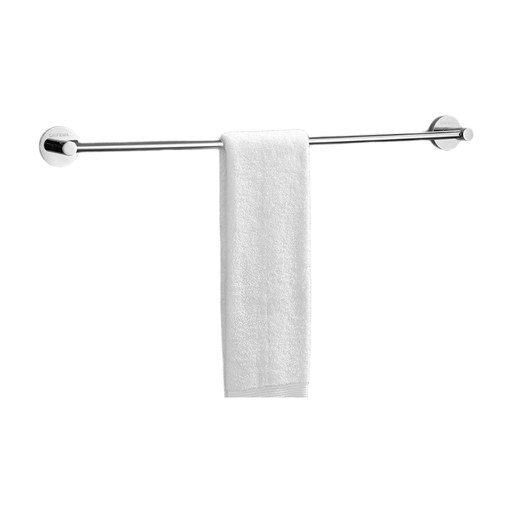
Why this product suits this profile: The single wall-mounted brass rail has a chrome finish and is supplied with an installation kit and screw fixings.
The rail length, material and mounting method are clearly specified. This makes it easy to compare the solution with the available wall space.
60 cm rail length, brass construction, chrome finish and a five-year manufacturer's warranty according to the product information.
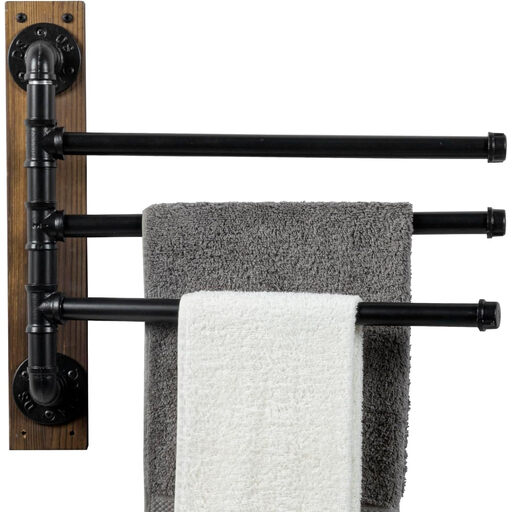
Why this product suits this profile: Three swivelling metal rails provide separate hanging space for the bathroom, kitchen, pool area or utility room. When not in use, the system can be folded flat.
The swivelling rails keep several towels separate and reduce the space needed when the unit is not in use.
Three rails that swivel through 180 degrees, wall mounting with a pre-drilled wooden board and a compact depth when folded away.
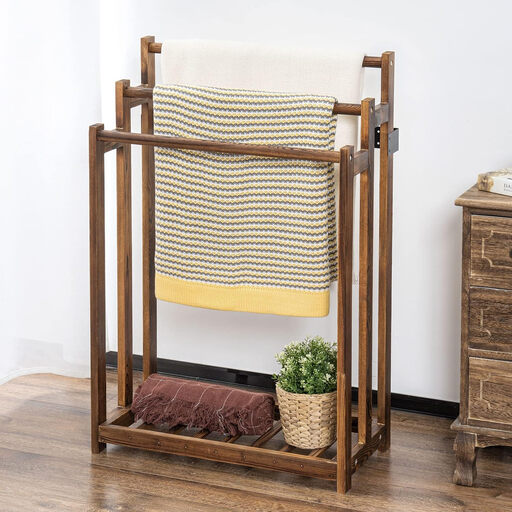
Why this product suits this profile: The freestanding towel rack is suitable for rented homes, utility rooms or areas where you do not want to drill into the wall. According to the description, it can also be secured to the floor.
The dimensions of 23.5 × 36 × 11.5 inches should be checked in advance. This helps prevent the stand from obstructing walkways or doors.
Three hanging levels plus a lower shelf for baskets, toiletries or folded laundry; material: solid wood.
We have put together a complete, regularly updated list of products that fully meet these strict selection criteria and the safety regulations applicable in the EU.
The service life depends on the material, installation and use. Wipe metal surfaces with a soft cloth and a mild cleaning product. Abrasive cleaners can damage chrome or powder-coated finishes. Wood should not be left wet for prolonged periods.
With wall-mounted models, check occasionally whether any screws or brackets have become loose. With an over-the-door model, the hooks should sit flush and the door should still close fully. Wet towels should not be permanently stacked on a single rail, as this restricts air circulation.
There is no standard height that suits every household. The rail is often positioned so that the towel is easy to reach without touching the floor. You should also check the distance from washbasins, radiators, sockets and doors.
This depends on the adhesive system, surface, load and installation. Smooth, clean and load-bearing surfaces are generally more suitable than porous or uneven ones. Always observe the manufacturer's stated maximum load and allow adhesive connections sufficient time to cure.
For several bath towels, consider a multi-level freestanding towel rail, a towel rail with several rails or a swivelling wall-mounted model. The key is to ensure that enough air can circulate between the towels and that the mounting surface can support the structure securely.