
Lieferung heute & morgen

Qualitätsgarantie

Willkommens-Angebote freischalten: KOSTENLOSE Lieferung | Bis zu 80 % RABATT | Kostenlose 30-Tage-JoyPlus-Testphase
App herunterladen
A bathroom towel rail should keep hand and bath towels within easy reach, allow them to dry properly and suit the available space. In rented homes, small bathrooms or guest rooms, however, design is not the only consideration. The mounting method, depth, material and load capacity determine whether the solution is genuinely practical for everyday use.
Several rails can look generously spaced in product photos. In practice, towels hanging too close together may take longer to dry. Check that the rails have enough space between them and that the towels can be spread out fully. A multi-tier towel rail is not automatically suitable for several large bath towels.
A freestanding towel stand needs floor space and should not be positioned in doorways or narrow passageways. For wall-mounted models, you also need to take skirting boards, sockets, taps and tile joints into account. For small bathrooms, slim wall-mounted models, over-door solutions or a space-saving towel rail are often more practical than a wide freestanding model.
A freestanding towel rail can generally be positioned flexibly, but it may tip over under a heavy load if the base is too light or uneven. A wall-mounted towel rail saves floor space, but it requires a suitable mounting surface and secure installation. In rented homes, check drilling requirements, door thickness and whether you have the landlord’s permission.
The material also deserves attention: wood adds a warm look, but in a damp bathroom it requires suitable surface care. Metal is easy to maintain, but should have a coating or corrosion protection suitable for humid rooms.
First, measure the area where the towel rail is to be mounted or placed. Make a note of:
A towel rail with shelf can provide additional storage for folded textiles or baskets. However, it requires more depth than a single wall-mounted rail. For restricted layouts, a folding or swivelling solution may be more suitable.
Look for sturdy connections between the rails, frame and mounting points. For wall-mounted models, the wall plugs and screws should be suitable for the mounting surface. The supplied fixings are not automatically suitable for every type of tile or wall.
For a freestanding model, a wide base and low centre of gravity are important criteria. If several heavy bath towels are hung up, the construction should not visibly wobble. Where stated by the seller, details of the maximum load capacity are preferable.
A metal towel rail with a powder-coated or otherwise suitably treated surface can usually be cleaned with a soft cloth. Abrasive products may damage coatings and chrome surfaces. Brass with a chrome finish should be wiped dry regularly to help reduce water marks.
A wooden or bamboo towel rail suits rustic and minimalist interiors. Check that the surface is treated and smooth, with no sharp edges. After showering, wipe away any splashed water and ventilate the room sufficiently. This will not automatically extend the product’s lifespan, but it does reduce prolonged exposure to moisture.
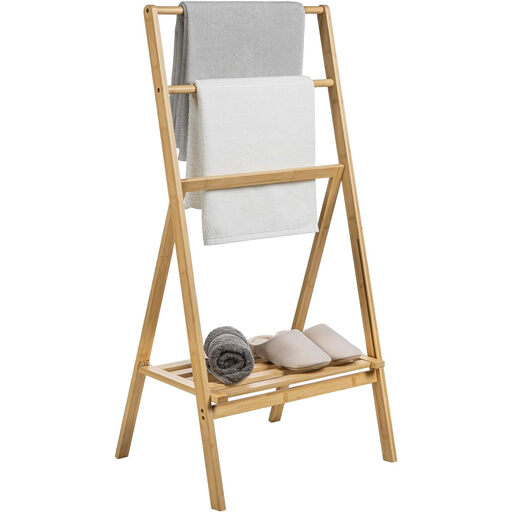
Why this product suits this profile: This freestanding bamboo model requires no wall drilling and, according to the product details, can be folded away. With a height of 43.7 inches and several shelves, it is designed for flexible use in the bathroom, kitchen or entrance hall.
The folding design avoids the need for permanent wall mounting. Before buying, compare the base dimensions of 21.7 x 17.5 inches with the available floor space.
Bamboo construction, multiple levels, a foldable frame and no tools required for assembly according to the product description.
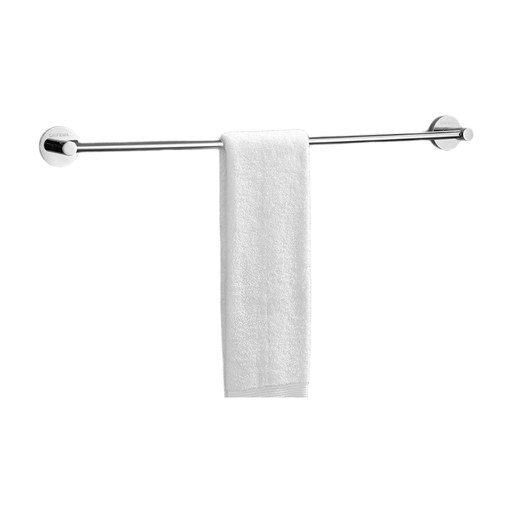
Why this product suits this profile: The single 60cm brass bar with a chrome finish is ideal for a clean, minimalist bathroom aesthetic. It can be mounted on walls beside a washbasin or shower, provided the surface is suitable for screw mounting.
The stated length makes it easier to plan the available space precisely. As this is a single rail, it does not make unrealistic claims about holding several towels.
60cm bar, brass construction, chrome finish and an installation kit listed as included.
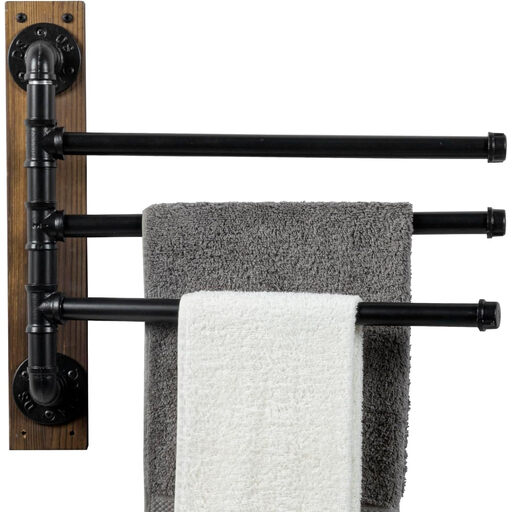
Why this product suits this profile: Three metal bars that swivel through 180 degrees provide flexible hanging options for the bathroom, kitchen or pool area. When folded away, the model extends 3.1 inches into the room, according to the product details.
The swivelling bars create space between towels while they dry, then fold neatly away to save room. A flat wall surface is required for installation.
Three bars, a 180-degree swivel function, wall mounting and a combination of powder-coated metal and solid wood.
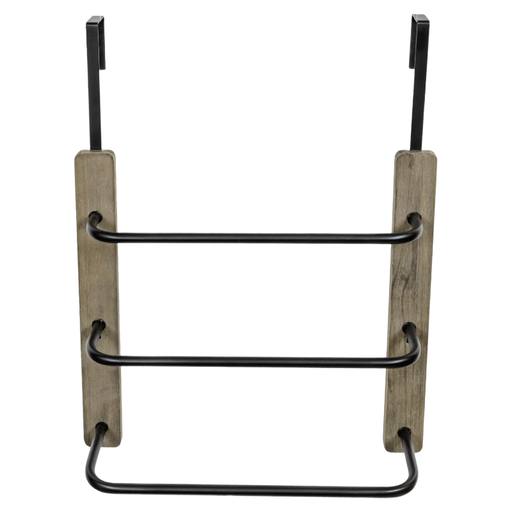
Why this product suits this profile: According to the product description, this over-door solution hangs in place without tools and provides three metal bars. It is designed for doors up to 1.75 inches or approximately 4.4 cm thick.
Before buying, you can check the most important compatibility factor by measuring the door thickness. You should also check the door frame, seals and available opening space.
Tool-free over-door installation according to the product details, three staggered bars and a stated depth of 19.6 cm.
We have put together a complete, regularly updated list of products that fully meet these strict selection criteria and the safety regulations applicable in the EU.
For limited floor space, consider a slim wall-mounted towel rail, an over-door solution or a folding towel stand. The actual depth when folded away and the distance from doors and bathroom fittings are key considerations. A single wall-mounted rail is usually more space-efficient than a model with several levels and shelves.
There is no single height that suits every bathroom. As a practical guide, the rail should be easy for everyone in the household to reach without the towel touching the floor. Also measure the distance from the washbasin, shower and radiator. If there are several rails, the towels should not hang directly on top of one another.
Remove water and soap residue with a soft, slightly damp cloth, then dry the surface. Avoid abrasive products and harsh cleaners, particularly on chrome, painted or powder-coated surfaces. Wood and bamboo should not be left wet for extended periods. Regularly checking the screws, joints and feet helps you identify loose connections at an early stage.