
Lieferung heute & morgen

Qualitätsgarantie

Willkommens-Angebote freischalten: KOSTENLOSE Lieferung | Bis zu 80 % RABATT | Kostenlose 30-Tage-JoyPlus-Testphase
App herunterladen
A bathroom towel rail should do more than simply complement the look of the room. The right installation method, sufficient space for drying and a material that can cope with everyday moisture are all essential. This is particularly important in rented homes, small bathrooms and family households, where unclear product details can quickly lead to unsuitable purchases.
A no-drill towel rail can be a practical solution, but it is not automatically suitable for every surface. Adhesive holders generally require a smooth, clean and dry surface. Suction-cup models usually adhere to smooth, non-porous surfaces such as glass, tiles or metal.
Adhesion may be limited on textured tiles, wallpaper, untreated marble or uneven walls. The maximum load capacity also applies only under the conditions specified by the manufacturer. Before buying, you should therefore check:
The overall length says little about how many towels can be hung comfortably. For example, a single towel rail measuring 60 cm is suitable for one or more narrowly folded towels. However, several towels hung one above another will dry more slowly if there is hardly any air circulation between the fabrics.
For families or several bath towels, multiple levels, swivel rails or a towel stand may be more practical. Sufficient space between the hanging points and the wall is important.
A black metal holder, a wooden towel rail or shiny chrome can complement different interior styles. However, cleaning and protection against moisture also matter in the bathroom. Untreated wood can be more sensitive to prolonged exposure to moisture. With metal, pay attention to the specific finish, such as powder coating, stainless steel or chrome.
Also check whether the holder should be cleaned only with a dry cloth, a damp cloth or a mild cleaning product. Abrasive cleaners can damage surfaces.
Before ordering, measure the available wall or floor space. Also take washbasins, radiators, shower doors and the opening area of doors into account. A towel hook or compact towel ring is often sufficient for a cloakroom. Longer rails or multiple levels are more suitable for bath towels.
Leaving space between towels helps air circulate. Models with swivel arms can be folded closer to the wall when not in use.
Stainless steel is a popular choice for rooms exposed to moisture. For a stainless-steel towel rail, the product description and care instructions should specify the exact finish. Powder-coated metal can provide a matt, industrial look. Wood and bamboo suit rustic or natural interior schemes, but should not be exposed to standing water for prolonged periods.
For towel rails for the bathroom and kitchen, an easy-to-clean finish is recommended, as these areas may also be exposed to soap residue, water splashes or cooking grease.
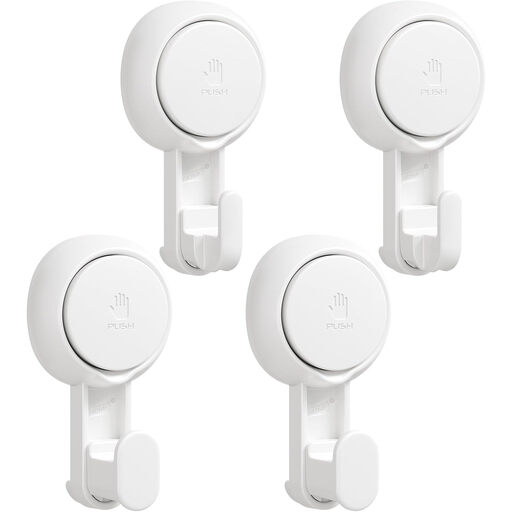
Why this product suits this profile: Four suction-cup hooks can be attached to suitable smooth surfaces without drilling and repositioned when required.
The product details expressly specify smooth, non-porous, dry surfaces and a maximum load of 11 lb. This helps prevent use on unsuitable walls.
Tool-free installation, 360-degree swivel hooks and the ability to reposition them repeatedly, according to the product description.
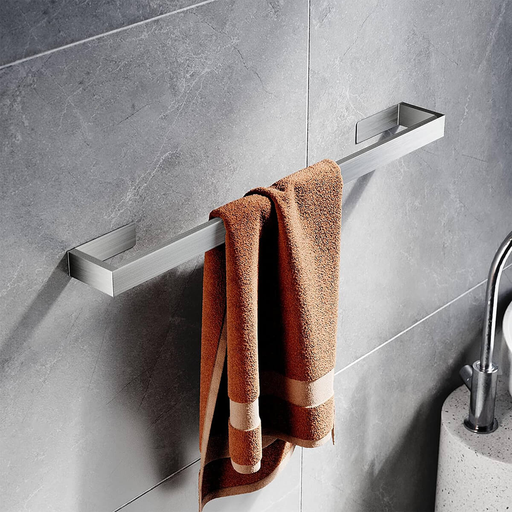
Why this product suits this profile: The 600-mm brushed stainless-steel version combines a longer rail with a subtle, modern finish.
The product description specifies self-adhesive installation. Before fitting, check that the surface is suitable, clean and able to support the holder.
Brushed stainless steel, a product length of 61.5 cm and no-drill installation according to the manufacturer’s specifications.
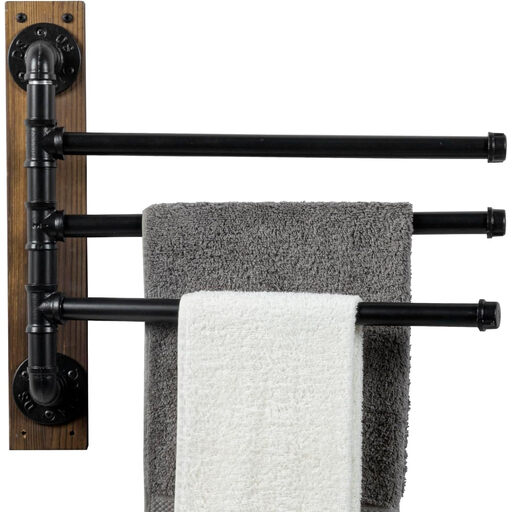
Why this product suits this profile: Three rails that swivel through 180 degrees provide separate hanging spaces for several hand or bath towels.
The swivel arms create space between the towels. When folded away, the model can lie flat against the wall, according to the description.
Black powder-coated metal, fired solid wood and three swivel rails.
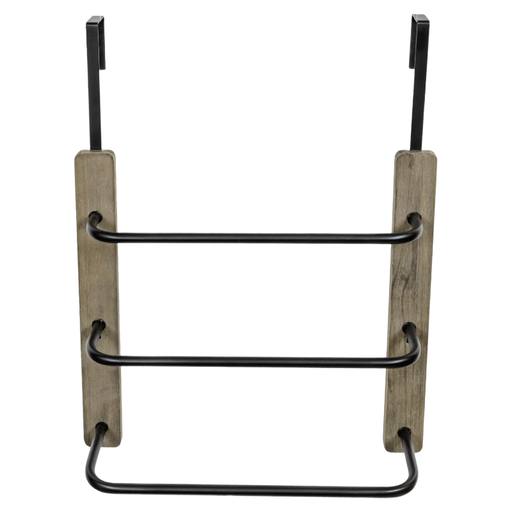
Why this product suits this profile: It fits over the door and, according to the product description, requires neither tools nor additional mounting materials.
The suitable door thickness is clearly specified: up to 4.4 cm. Before buying, check the rebate, door movement and available width.
Three levels, a height of 56.9 cm and a combination of wood and matt black metal.
We have put together a complete, regularly updated list of products that fully meet these strict selection criteria and the safety regulations applicable in the EU.
Whenever possible, install a wall-mounted towel rail so that splashing water does not reach the fittings continuously. With adhesive and suction-cup models, clean the surface before installation and allow it to dry completely. Load tests using heavy objects are not advisable when the manufacturer specifies a clear maximum load.
A metal towel rail can usually be cleaned with a soft, damp cloth. For wood or bamboo, gentle cleaning without prolonged soaking is recommended. Check screws, adhesive joints and suction cups regularly, particularly when several wet towels are hanging from them.
For rented homes, a no-drill towel rail, suction-cup model or over-door solution may be suitable. The surface is crucial. Adhesive holders should only be attached to the surfaces for which they are intended and removed according to the instructions.
The required depth depends on the model. The towel should not rest directly against the wall, so that air can circulate. Check the stated product depth and also allow for the thickness of the folded or unfolded towel.
Towel hooks take up little space and are suitable for guest, hand or kitchen towels. A towel rail generally keeps textiles more spread out, providing more hanging space as a result. For several users, combining hooks and rails can be a practical solution.