
Lieferung heute & morgen

Qualitätsgarantie

Willkommens-Angebote freischalten: KOSTENLOSE Lieferung | Bis zu 80 % RABATT | Kostenlose 30-Tage-JoyPlus-Testphase
App herunterladen
The right bathroom towel rail keeps things tidy without taking up unnecessary floor or wall space. Depending on your room, whether you rent and the size of your household, different solutions may be suitable: a towel rail, a towel hook, a wall-mounted model, a freestanding towel rail or a space-saving over-the-door hanger.
If you choose based on design alone, you can easily overlook important details. Three common purchasing mistakes can lead to unnecessary costs later:
For rented homes or freshly renovated rooms, a towel rail without drilling is suitable if the surface supports the fixing method. Suction-cup models are designed for smooth, non-porous surfaces such as glass, metal, stainless steel, acrylic and suitable tiles. Before installation, the surface should be cleaned, dried completely and degreased.
A wall-mounted towel rail with screw fixing provides a secure connection, but requires drilled holes and suitable fixing materials. With plasterboard, natural stone or tiles, the wall plugs and drill bits must be suitable for the surface. A shower towel rail should be positioned so that it does not obstruct access and is not exposed to a strong stream of water on a permanent basis.
Over-the-door models are hung in place without drilling. The door thickness must match the manufacturer’s specifications. Door seals and the door frame must not be placed under continuous pressure by the hooks.
A single towel rail is suitable for one or two towels, provided there is sufficient space between the rail and the wall. Multiple tiers increase capacity, but can restrict air circulation between the towels. Open designs with offset rails support separate hanging.
For small bathrooms or cloakrooms, slim wall-mounted models, hooks or a space-saving towel rail are practical choices. Before buying, compare the width, depth and height with the intended space. With a towel stand, it is not just the footprint that matters, but also the swing range and the distance from the shower, toilet or cupboard.
A metal towel rail may be made from iron, steel, brass or aluminium. The specific surface finish and care instructions are key. Powder-coated or chrome-plated surfaces should be cleaned with a soft cloth; abrasive products may damage the coating.
A wooden or bamboo towel rail adds a warm look to the bathroom, kitchen or hallway. Wood should not be left standing in water for long periods. Water droplets should be wiped away promptly, and the location should allow sufficient ventilation. For families with several towels, models with a shelf or multiple tiers are practical, provided there is enough floor space.
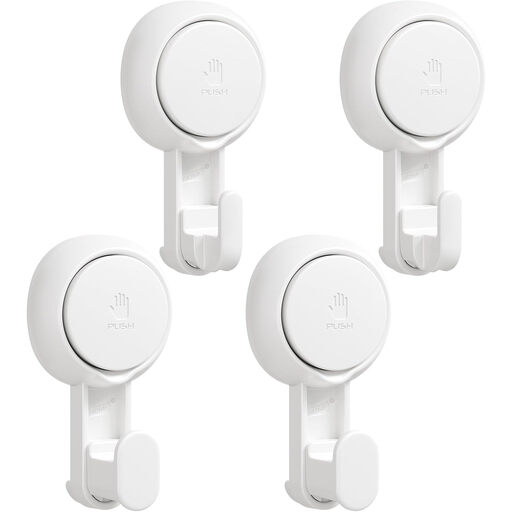
Why this product suits this profile: The hooks can be installed without drilling, adhesive or tools, and removed again when moving home. This makes them suitable for tenants and for hanging individual towels in the bathroom or kitchen.
The product information specifies smooth, dry and non-porous surfaces as a requirement. This avoids the common assumption that suction cups are suitable for every wall.
Four rotating hooks; according to the product information, a load capacity of up to 11 lb or around 5 kg on suitable surfaces.
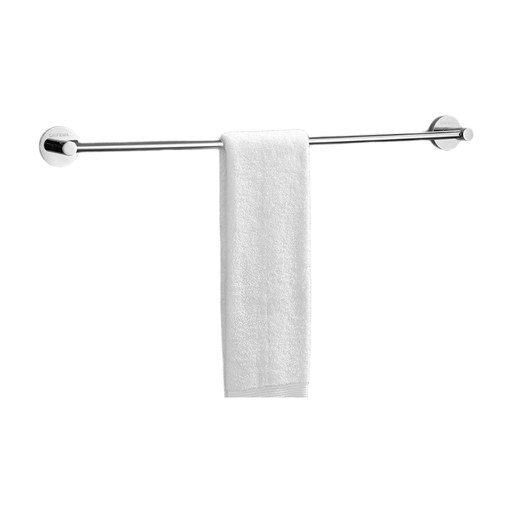
Why this product suits this profile: The single 60 cm brass rail with a chrome finish complements a cleanly styled bathroom or kitchen and is securely screwed to the wall.
The stated length, mounting method and included installation set make it easier to check the details before buying. However, the wall must still be suitable for screw fixing.
60 cm rail, brass construction, chrome finish and a five-year warranty stated by the manufacturer.
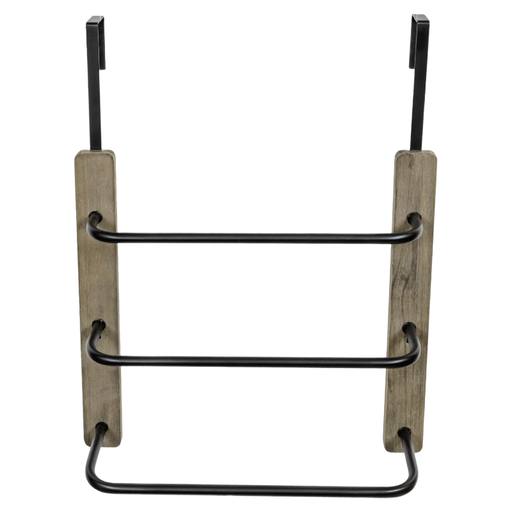
Why this product suits this profile: The design hangs over standard doors up to 4.4 cm thick, making use of otherwise unused space. Three metal rails provide room for several towels or dressing gowns.
The maximum door thickness is specified and should be measured before ordering. This helps prevent the rail from not fitting or the door from failing to close properly.
Tool-free door mounting, three tiers and a combination of solid wood and powder-coated metal.
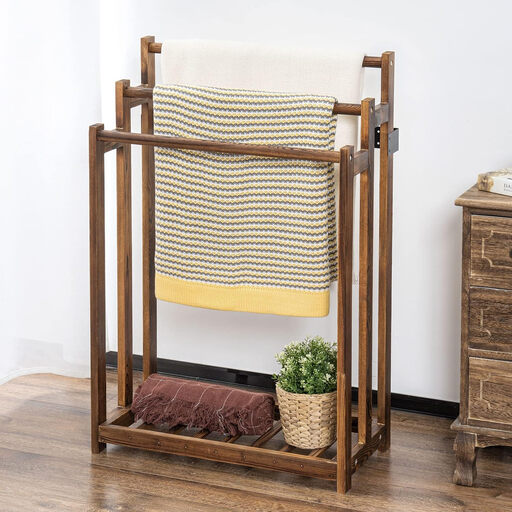
Why this product suits this profile: Three tiers and a lower shelf provide storage for towels, baskets or toiletries. The model can stand freely or be secured to the floor.
The product dimensions of approximately 59.7 × 91.4 × 29.2 cm make it easier to assess the space required before buying. The stand should not be placed on an uneven floor.
Solid wood construction, three hanging options and additional shelf space.
We have put together a complete, regularly updated list of products that fully meet these strict selection criteria and the safety regulations applicable in the EU.
For small spaces, consider a slim wall-mounted rail, individual towel hooks, an over-the-door model or a suction-cup holder. The key is to keep doors, shower access and movement areas clear. A freestanding towel stand requires more floor space, but can be positioned flexibly without wall mounting.
A suction-cup holder requires a smooth, dry, clean and non-porous surface. The suction cup should be pressed firmly into place before attaching the holder. According to the product information, uneven tiles, wallpaper, painted walls and porous materials are unsuitable. The permitted weight must not be exceeded.
Wall mounting saves floor space and provides a secure solution when the fixing is suitable. A towel stand, on the other hand, can be set up without drilling holes and moved whenever needed. For rented homes, flexible room layouts or changing uses, a freestanding model may be more practical; for very small bathrooms, a wall-mounted rail is often more space-saving.