
Lieferung heute & morgen

Qualitätsgarantie

Willkommens-Angebote freischalten: KOSTENLOSE Lieferung | Bis zu 80 % RABATT | Kostenlose 30-Tage-JoyPlus-Testphase
App herunterladen
A bathroom towel rail should keep towels within easy reach, support air circulation and take up as little space as possible. In small bathrooms, rented homes or households with several people, however, a simple towel rail is often not enough. Wall-mounted solutions, a freestanding bathroom towel stand or a combined bathroom shelf with storage may be more suitable.
Three common pitfalls in particular can lead to the wrong choice:
Several rails do not automatically mean more usable capacity either. What matters is whether towels can hang with enough space between them and whether the construction remains stable when fully loaded.
Measure the intended area in width, height and depth. For wall-mounted installation, also check that doors, drawers and access to the shower remain unobstructed. A space-saving towel rail is not compact simply because it is narrow: a fold-out or multi-level construction can require considerably more room when open.
The following designs are particularly relevant for small bathrooms:
The stated maximum load only applies when the item is installed correctly using suitable wall plugs or anchors. Therefore, check:
A cabinet or bathroom shelf should always be secured to the wall to prevent it from tipping over. With tiled walls, choose an installation method that takes the drilling points and grout lines into account. In rented homes, drill-free options such as a freestanding or over-door towel rail may be more practical.
Bathrooms combine steam, splashing water and cleaning products. Powder-coated metal, stainless steel, brass or painted wood may be suitable, depending on the design. However, the quality of the specific surface finish remains crucial.
Look for:
With a combination of a wood and metal towel rail, the wooden surface should be cleaned regularly with a dry or only slightly damp cloth. Abrasive products can damage paint, powder coating or chrome finishes.
The following recommendations categorise specific models by space requirements, installation method and storage function. The details are based on the respective product descriptions.
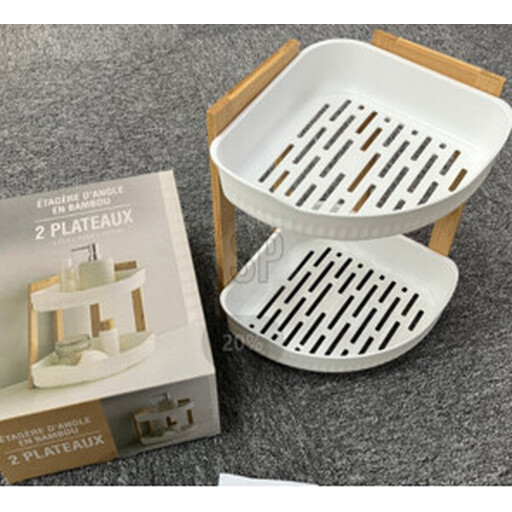
Why this product suits this profile: Measuring 23 × 23 × 27 cm, this compact two-tier shelf is suitable for placing on a washbasin, inside a cabinet or on storage surfaces in small bathrooms.
The fixed external dimensions make it easier to understand how much space the product will require before buying. The open design makes stored items easy to reach.
Two tiers with a compact footprint; according to the description, designed for toiletries, soap and smaller towels.
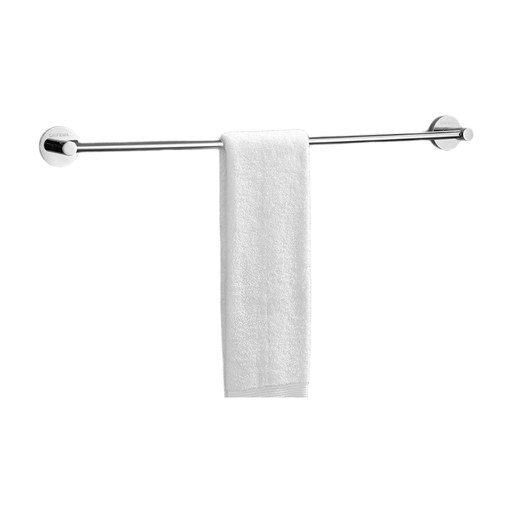
Why this product suits this profile: The single 60 cm brass rail with a chrome finish is aimed at buyers who prefer a clearly defined, wall-mounted solution.
The product description specifies the material, rail length, screw fitting and included installation accessories. This makes it easier to assess compatibility and installation requirements.
60 cm rail; chrome finish; installation kit and five-year manufacturer’s warranty according to the product details.
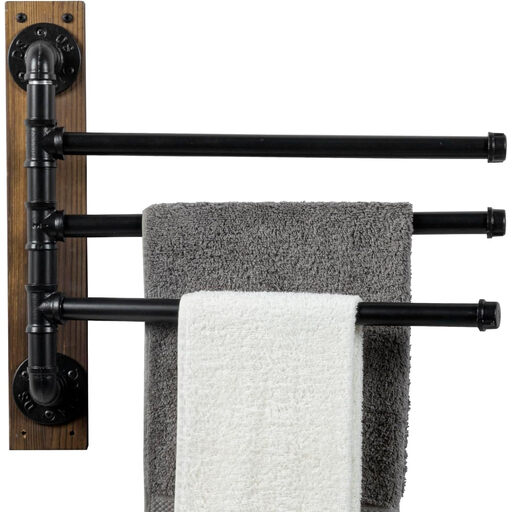
Why this product suits this profile: Three rails that swivel through 180 degrees provide separate hanging areas for several towels and can fold flat against the wall when not in use.
The swivel design reduces the permanent projection from the wall. It is installed on a flat wall using pre-drilled holes in the wooden mounting plate.
Three metal rails; 180-degree swivel function; combination of powder-coated metal and solid, burnt wood.
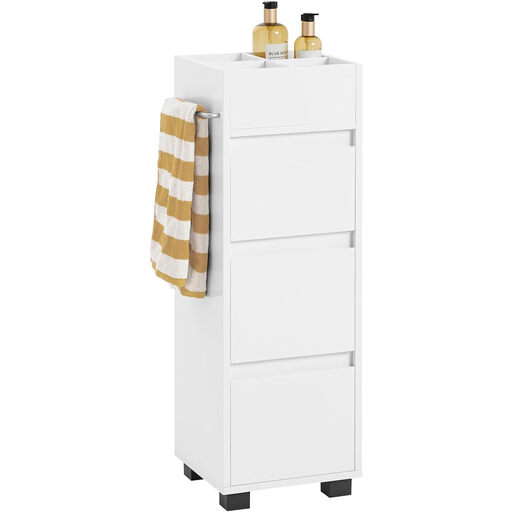
Why this product suits this profile: Measuring 30 × 90 × 30 cm, this slim cabinet combines three drawers, four open compartments and a towel rail that can be fitted on either side.
The shallow depth is clearly specified. The maximum load of 40 kg and the anti-tip safety advice make important safety requirements clear.
Three drawers and four shelves; towel rail can be fitted on the left or right; MDF body with a white painted finish.
We have put together a complete, regularly updated list of products that fully meet these strict selection criteria and the safety regulations applicable in the EU.
For a small bathroom, a wall-mounted solution is often more space-efficient than a wide floor-standing rail. However, a wall-mounted towel rail should not be installed directly where the fittings or wooden surfaces will be constantly exposed to water.
A freestanding towel rail, on the other hand, is suitable for rented homes or flexible layouts. Before buying, measure the entire footprint available. Models with a lower shelf make use of vertical space, but they can get in the way in narrow passageways.
For several people, two separate hanging levels or swivel rails are practical. If you also want to store toiletries, toilet roll or folded laundry, choose a towel rail with shelf, a towel rack or a slim bathroom cabinet.
First check the wall type, tile position and drilling points. Use a wall plug suitable for the surface and, where possible, avoid drilling directly into a grout line unless the installation instructions specify otherwise. Plasterboard requires suitable cavity wall anchors. Do not exceed the rail’s permitted load.
The required distance depends on the towel size and the design. Towels should not remain directly on top of one another, so that air can circulate between the textiles. With multi-level models, it is therefore not just the number of rails that matters, but also their spacing and orientation.
A wall-mounted rail saves floor space, but requires a suitable wall and permanent installation. A freestanding stand is more flexible and appealing for rented homes, but it needs floor space. If you need additional storage, a slim bathroom shelf or cabinet with an integrated towel rail may be the more practical solution.