
Lieferung heute & morgen

Qualitätsgarantie

Willkommens-Angebote freischalten: KOSTENLOSE Lieferung | Bis zu 80 % RABATT | Kostenlose 30-Tage-JoyPlus-Testphase
App herunterladen
The right bathroom towel rail keeps textiles within easy reach while making sensible use of the available space. However, colour and design are not the only considerations when choosing one. Unclear measurements, unsuitable fixings or delicate finishes often lead to disappointing purchases.
A freestanding towel stand may look narrow, but its feet can make it deeper than expected. With a wall-mounted model, you need to consider not only its length but also the distance from the wall, washbasin or door. For a small cloakroom, compact models or a space-saving towel rail are often more practical than a wide towel stand.
Metal, wood and coated surfaces react differently to moisture. A wooden towel rail should not be left permanently in standing water or in a poorly ventilated area. With metal, the material, finish and cleaning instructions are crucial. Abrasive cleaners can cause visible damage to painted or chromed surfaces.
A wall-mounted towel rail requires a suitable wall and appropriate wall plugs or screws. Not every fixing kit supplied is suitable for tiles, plasterboard or masonry. In rented homes, over-the-door models or freestanding versions can be a practical alternative. The product description should clearly state whether mounting accessories are included.
For a towel, the bar should be long enough and sufficiently far from the wall so that the textile does not remain in constant contact with a damp surface. A single towel rail is suitable for a hand towel or a lightweight bath towel. Multiple levels or bars provide additional hanging space, but require enough airflow between them.
With a towel rail with shelf, the shelf area should be suitable for the items you intend to store there. Baskets, toiletries and rolled-up towels can place more strain on the model than individual textiles. The stated maximum load capacity is therefore more important than size alone.
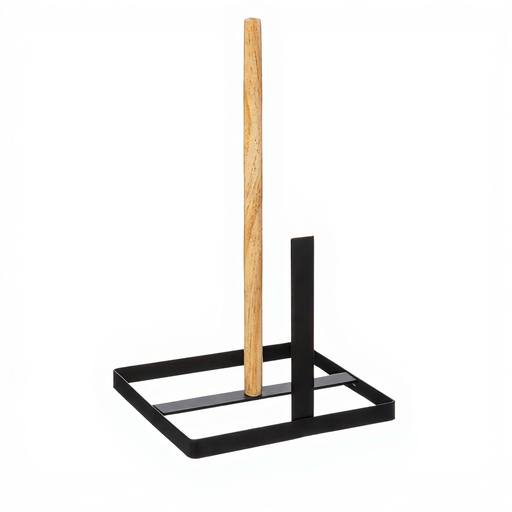
Why this product is a good match: Measuring 15 × 15 × 30 cm, this compact freestanding holder is suitable for hand towels, guest towels or tea towels on a shelf or worktop.
The precise overall dimensions make planning easier. As no wall mounting is required, there is no need to check wall plugs or drilling points.
Iron construction, a square design and a surface that is easy to clean according to the product description.
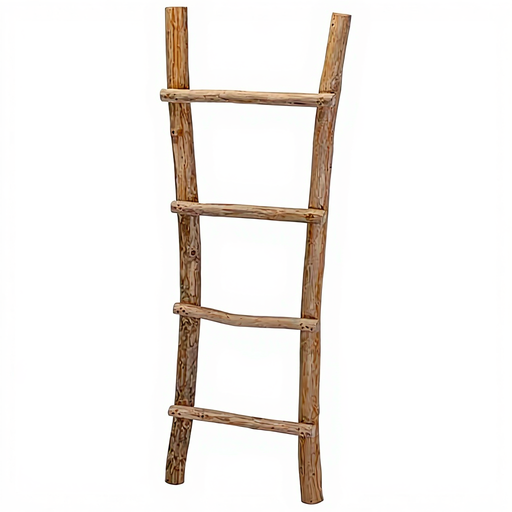
Why this product is a good match: Solid teak combines a natural look with several hanging options, making it a good fit for calm, minimalist bathrooms or wellness areas.
The care instructions set clear limits: a maximum total load of 3 kg, dry standing surfaces and no permanent exposure to moisture.
Solid teak, several hanging options and cleaning with a damp cloth.
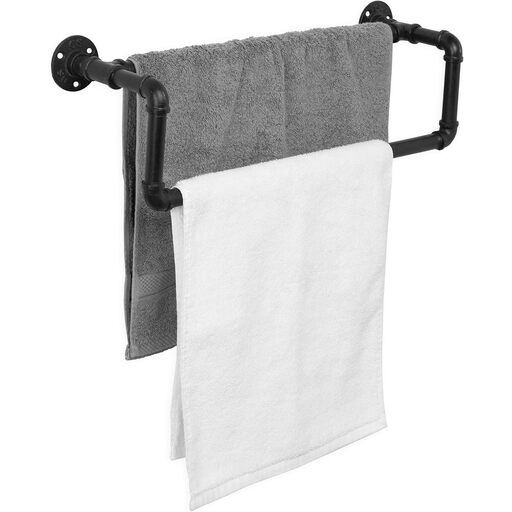
Why this product is a good match: Two bars positioned one above the other provide space for several towels or garments in the bathroom or utility room.
The details specify the installation method, dimensions of 55,1 × 13,5 × 14,7 cm and the required fixing principle. Mounting accessories are not included.
Two bars, a matt black metal finish and an industrial pipe design.
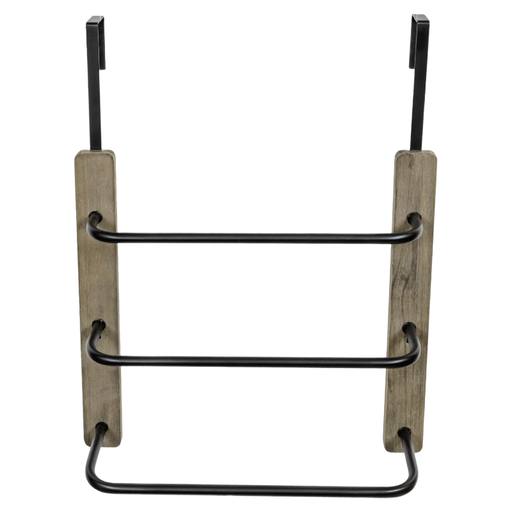
Why this product is a good match: With three descending metal bars, this over-the-door solution is designed for bathrooms, bedrooms or guest rooms and can be hung without tools.
According to the product details, the compatible door can be up to 4,4 cm thick. Checking this measurement prevents the holder from obstructing the door when it is opened.
Tool-free installation, three bars and a combination of grey wood and matt metal.
In the bathroom, wall mounting near the shower or washbasin is a sensible choice, provided the wall is strong enough. A metal towel rail with a coated finish often suits modern or industrial interiors. A wooden towel rail, on the other hand, complements natural, Scandinavian or rustic spaces.
In the kitchen, a short towel bar or compact holder may be enough for tea towels. If you have several textiles, a double-decker solution can be useful, provided enough air can circulate between the towels. In a cloakroom, small freestanding models or a towel rail with shelf are practical because they require no extensive installation and keep towels clearly visible and accessible.
We have put together a complete, regularly updated list of products that fully meet these strict selection criteria and the safety regulations applicable in the EU.
Choose a drilling point away from the grout lines and check the wall for cables and pipes. Use a suitable drill bit for tiles and switch off the hammer function when starting to drill. The wall plug must then be suitable for the type of wall. If you are unsure, freestanding or over-the-door models are an alternative.
This depends on the design and the size of the towel. The textile should not remain in constant contact with the wall. Before buying, check not only the length of the bar but also its projection from the wall and the distance between multiple levels.
Regularly wiping it with a soft cloth removes moisture and residue. Coated metal and chrome should not be treated with abrasive cleaners. Wood needs protection from standing water and should no longer be used if it develops cracks, warping or sharp splinters.