
Lieferung heute & morgen

Qualitätsgarantie

Willkommens-Angebote freischalten: KOSTENLOSE Lieferung | Bis zu 80 % RABATT | Kostenlose 30-Tage-JoyPlus-Testphase
App herunterladen
A new bathroom cabinet promises order and more storage space. However, the selection is vast, and not every model delivers on its promises. Many buyers are frustrated by swollen materials, impractical compartments, or wobbly construction. Before you make a decision, it's helpful to know the typical pitfalls to find a durable and functional solution for your bathroom.
This guide, created by the Joybuy Product Recommendation Officer, shows you what to look for to distinguish marketing hype from genuine quality features.
The investment in new bathroom furniture should pay off in the long run. Pay attention to these three points to avoid disappointment:
To avoid a bad purchase, focus on these three objective criteria. They will help you evaluate the quality and functionality of a bathroom cabinet.
The material is the foundation for your cabinet's longevity.
Measure the available space precisely and consider what you want to store.
The type of installation affects both appearance and safety.
Here are some recommendations tailored to specific needs and room situations.

Why This Fits Their Persona: Ideal for renters and homeowners with very small bathrooms or guest toilets. With its extremely narrow 20x20 cm footprint, this model makes full use of vertical space to create maximum storage in the tightest of areas.
It solves the problem of ill-fitting dimensions by being specifically designed for niches. The melamine coating on the E1-grade MDF panels protects against moisture, and the included anti-tip device addresses the safety risk of tall, narrow furniture.
Ultra-compact design; combination of open shelves, drawers, and doors for flexible organisation; includes anti-tip device for secure wall mounting.
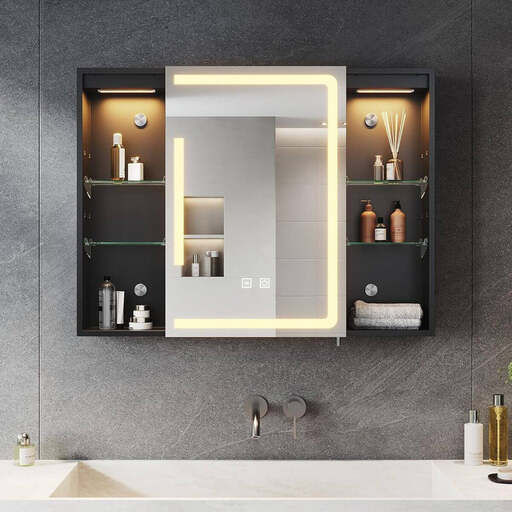
Why This Fits Their Persona: For users seeking an all-in-one solution with modern design and technical convenience. This mirrored cabinet combines storage, a mirror, and a sophisticated lighting unit that integrates seamlessly into a contemporary bathroom.
It bypasses the trap of unsafe electronics by offering useful, bathroom-safe features like an anti-fog heater, an integrated socket, and adjustable light colours. The adjustable glass shelves provide a flexible interior layout.
Dimmable lighting with 3 colour temperatures; integrated socket and anti-fog function; combination of open and closed storage; modern, matte black design.
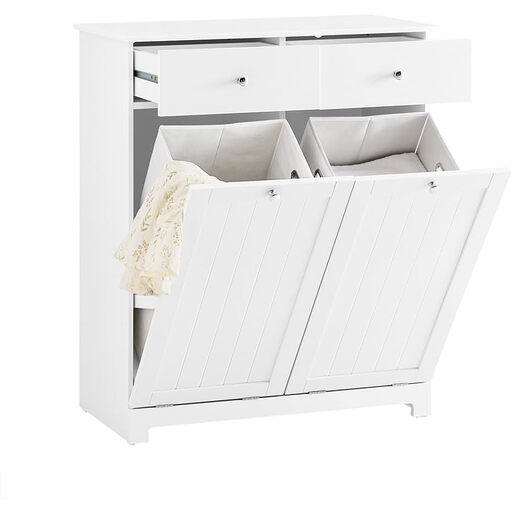
Why This Fits Their Persona: Perfect for families or individuals looking for an integrated solution for collecting and sorting laundry directly in the bathroom. This cabinet combines classic storage space with a clever laundry management feature.
This model solves the problem of impractical layouts with a highly specialised function: two tilt-out laundry baskets (90L total) for direct laundry separation. The raised feet promote air circulation and prevent moisture damage at the base.
Smart laundry separation with two integrated baskets; additional storage in two drawers and on the top surface; sturdy construction from E1-grade MDF with a high load capacity (up to 70 kg according to the manufacturer).
We have compiled a complete, up-to-date list of products that fully meet these strict selection criteria and UK safety regulations.
The IP (Ingress Protection) rating indicates how well an electrical device is protected against the intrusion of foreign objects and water. IP44 is a common standard for bathroom lights and cabinets. The first digit (4) means protection against solid foreign objects with a diameter greater than 1 mm. The second digit (4) means protection against splashing water from all directions. A product with this rating is suitable for safe use in zones 2 and 3 of the bathroom, i.e., near the shower and sink.
For high durability in a humid bathroom environment, MDF panels with a high-quality, seamless coating (e.g., lacquer or melamine resin) are an excellent choice. They are more dimensionally stable and swell less quickly than simple, uncoated particleboard. Solid wood is also an option but requires regular maintenance (e.g., re-oiling) to protect it from moisture. Regardless of the material, the quality of the workmanship, especially at the edges, is crucial.
A tall, narrow bathroom cabinet should always be secured to the wall to prevent it from tipping over. Most manufacturers include an anti-tip device for this purpose. This usually consists of a bracket or strap that is screwed to the cabinet and the wall. For wall mounting, use wall plugs and screws that are appropriate for your wall type (e.g., concrete, plasterboard, brick). Ensure the cabinet is level and stable on the floor before fixing it to the wall.