
Lieferung heute & morgen

Qualitätsgarantie

Willkommens-Angebote freischalten: KOSTENLOSE Lieferung | Bis zu 80 % RABATT | Kostenlose 30-Tage-JoyPlus-Testphase
App herunterladen
The unused area under the sink is often wasted space in the bathroom. A matching vanity unit can solve this problem by providing valuable storage for towels, cleaning supplies, and cosmetics, all while creating a tidy, clutter-free look. However, the selection is vast, and not every model lives up to its promise.
Many buyers only realise after delivery that their new under-sink cabinet doesn't fit, the material swells up after a short time, or the interior layout is impractical. To help you avoid such a costly mistake, we'll highlight the three most common pitfalls and show you what to look for when making your choice.
The most common reason for returns is a simple measurement error. A bathroom cabinet with a p-trap cutout is only useful if the opening perfectly aligns with the drain pipe. A cutout that is too small or incorrectly positioned makes installation impossible without modifying the furniture itself. The overall width and depth are just as critical, especially in a small guest bathroom.
The bathroom is the most humid room in the house. Furniture made from uncoated or low-quality engineered wood (like standard MDF boards) tends to absorb moisture and swell. The results are unsightly warping, peeling paint, and a shortened lifespan.
A cabinet is only as good as its ability to create order. Models without adjustable shelves or with a poor compartment layout force you to lay tall bottles down or leave small items without a designated spot. The storage space you gain is therefore not used efficiently.
To avoid these problems, you should check three core parameters before buying. These will determine the fit, durability, and functionality of your new bathroom storage solution.
Measuring is the first and most important step. Take note of the following dimensions:
Look for materials designed for high-moisture environments.
A good under-sink cabinet adapts to your needs.
Based on these criteria, we have identified several models that offer a well-thought-out solution for different needs and room situations.

Why This Fits Their Persona: Ideal for anyone looking for a straightforward and functional solution to quickly create order. The classic design fits into almost any bathroom and offers a proven layout for daily needs with one open compartment and two doors.
The product description explicitly advises checking the dimensions of the p-trap and available space before purchasing (avoids Pitfall 1). The lacquered MDF surface provides basic protection against moisture (addresses Pitfall 2).
A combination of an open shelf for quick access and closed storage space. The timeless design and standard dimensions make it a versatile choice.
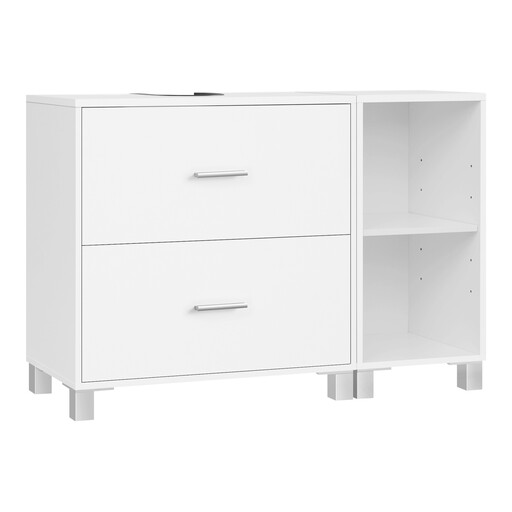
Why This Fits Their Persona: This combination of a vanity unit and a flexible side cabinet maximises storage space. The side cabinet can be placed on the left, right, or even separately, allowing for high adaptability to different bathroom sizes and layouts.
The modular design and the adjustable shelf in the side cabinet counteract an impractical interior layout (avoids Pitfall 3). The E1-grade engineered wood material is water-repellent and suitable for bathrooms (addresses Pitfall 2).
High flexibility thanks to the separately placeable side cabinet. Offers significantly more storage than a single small vanity unit.
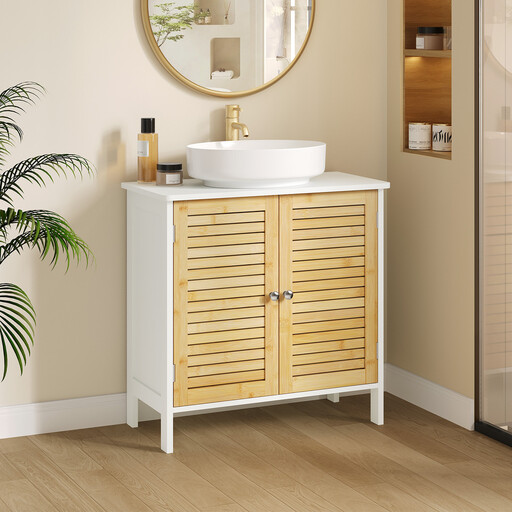
Why This Fits Their Persona: For users who value aesthetics and materials. The combination of natural bamboo and white lacquered MDF creates a modern and warm atmosphere that stands out from standard all-white furniture.
Bamboo is naturally more moisture-resistant than pure MDF, which reduces the risk of swelling (avoids Pitfall 2). The adjustable shelf inside ensures flexible use of the storage space (avoids Pitfall 3).
High-quality material combination for an appealing look. The doors are equipped with magnetic catches, ensuring they close securely and quietly.
We have compiled a complete, up-to-date list of products that fully meet these strict selection criteria and UK safety regulations.
No. The fit depends on the cabinet's dimensions, the size and position of the p-trap cutout, and the type of sink. For example, pedestal sinks are not compatible with standard vanity units. It is essential to accurately measure the available space and the position of the drain pipe before purchasing.
To ensure longevity, you should regularly wipe the surfaces with a soft, damp cloth and immediately remove any standing water. Avoid harsh or abrasive cleaners, as they can damage the protective coating. Also, ensure good ventilation in the bathroom to reduce overall humidity.
Both options have their pros and cons. A wall-mounted vanity unit makes the room appear larger and simplifies floor cleaning. However, it requires a solid wall for installation. A floor-standing bathroom cabinet is easier to install, stands stably on the floor, and can often support more weight. The choice depends on the structure of your walls, your interior design style, and your personal preferences.