
Lieferung heute & morgen

Qualitätsgarantie

Willkommens-Angebote freischalten: KOSTENLOSE Lieferung | Bis zu 80 % RABATT | Kostenlose 30-Tage-JoyPlus-Testphase
App herunterladen
A bathroom vanity unit creates storage space, can conceal visible pipework and makes good use of the area beneath your basin. However, not every unit will fit beneath every basin. Common buying mistakes include inaccurate measurements, a poorly positioned trap cut-out or materials that cannot cope well with persistently damp conditions.
A unit that is 60 cm wide won’t automatically fit beneath a 60 cm basin. You also need to consider:
Before buying, measure the available space in at least three places. If you live in rented accommodation, also check whether wall mounting is possible and permitted.
A bathroom cabinet with a trap cut-out can make installation easier if the cut-out matches the pipework. But the shape alone isn’t enough. The width, depth and height of the cut-out all matter. If you already have a basin, measure the trap’s position and route carefully, and make sure the pipework isn’t put under pressure during installation.
A unit beneath the basin with a cut-out that’s too small may need to be modified. This can be particularly problematic with delicate MDF panels, as exposed cut edges need to be protected from moisture.
MDF and engineered wood panels are suitable for many bathroom furniture pieces, as long as they’re protected from standing water. A water-repellent finish doesn’t replace careful maintenance. Wipe away splashes promptly, and don’t place the unit in an area that stays wet.
Look for details such as E1 MDF, sealed surfaces, raised feet and easy-care coatings. The E1 designation describes the stated formaldehyde emission standard for the engineered wood; it doesn’t automatically mean the material is fully moisture-resistant.
A compact space-saving bathroom cabinet is a good choice for smaller bathrooms, but it may not have enough room for large cleaning-product bottles. Check the internal height, not just the external dimensions.
A bathroom unit with an adjustable shelf can be adapted to accommodate items of different heights. If you’re buying a bathroom vanity unit with drawers, also check whether the drawers can open past the trap.
Always check the stated maximum load capacity and distribute heavier items as evenly as possible. A unit with feet or castors should stand on a level surface. Anti-tip fittings or wall fixings are particularly important in homes with children.
A bathroom vanity unit with doors keeps contents out of sight and is suitable for larger bottles. Drawers make smaller items easier to reach. A freestanding bathroom unit can be useful during renovations or in rented homes, but should still be secured against tipping if the manufacturer recommends it.
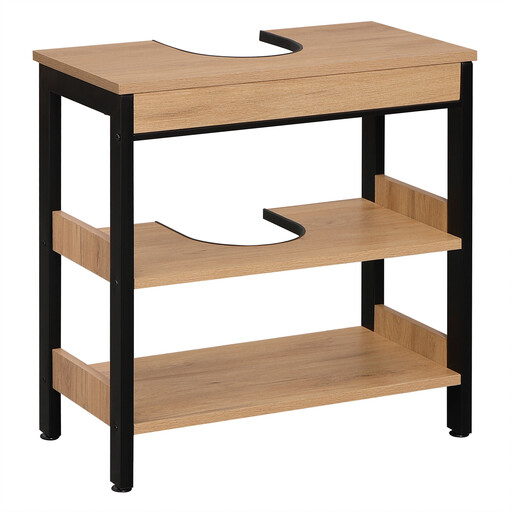
Why this product is a good fit: At 60 x 60 x 30 cm, with a pre-cut trap opening, this unit offers a straightforward solution for a standard basin, provided the pipework matches.
The stated cut-out makes it clear what needs checking. Before installation, you’ll still need to compare it with the position and size of your P-trap.
MDF construction, pre-cut trap opening and a compact depth of 30 cm.
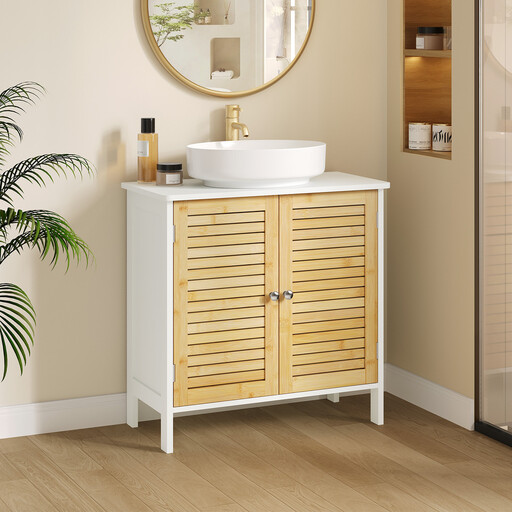
Why this product is a good fit: The combination of a white front, bamboo details, two doors and an adjustable shelf will appeal if you want practical storage with a coordinated look.
The trap opening is listed as 10 x 22,5 cm, so you can check before buying whether it will fit your existing installation.
E1 MDF panels, bamboo elements, a removable and adjustable shelf, and magnetic catches.
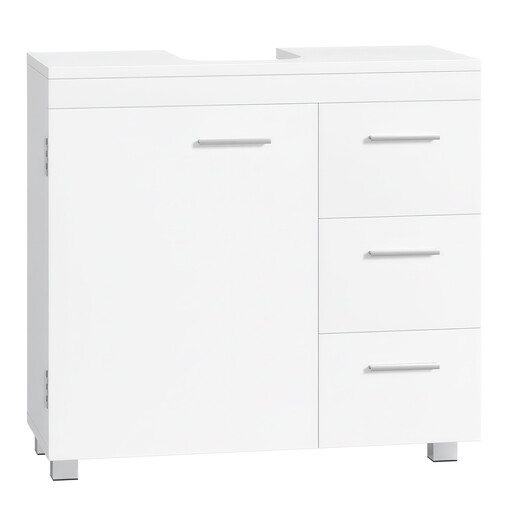
Why this product is a good fit: Three drawers and two compartments behind the door provide separate spaces for toiletries, towels and larger bathroom essentials.
The product dimensions of 30 x 70 x 64 cm and maximum static load capacity of 36,2 kg are clearly stated. To check whether it will fit, you’ll also need to take the basin shape and pedestal into account.
Three drawers, two compartments behind the door, an adjustable shelf and an anti-tip kit included.
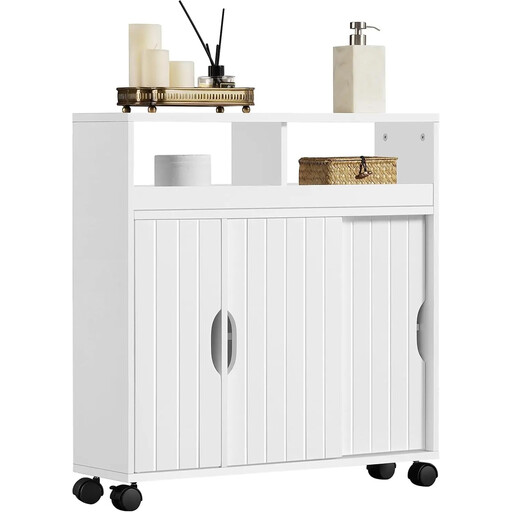
Why this product is a good fit: Its 20 cm depth and four castors make it suitable for narrow spaces or for anyone who wants to move their storage around easily.
The three height settings for the adjustable interior are clearly listed as 16,5, 23 and 29,5 cm. The maximum load capacity is 10 kg and shouldn’t be exceeded.
Four castors, two of which lock, open shelves and height-adjustable storage at a depth of 20 cm.
We’ve put together a complete, regularly updated list of products that meet these strict selection criteria and fully comply with the safety regulations in force in the EU.
Read the instructions before assembling the unit and check that all the parts are labelled. If you’re choosing a unit for countertop and pedestal basins, the basin shape is especially important: a model designed for a pedestal basin won’t necessarily fit beneath a freestanding countertop basin.
To help your unit last longer:
A white bathroom vanity unit often looks unobtrusive in a small room, but it needs regular cleaning to stop water splashes and soap residue from drying visibly on the surface.
Measure the width, depth and height of the available space. You’ll also need to take the trap, water connections, plinth and door movement into account. The unit’s external width shouldn’t exceed the usable space.
First, check that the trap lines up with the opening in the unit. The cut-out mustn’t put pressure on the pipework. If the existing installation doesn’t match the planned cut-out, don’t modify the unit without checking first.
There’s no reliable way to give a fixed lifespan. It depends on the material quality, construction, load, ventilation and exposure to water. Keeping surfaces dry, distributing the load evenly and securing the unit firmly can all help it last longer.