
Lieferung heute & morgen

Qualitätsgarantie

Willkommens-Angebote freischalten: KOSTENLOSE Lieferung | Bis zu 80 % RABATT | Kostenlose 30-Tage-JoyPlus-Testphase
App herunterladen
A battery-operated LED string light can be used independently of plug sockets on balconies, patios, in gardens, living spaces or when camping. Before you buy, though, it’s worth taking a close look at the technical specifications. Terms like “outdoor”, “waterproof” or “dimmable” don’t always mean the same thing from one product to the next.
For an LED string light for outdoors, the ingress protection rating is crucial. IP44 means protection against solid foreign objects above a certain size and against splashing water from any direction. An IP44 string light can therefore be used, for example, on a sheltered balcony, under an eaves overhang or in the garden. However, it is not suitable for submersion.
The battery compartment and plug connections must also be kept dry. A light described as a “waterproof string light” should therefore always be checked against the specific IP rating.
Two models of the same length can look very different. What matters is:
A 15-metre string light with 150 LEDs and 10-centimetre spacing creates a different effect to a 5-metre string light with ten large globe bulbs and 50-centimetre spacing. For a tree or a railing, closely spaced LEDs are usually more practical. For party and wedding lighting, larger bulbs with wider spacing can be a better design choice.
A warm white string light at around 3000 Kelvin tends to feel more subtle in living areas, on tables or at celebrations. Cool white at around 6500 Kelvin appears noticeably brighter and more like daylight. A multicoloured string light, on the other hand, adds colourful accents, but isn’t suitable for every setting.
Also, “eight modes” doesn’t necessarily mean eight completely different brightness levels. Usually, these are various steady-on and flashing functions. A dimmable string light should therefore explicitly state that it has brightness control. A memory function typically saves the last setting you selected, but it doesn’t replace a timer.
Many models use two or three AA batteries. These are often not included in the box. Before you set it up, check whether you already have suitable batteries to hand and how easy the battery compartment is to access.
For regular use, an on/off switch, a remote control or a timer is handy. A 6-hour timer can reduce the daily effort of operating it. If you won’t be using the batteries for a while, remove them to prevent damage from leakage. Don’t mix old and new batteries, or different battery types.
For indoor use, IP20 is often sufficient for decorative models. This rating is not intended for damp conditions. An IP20 string light therefore doesn’t belong on an open patio or in an unsheltered garden area.
For a string light for balcony and garden, IP44 is a common choice for splash-water protection. Even so, the battery compartment must not be permanently exposed to rain or standing water. If the cable, LEDs or housing are damaged, the string light should not be used.
For small shelves, children’s rooms or sideboards, 1.65 to 2.6 metres is often enough. Balconies, railings and larger garden areas usually need much more length, depending on the route you want to cover. The total length stated may include the lead-in cable, so you should look at the illuminated length separately.
When choosing a Christmas string light, also consider whether you want a steady, continuous glow or changing effects. For a calm room decoration, warm white light with simple operation is often a good choice, while a coloured version can add visible accents at parties or for seasonal decorations.
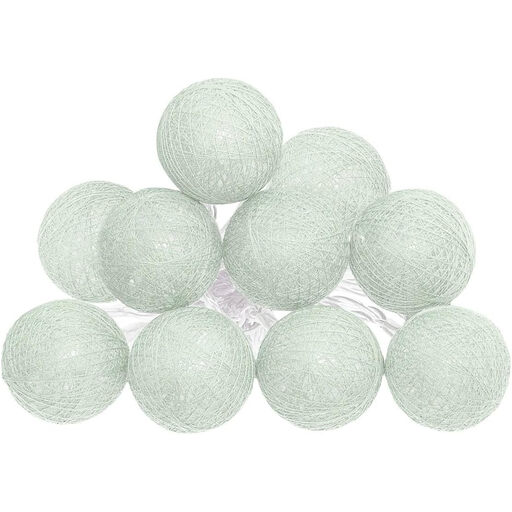
Why this product fits the profile: This compact, battery-operated decoration is designed for living spaces, shelves and smaller areas. It requires two AA batteries and has an on/off switch.
The specifications clearly state the total length of 165 cm, ten LEDs, two AA batteries and the IP20 rating. This makes its intended indoor use perfectly clear.
Compact size, warm white light and simple operation for decorative indoor lighting.
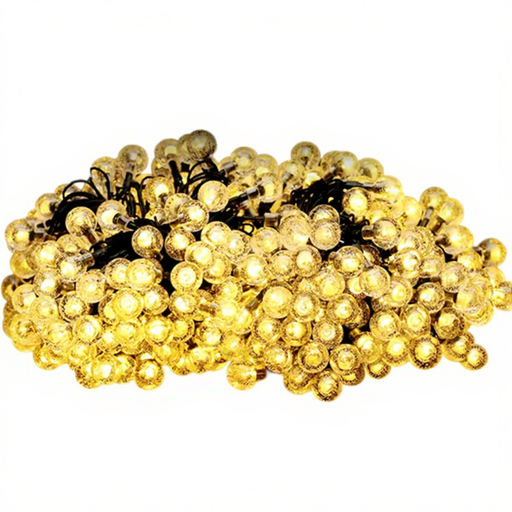
Why this product fits the profile: This model combines 50 LEDs with eight switchable modes, a memory function, a timer and IP44 protection for indoor and outdoor use.
Timer, memory function and IP44 are listed as concrete features. The protection rating is not confused with suitability for submersion.
50 LEDs, eight modes, timer and memory function; operating temperature according to the product specification from -25 °C to 45 °C.
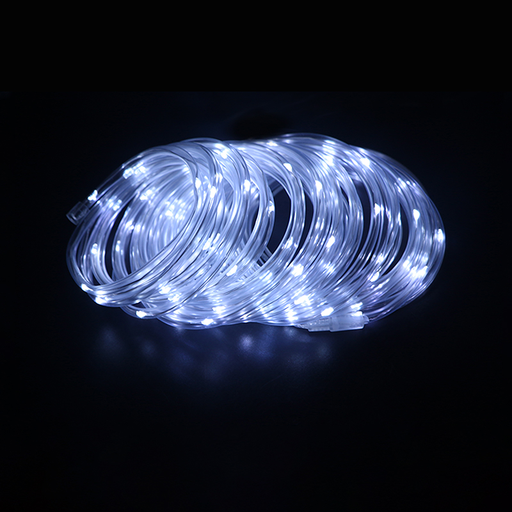
Why this product fits the profile: With a total length of 15.3 metres and 150 cool white LEDs, this model is suitable for larger balconies, gardens, pathways, shop windows or event spaces.
The length, number of LEDs, 10 cm spacing, power supply with three AA batteries and IP44 are all clearly stated.
150 LEDs, eight functions with memory mode, brightness control according to the product name and IP44 splash-water protection.
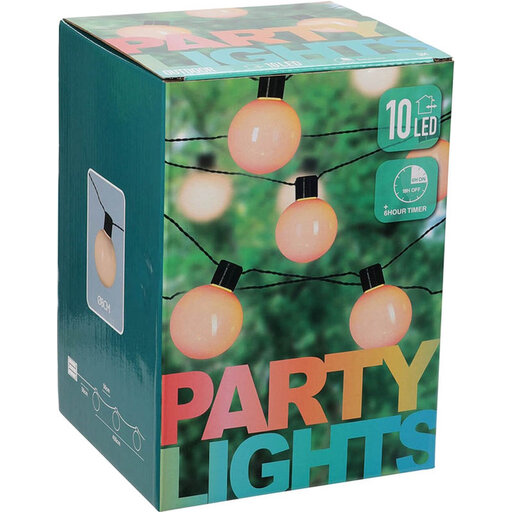
Why this product fits the profile: Ten globe-shaped LEDs with 50 cm spacing, warm white light and a 6-hour timer are ideal for tables, gazebos, patios and celebrations.
The larger bulb design and LED spacing are clearly stated. The timer reduces unnecessary running time, while IP44 classifies its suitability against splash water.
Five metres in length, ten warm white LEDs, 6-hour timer and three AA batteries for power.
We’ve put together a complete, regularly updated list of products that fully meet these strict selection criteria and the safety regulations in force in the EU.
The running time depends on the number of LEDs, the light mode, brightness, battery capacity and ambient temperature. Flashing or dimming functions can affect power consumption. Without specific battery data, it’s not possible to give a reliable general running time. For longer events, it’s a good idea to keep spare batteries on hand.
That depends on the ingress protection rating and the location. IP44 models are protected against splash water, but are not suitable for submersion. The battery compartment should be shielded from direct rain. IP20 models are intended for dry indoor use only.
Warm white at around 3000 Kelvin is often chosen for a calm, decorative atmosphere. Cool white at around 6500 Kelvin looks more like daylight and can be suitable for larger areas or clearer outlines. The decision depends on the setting, your décor and the lighting effect you want.